The Abominable Snowman (1957)
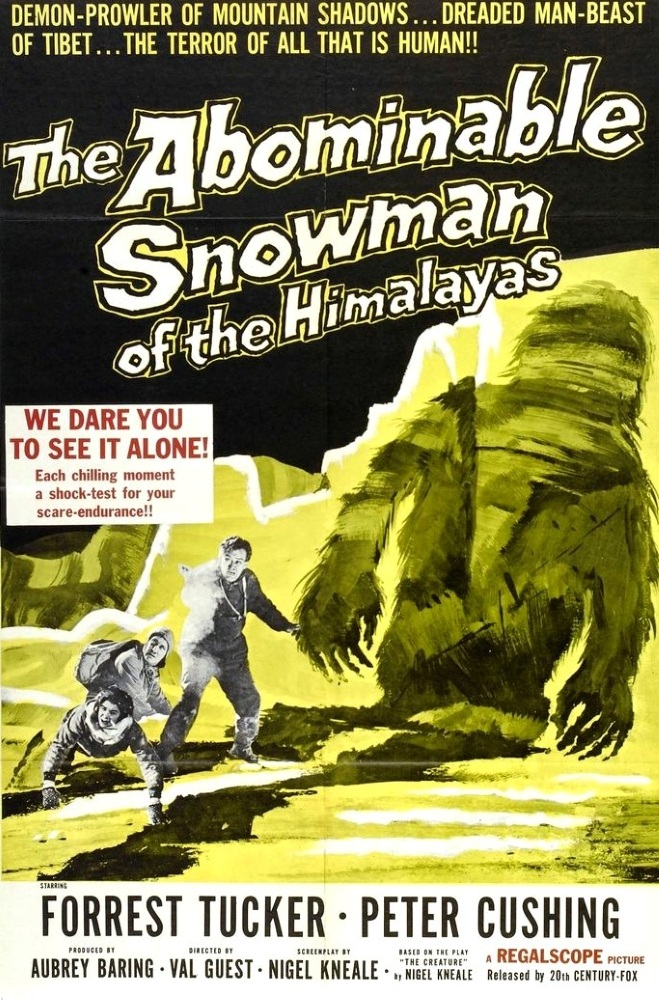
Search for the Yeti
An early Hammer film from a script by Quatermass creator Nigel Kneale and shot in black-and-white about the search for the Yeti. This creates modest atmosphere
The Science Fiction Horror and Fantasy Film Review


The Anglo-horror cycle refers to a body of horror (and sometimes science-fiction) films that were produced in England between the late 1950s and late 1970s – the cycle gained strength around 1957 and had tapered off by 1980.
Although there were earlier works that can be classified as Anglo-horror, the cycle was ignited by Hammer Films whose remakes of the classics with The Curse of Frankenstein (1957) and Dracula/The Horror of Dracula (1958) proved huge international successes. These made stars out of Christopher Lee and Peter Cushing and gave director Terence Fisher a cult following.
Hammer Films produced a string of Frankenstein and Dracula sequels, remade several other classic horror films with variable success along several other vampire films, in particular a trilogy of lesbian vampire films. They also dipped their toes into other themes such as the Psycho-Thriller, the prehistoric film and some science-fiction works, including the trilogy of Quatermass films.
A number of other companies quickly followed Hammer’s footsteps, in particular Amicus with their own body of horror and SF films, in particular their series of horror Anthologies. Other smaller companies like Lippert, Tigon and Tyburn made offerings too.
The Anglo-horror films centred around a regular body of actors including Lee, Cushing, Michael Gough, Donald Pleasance, Ralph Bates, Michael Ripper, Barbara Shelley, Veronica Carlson, Caroline Munro and even a number of faces that subsequently became famous like Oliver Reed, Raquel Welch, David Warner and Donald Sutherland, along a regular interchangeable body of directors, writers, producers, art directors, musicians and cinematographers.
Most of the earlier Hammer films took place in lush 19th Century period surroundings, although many subsequent films moved to contemporary surroundings. They were the first major horror films in colour and they were regarded as shocking in the day. Into the 1970s with the freeing up of censorship standards, nudity and some awkward pandering to youth elements begin to enter.
The Anglo-horror cycle died away around 1980 apart from some occasional stragglers. Hammer made their last theatrical film in 1979 and that was it apart from some ventures into tv, while Amicus closed up shop around the same time. The problem was largely difficulty in attaining distribution deals in the US, stars (notedly Christopher Lee) wanting to branch out of genre typecasting. Audience tastes changed with The Exorcist (1973) dominating the horror scene of the 1970s against which Hammer’s values seemed staid.
Hammer Films was revived in 2010, although it is now nothing more than a brand name used for a series of films made by international filmmakers of no common linkage, as opposed to the originals, which were a body of films made by a small body of creative talents under one roof.
An early Hammer film from a script by Quatermass creator Nigel Kneale and shot in black-and-white about the search for the Yeti. This creates modest atmosphere
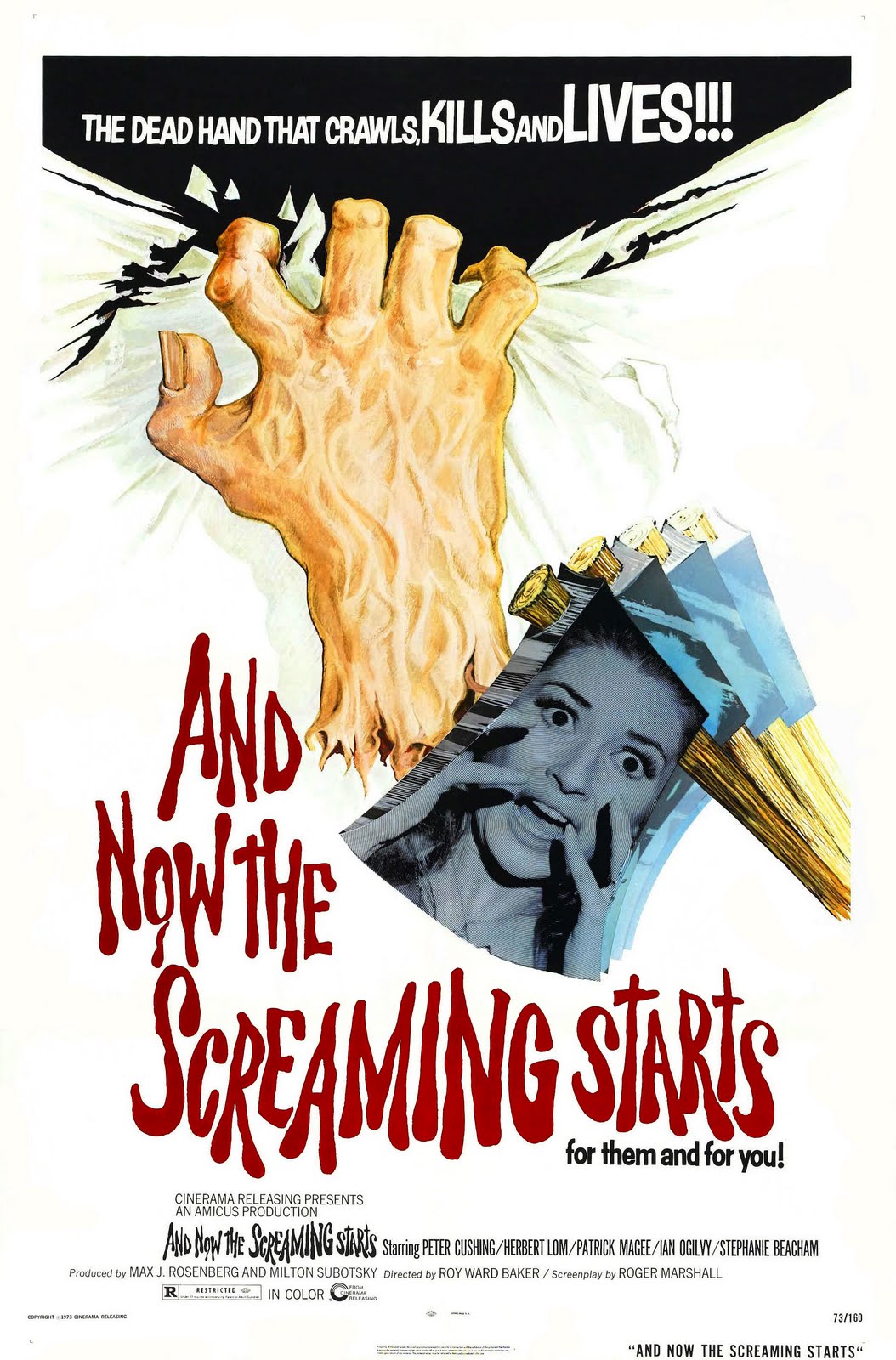
Amicus Films venture into the haunted house genre with a newlywed Stephanie Beacham haunted by a disembodied hand but atmosphere is weakened by the constant reaching for crude shock effect
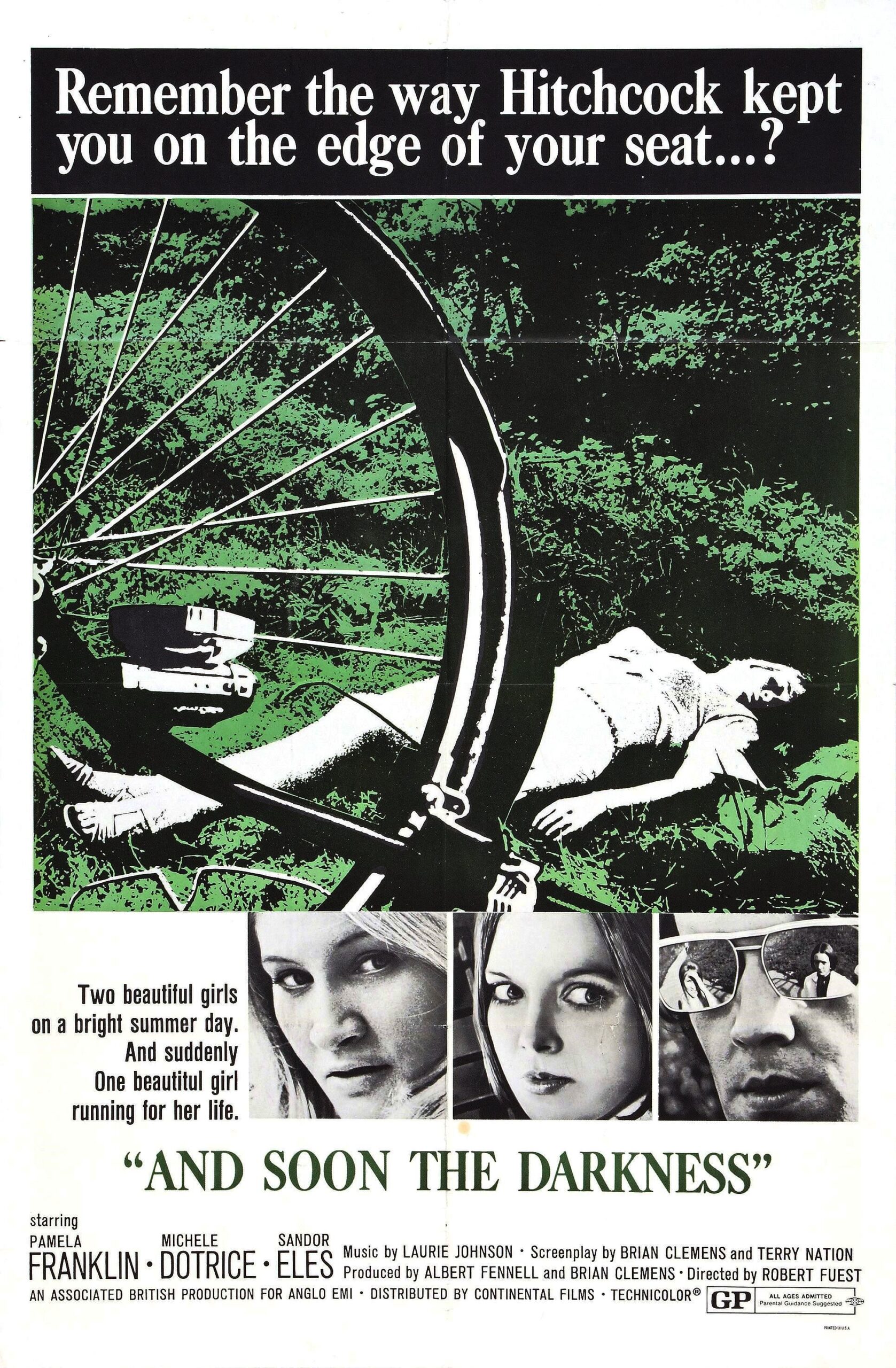
Overlooked psycho-thriller from Robert Fuest, director of the Dr Phibes films, about a girl whose friend goes missing while on a cycling tour through France. Fuest does an great job in making the French countryside into something sinister
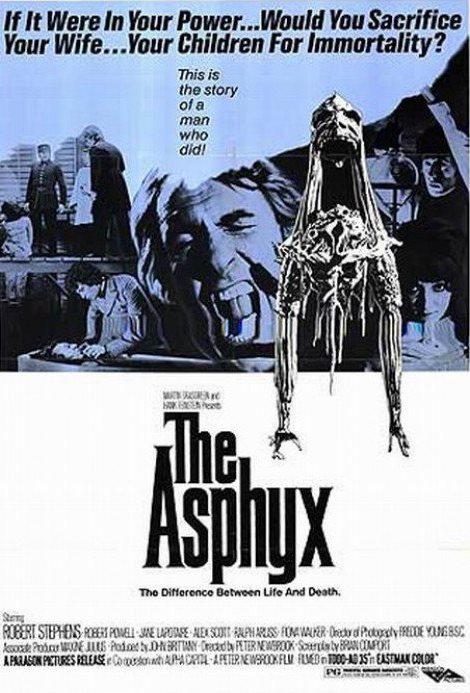
A very underrated and almost completely ignored film from the great Anglo-horror cycle in which Victorian scientists are on a quest to capture the spirit of death
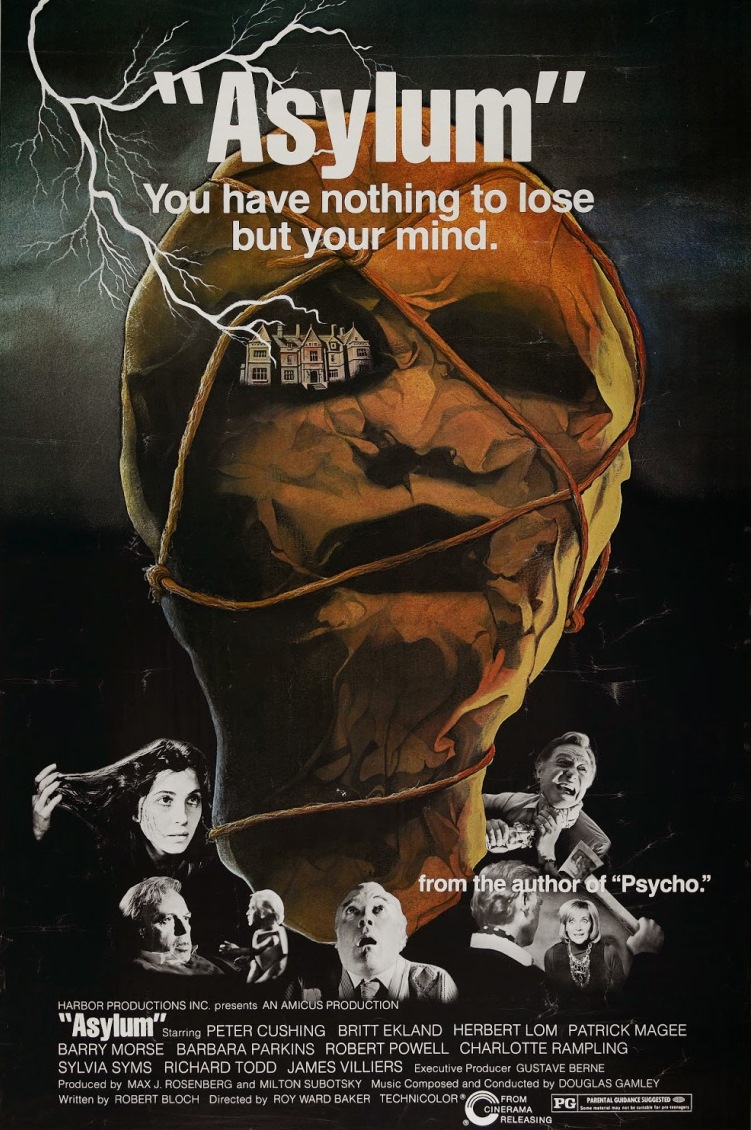
One of the best of the horror anthologies from UK’s Amicus Films. This adapts four stories from Robert Bloch, which are all tales told by the inmates of the titular asylum and settle in with chill effectiveness
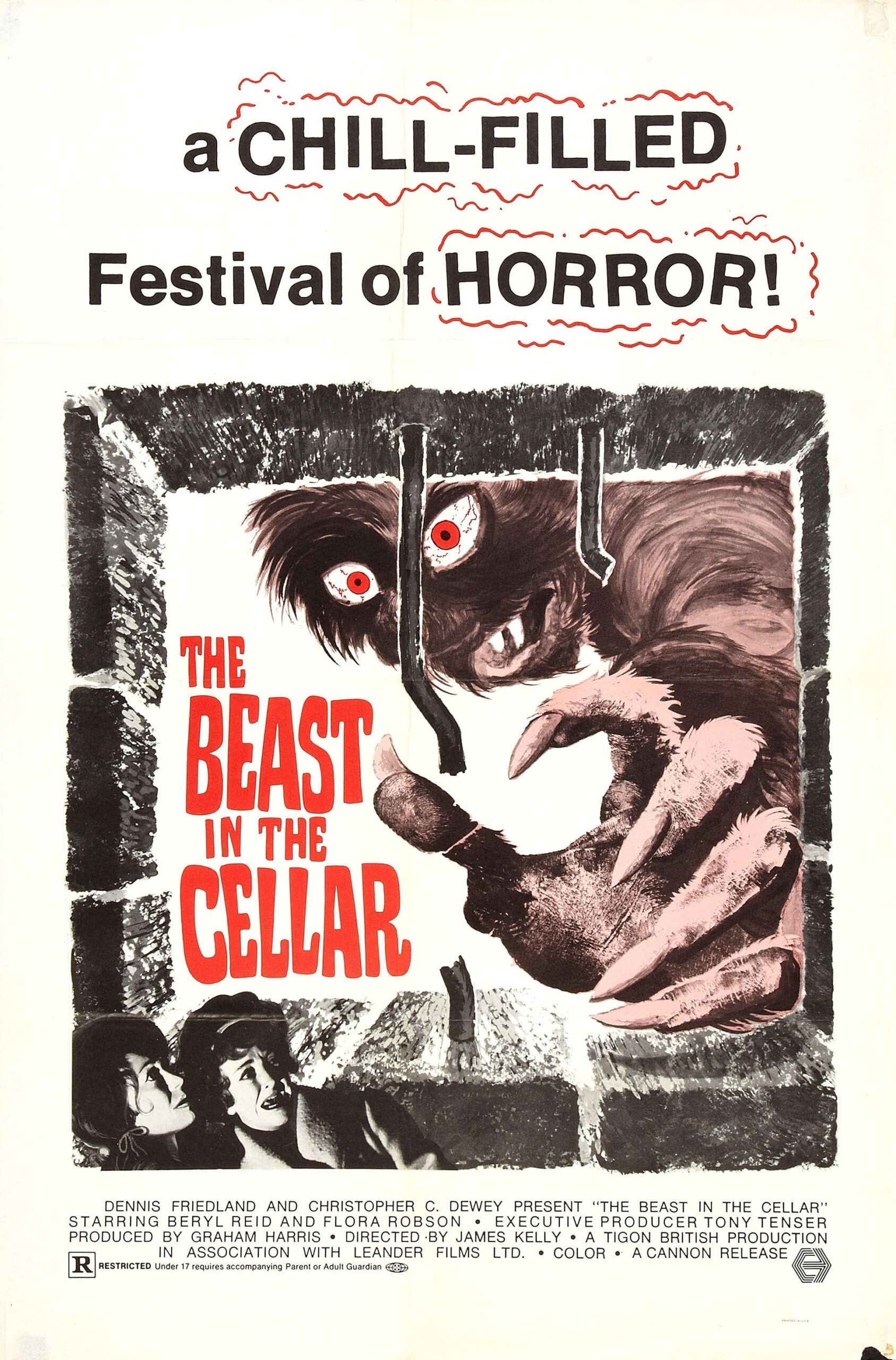
Variant on the Mad Relative Locked in the Attic/Cellar film made as part of the British horror cycle. Unfortunately, this plods where it should have developed tension
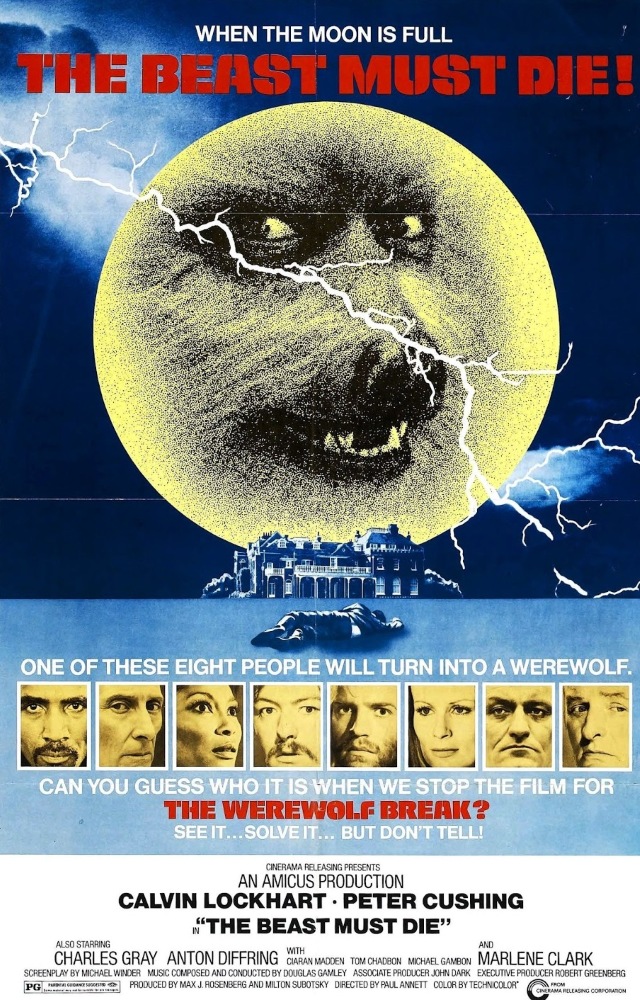
Amicus film that manages the novel idea of combining a werewolf with an an Agatha Christie styled whodunnit as people try to guess which among the guests gathered at a mansion is a werewolf
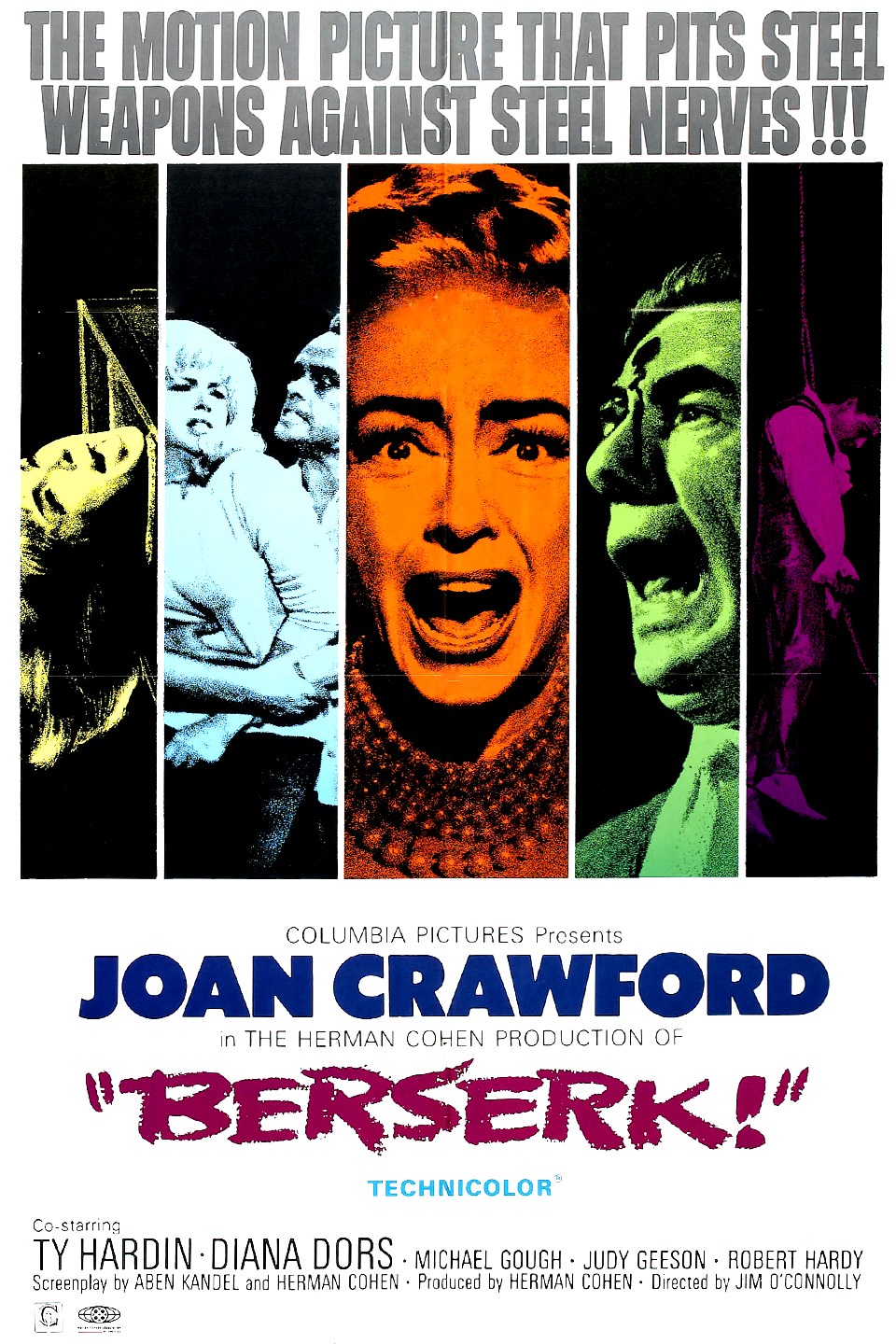
Film about a series of sensationalistic murders at a circus. Producer Herman Cohen is clearly trying to replicate the success of his Horrors of the Black Museum. Joan Crawford chews the scenery in grand style as the circus owner
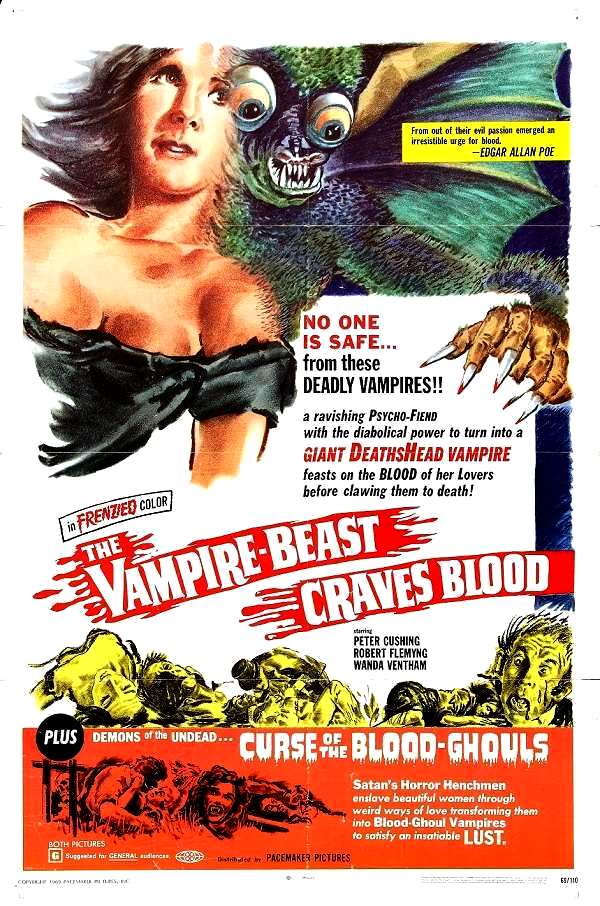
Possibly the most ridiculous film produced during the Anglo-horror cycle in which scientist Robert Flemyng turns daughter Wanda Ventham into a giant vampiric Deathshead moth
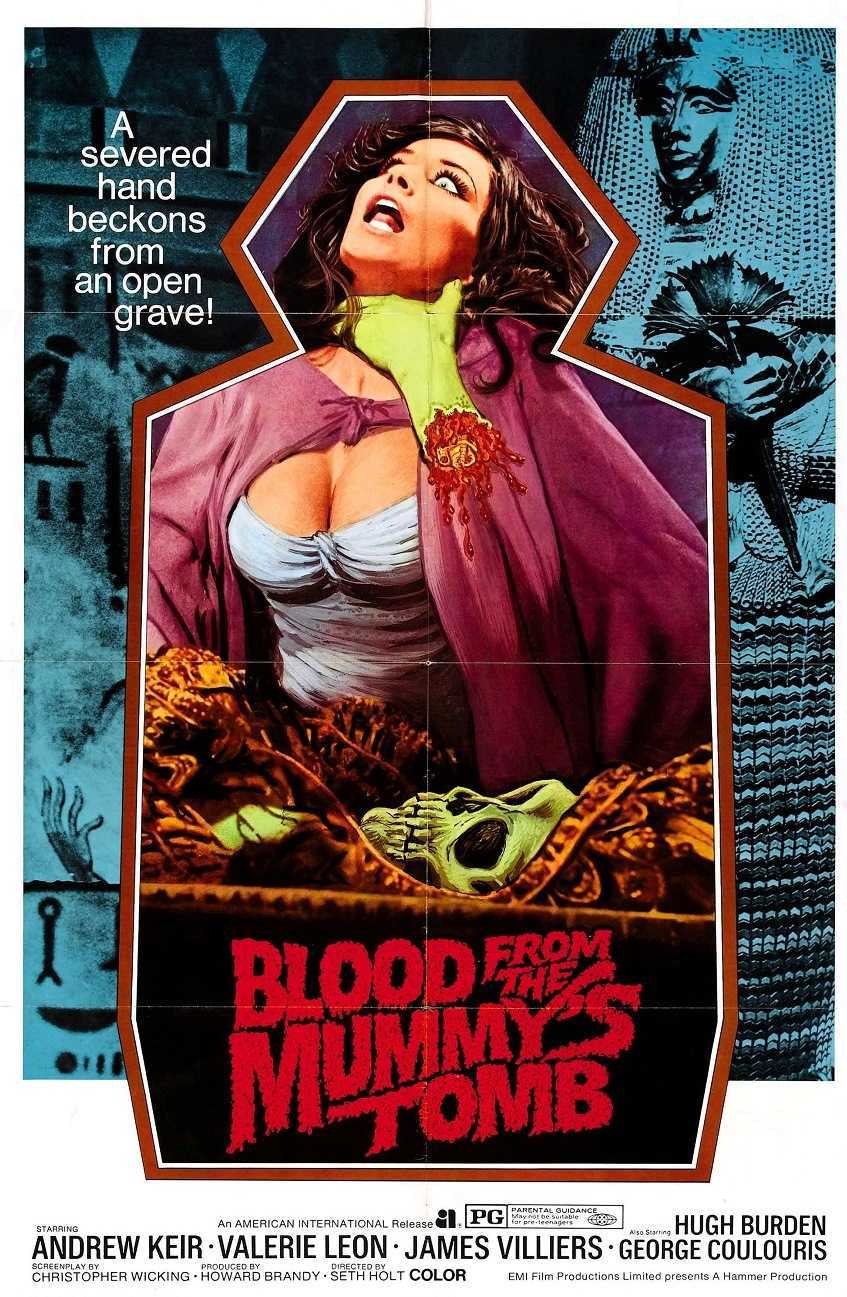
Hammer Films adapt Bram Stoker’s Jewel of the Seven Stars about a revived mummy queen. A troubled production that ended up being one of Hammer’s never-quite-rans
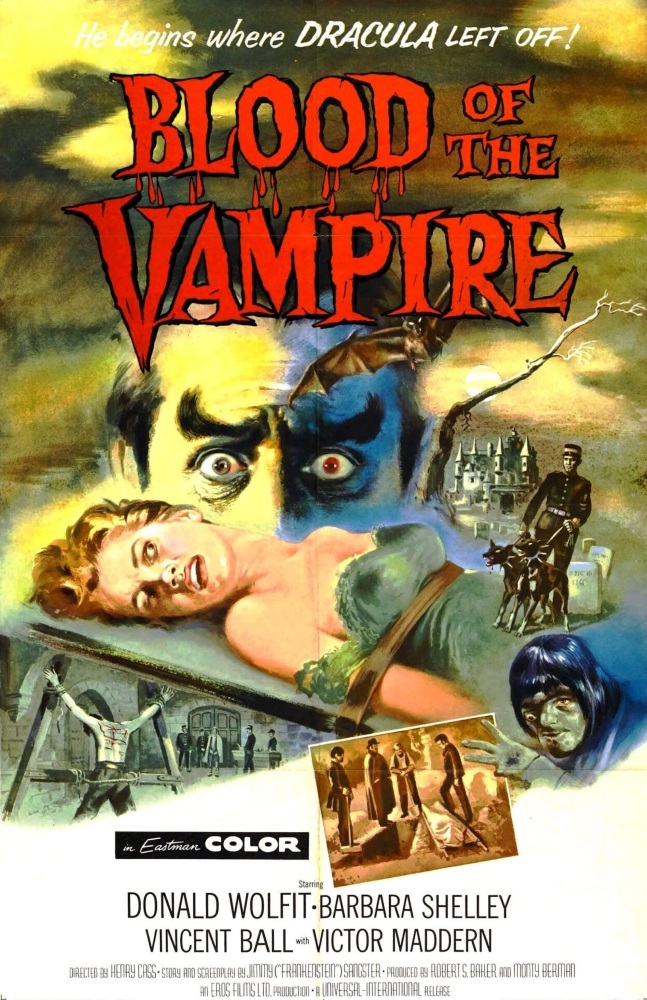
An obscure effort from the early days of the Anglo-horror cycle. A medical vampire effort and a Hammer imitator with lavish production values and memorable characters that easily sits up alongside Hammer’s better work
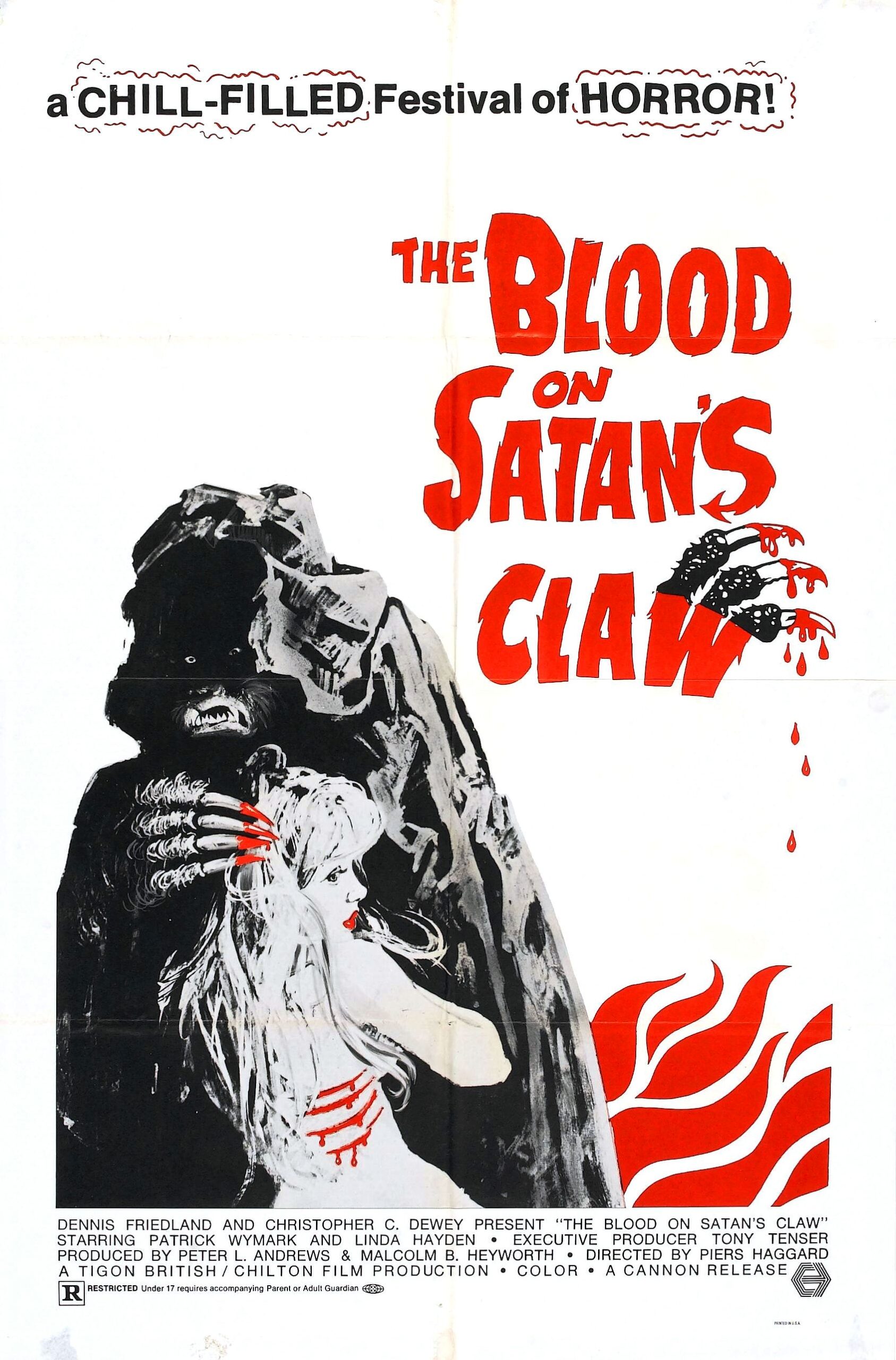
English horror film influenced by both the witch persecution themes of The Witchfinder General and the early 70s witchcraft film. Well made but that doesn’t quite disguise an unstructured screenplay
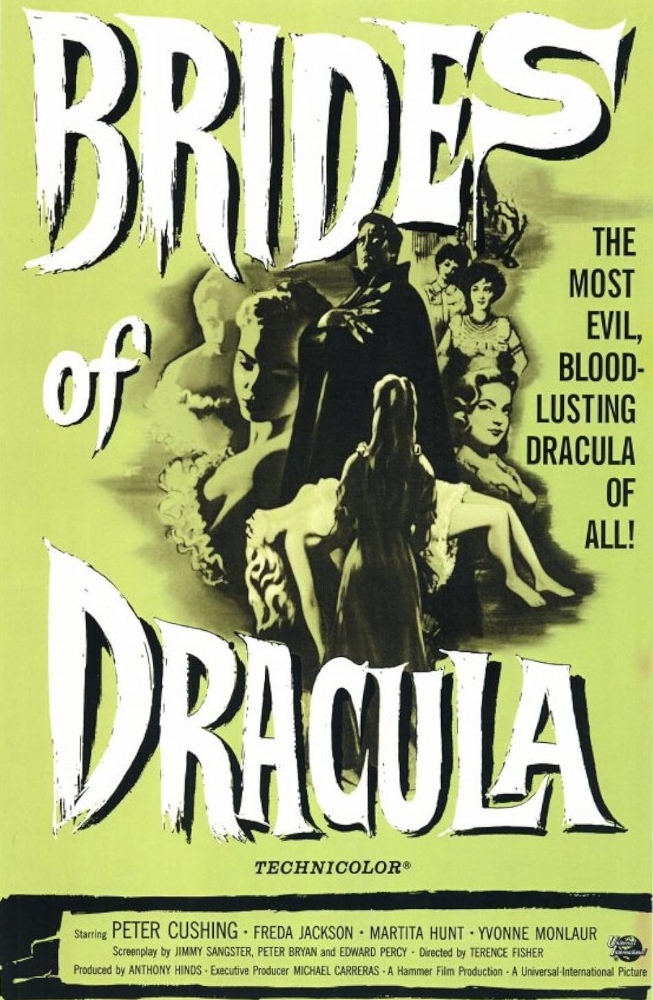
The second of Hammer’s Dracula films has to work around the absence of Christopher Lee. Peter Cushing’s Van Helsing is brought to the forefront and Terence Fisher provides some standout directorial sequences
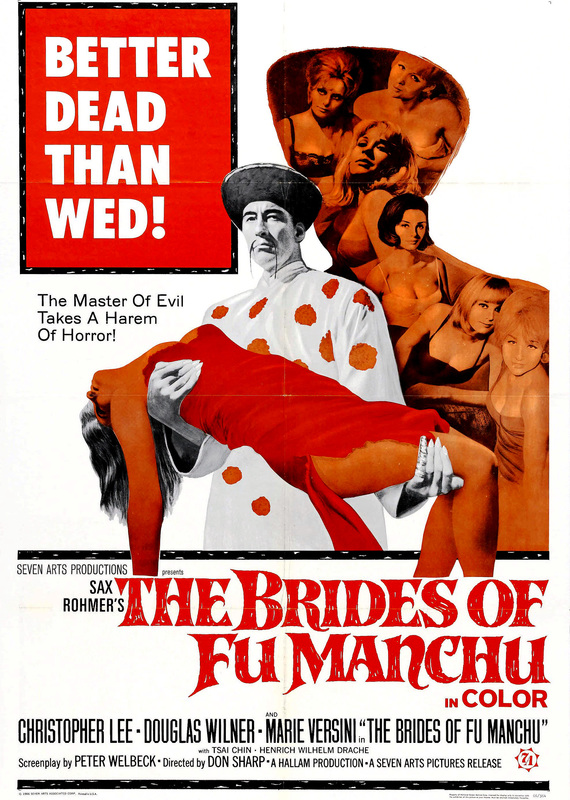
The second film with Christopher Lee as the Chinese super-villain Fu Manchu. Not quite up with its predecessor The Face of Fu Manchu but still an exciting blend of pulp melodrama, super-science and Yellow Peril
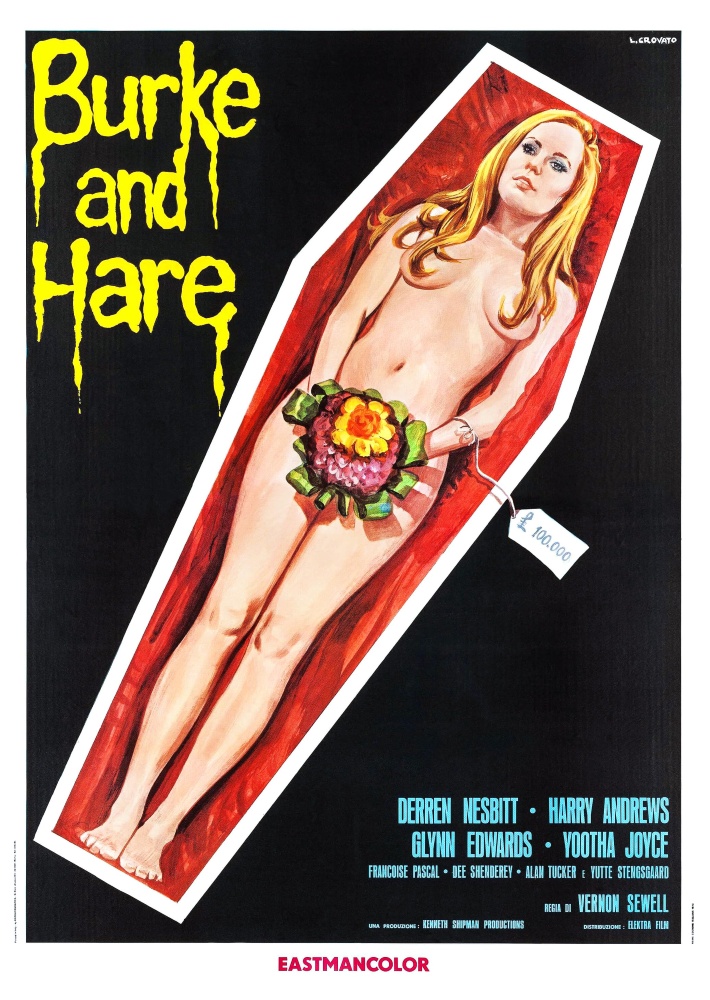
One of several film versions of the story of the 19th Century grave robbers Burke and Hare, made at the height of the Anglo-horror cycle. While reasonably accurate to the facts, the story is sidetracked by softcore happenings at a brothel

Interesting Hammer film than never quite succeeded where director Brian Clemens, creator of tv’s The Avengers, tries to blend the staple of the Hammer vampire film with a swashbuckler

Twelfth of the popular British comedy series, here the Carry On team conduct a bawdy farce on the Hammer horror film that was all the in-thing at the time
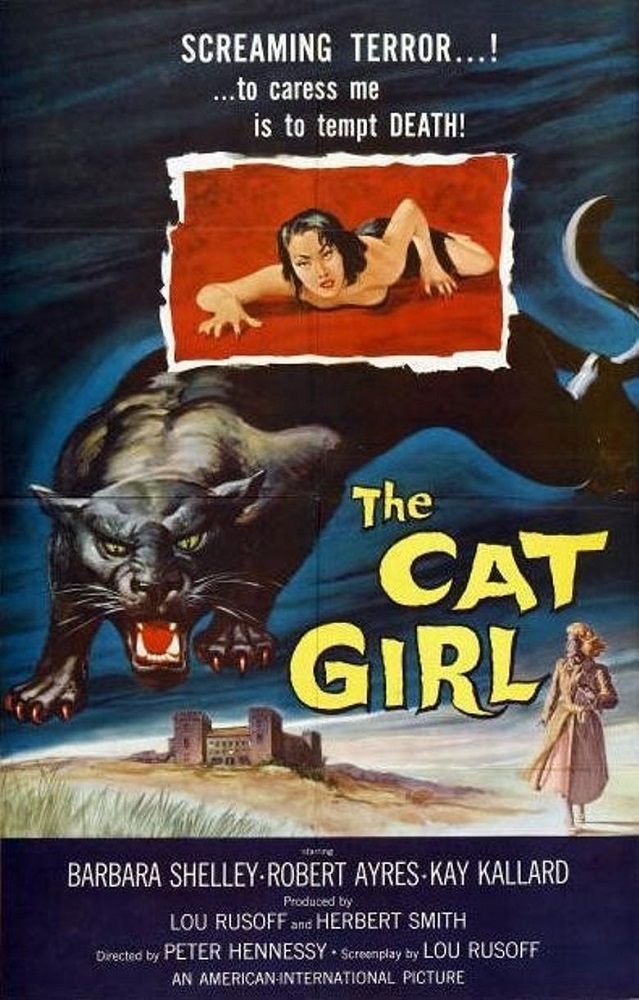
One of the better copies of Cat People, an Anglo-horror film with Barbara Shelley coming to believe that she is the inheritor of a family curse that causes her to turn into a big cat
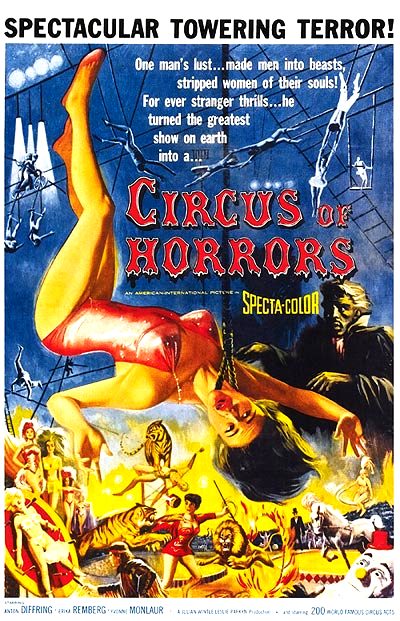
Fascinatingly sordid film from the early days of the English horror cycle in which Anton Diffring is a mad surgeon obsessed with facial disfiguration hiding as a circus master and arranging a series of circus-themed deaths for his failed experiments
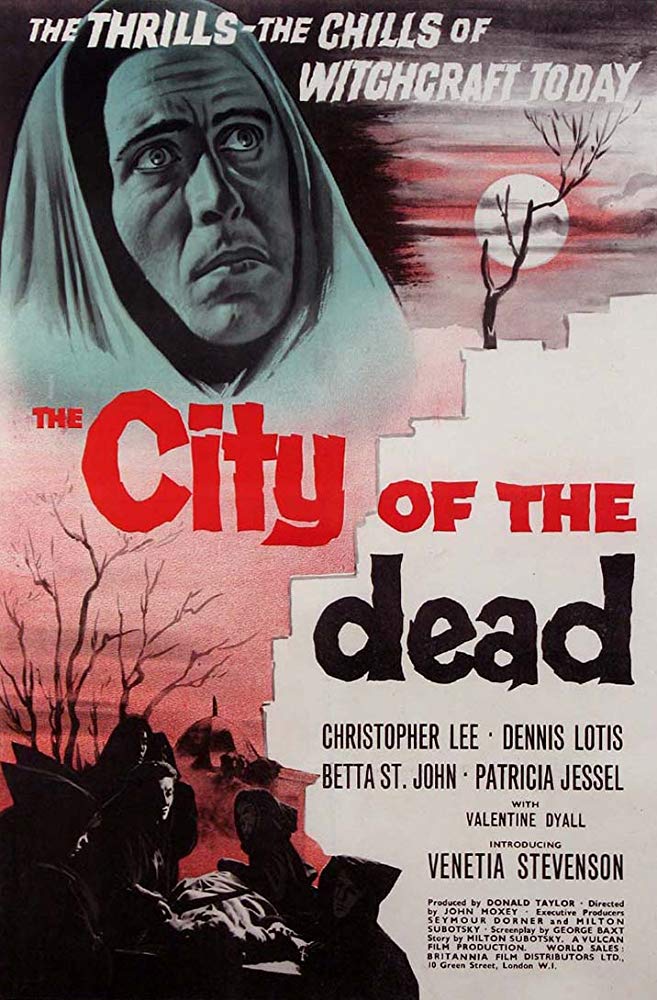
An effort from the early days of the Anglo-horror cycle about a town ruled by a reincarnated witch. This comes drenched in a good deal of heavy black-and-white atmosphere
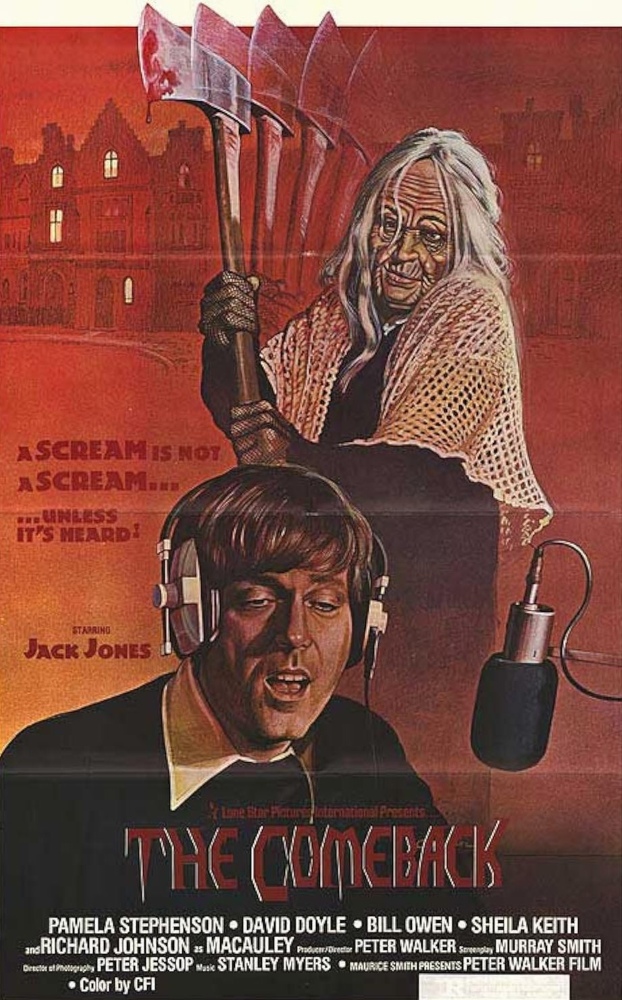
One of the films from Pete Walker, a greatly underrated director working in the British horror film in 1970s, in which pop star Jack Jones retreats to a country house only to be stalked by a psycho
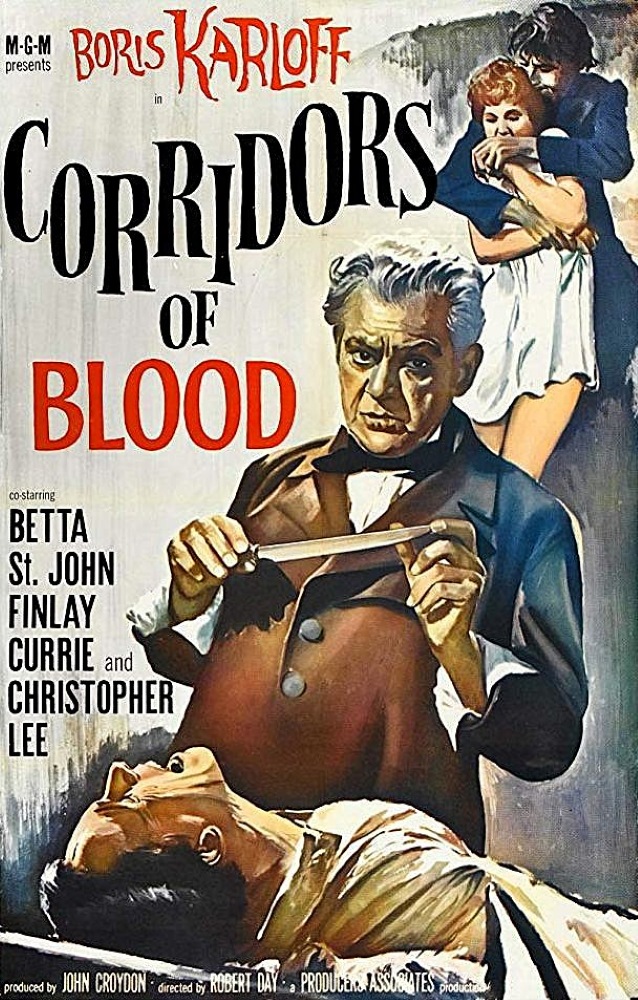
Early Anglo-horror film that seems to be trying to push a story about a 19th century doctor (Boris Karloff)’s discovery of anaesthetic gas out of shape and make it into a horror story.
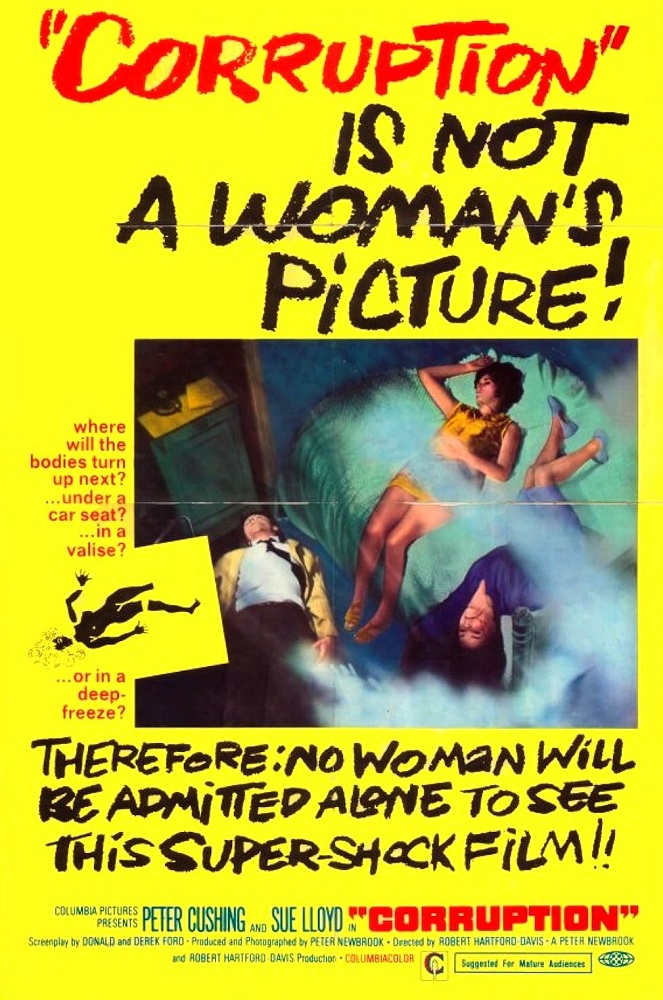
Peter Cushing plays a surgeon who devises an advanced technique to restore his wife’s burn-disfigured face – only to find he must kill to maintain it. An Anglo-horror effort that borrows the basics of Eyes Without a Face/Les Yeux Sans Visage
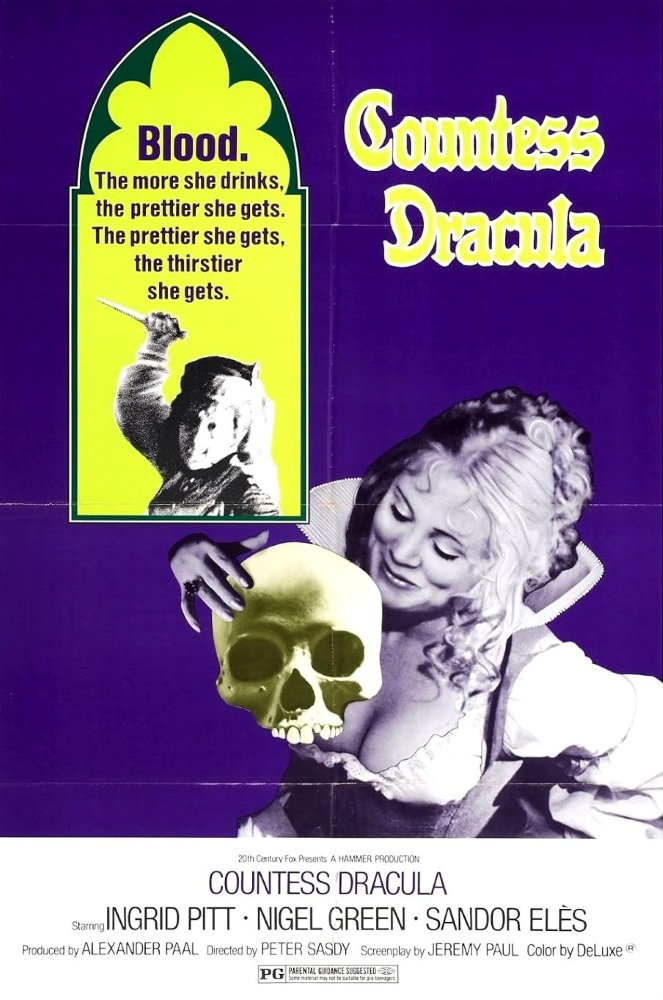
Not another of Hammer’s Dracula films despite the title. This still builds on the brand name but is instead their loose adaptation of the story of the infamous blood-bathing Elizabeth Bathory.
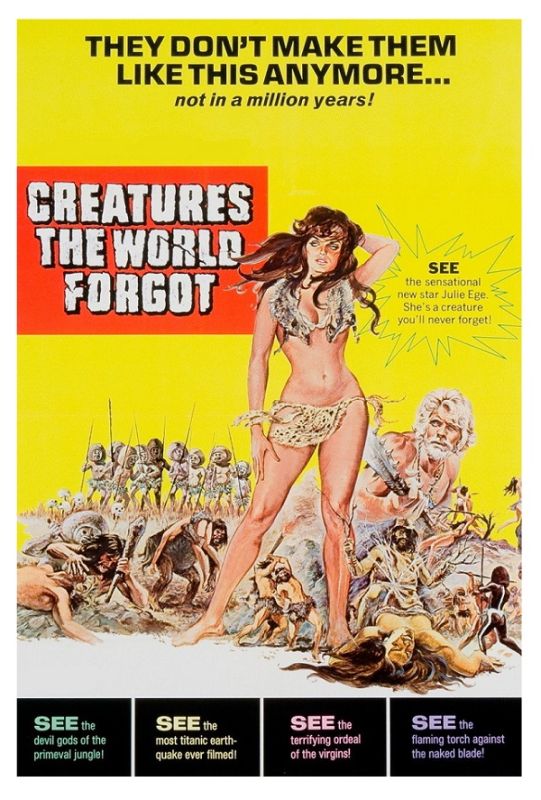
The fourth and final of Hammer Films’ cycle of prehistoric adventure films, this far less interestingly throws out stop-motion animated dinosaurs and opts for relative anthropological realism
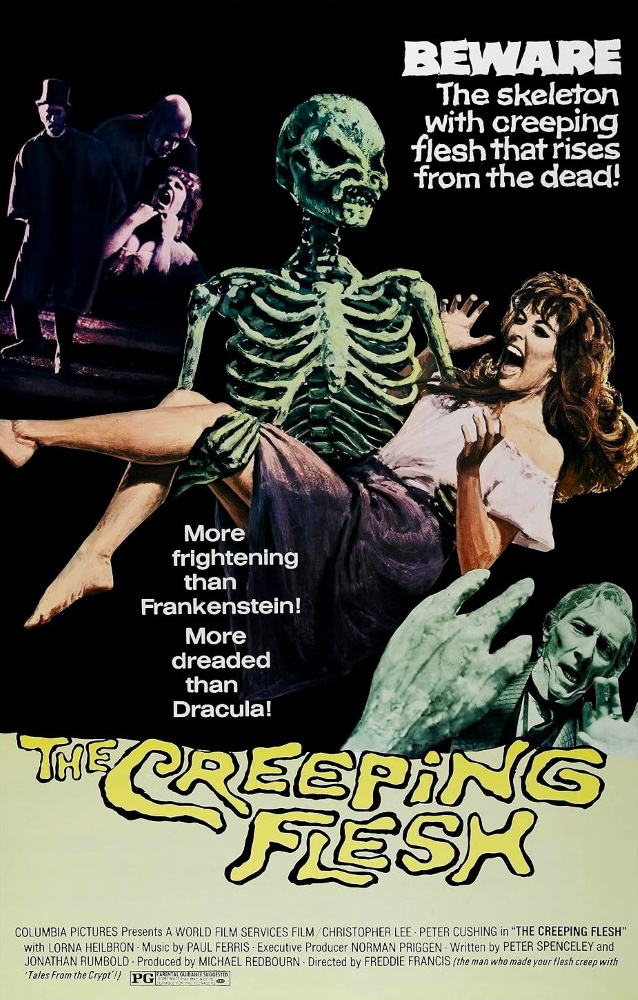
An interesting never-quite-ran from the heyday of Anglo-horror cycle with Peter Cushing and Christopher Lee as Victorian anthropologists dealing with a prehistoric skeleton that is an embodiment of evil

One of Hammer Films’ psycho-thrillers. Unlike the others, this is in colour where it loses much of the edgy tension the others had from shooting in b/w. The plot is slow to kick in but does produce some worthwhile twists
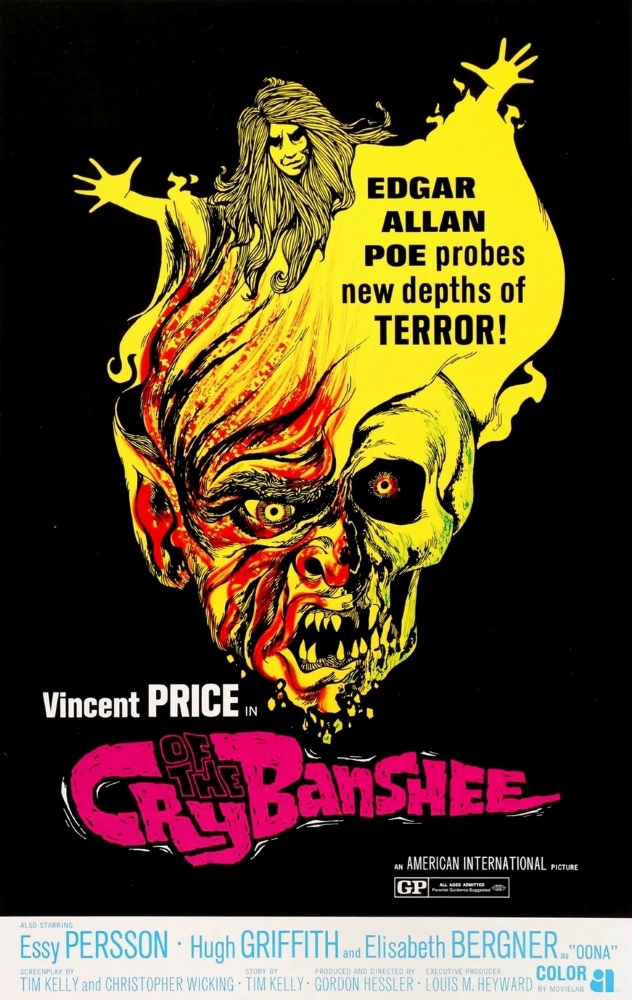
Dreary film in which Vincent Price is a magistrate who is haunted by a manifestation of The Devil for his witch persecutions. The publicity falsely tried to sell this as an Edgar Allan Poe adaptation.

This and The Horror of Dracula the following year set Hammer Films on the map. A remake of Frankenstein very different to the 1931 version that comes in vibrant colour and places Peter Cushing’s ruthlessly amoral Baron at the centre of the show
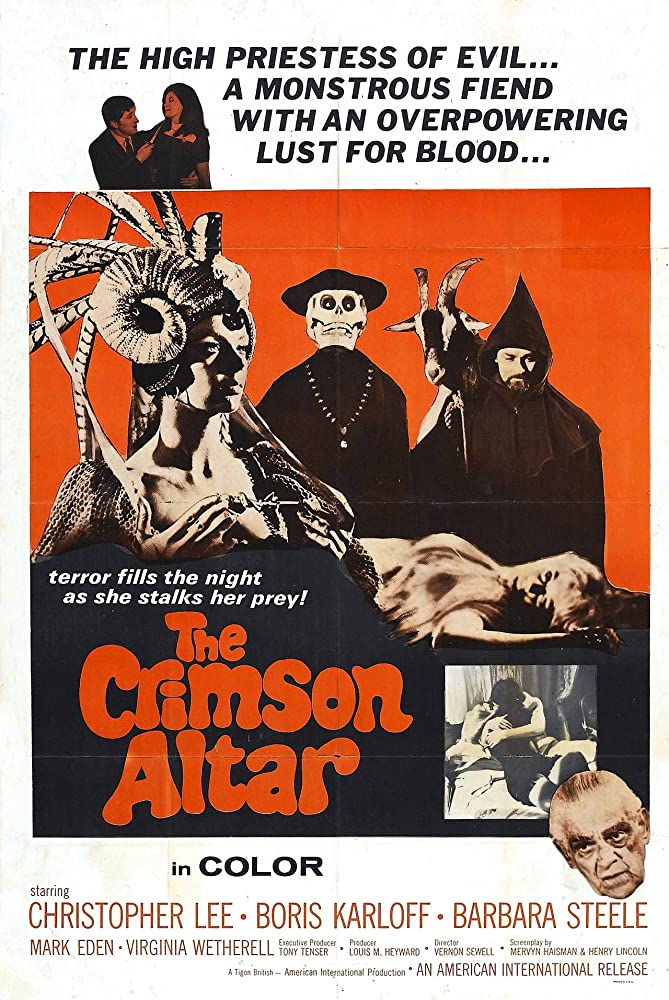
Dreary British occult film that wastes a great cast line-up, including Christopher Lee, Barbara Steele and an 82 year-old Boris Karloff in his last performance

The second mummy film from Hammer Films, this is a rather dull variant on the genre. Their usual flair and production values emerge here under a director who makes this turn out plodding
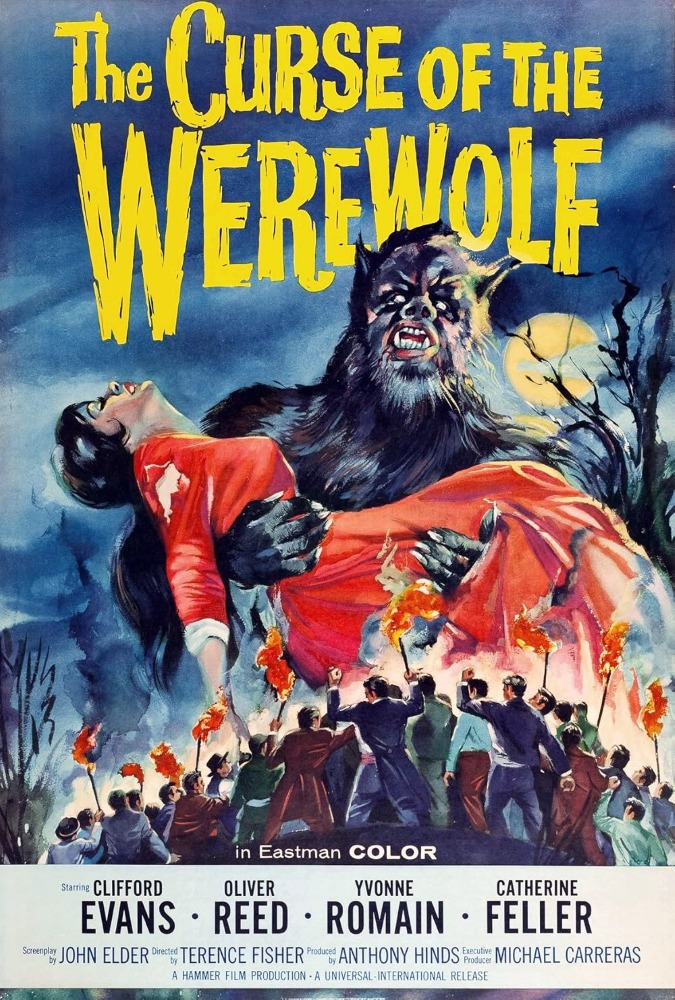
Hammer Films offer their take on the werewolf film starring a young, unknown Oliver Reed. Director Terence Fisher creates a lush film rich in symbolism, made with the full weight of Hammer’s production values
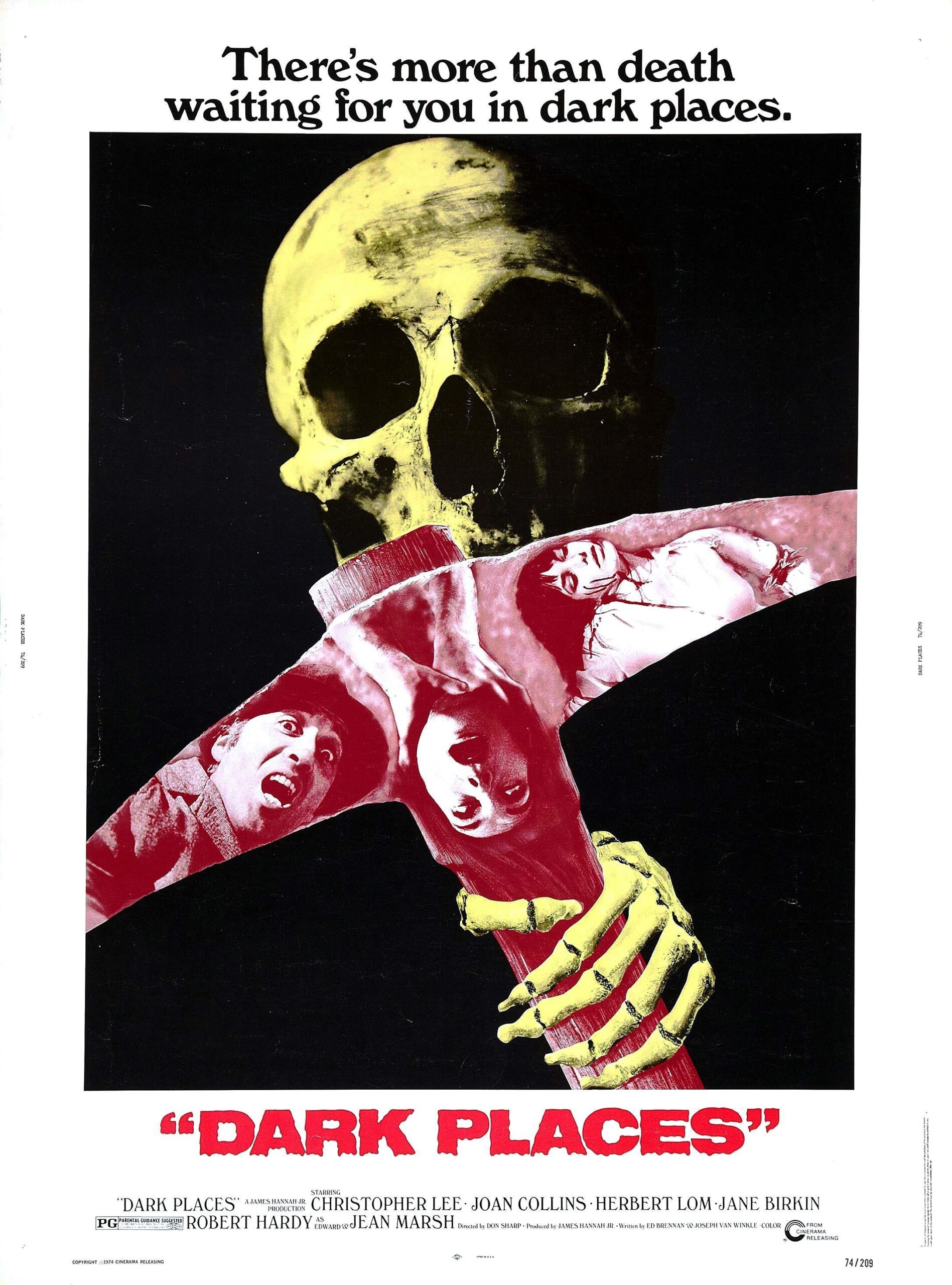
A forgotten item from the Anglo-horror cycle in which brother and sister Christopher Lee and Joan Collins conspire to fake a series of hauntings in order to obtain an inheritance hidden in a mansion
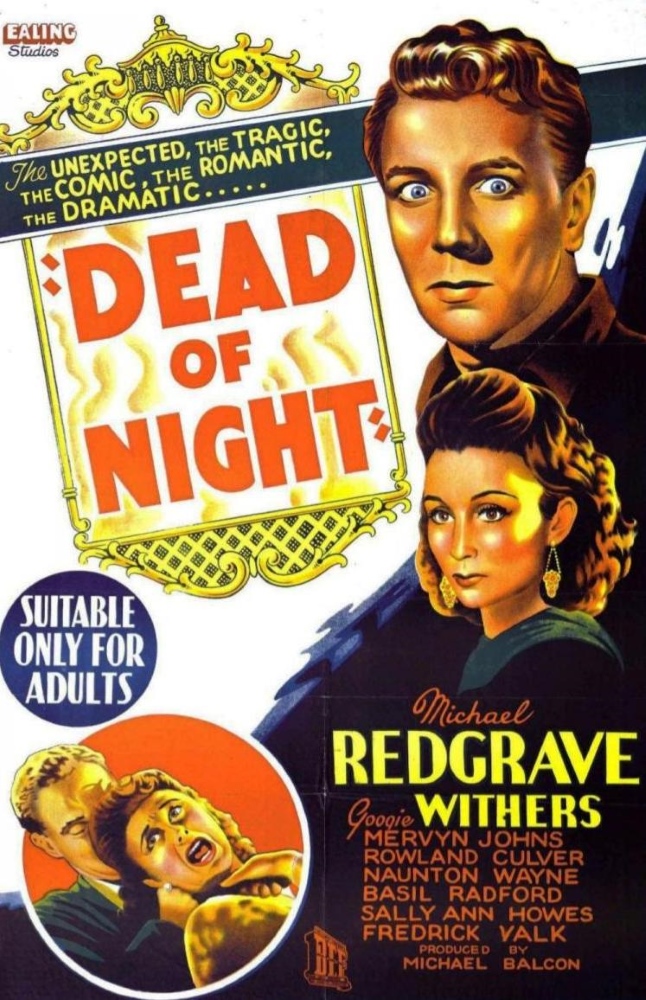
Celebrated British horror anthology, which tells five ghost stories and tales of the supernatural. All are strong stories with The Ventriloquist’s Dummy segment in particular having become regarded as a classic
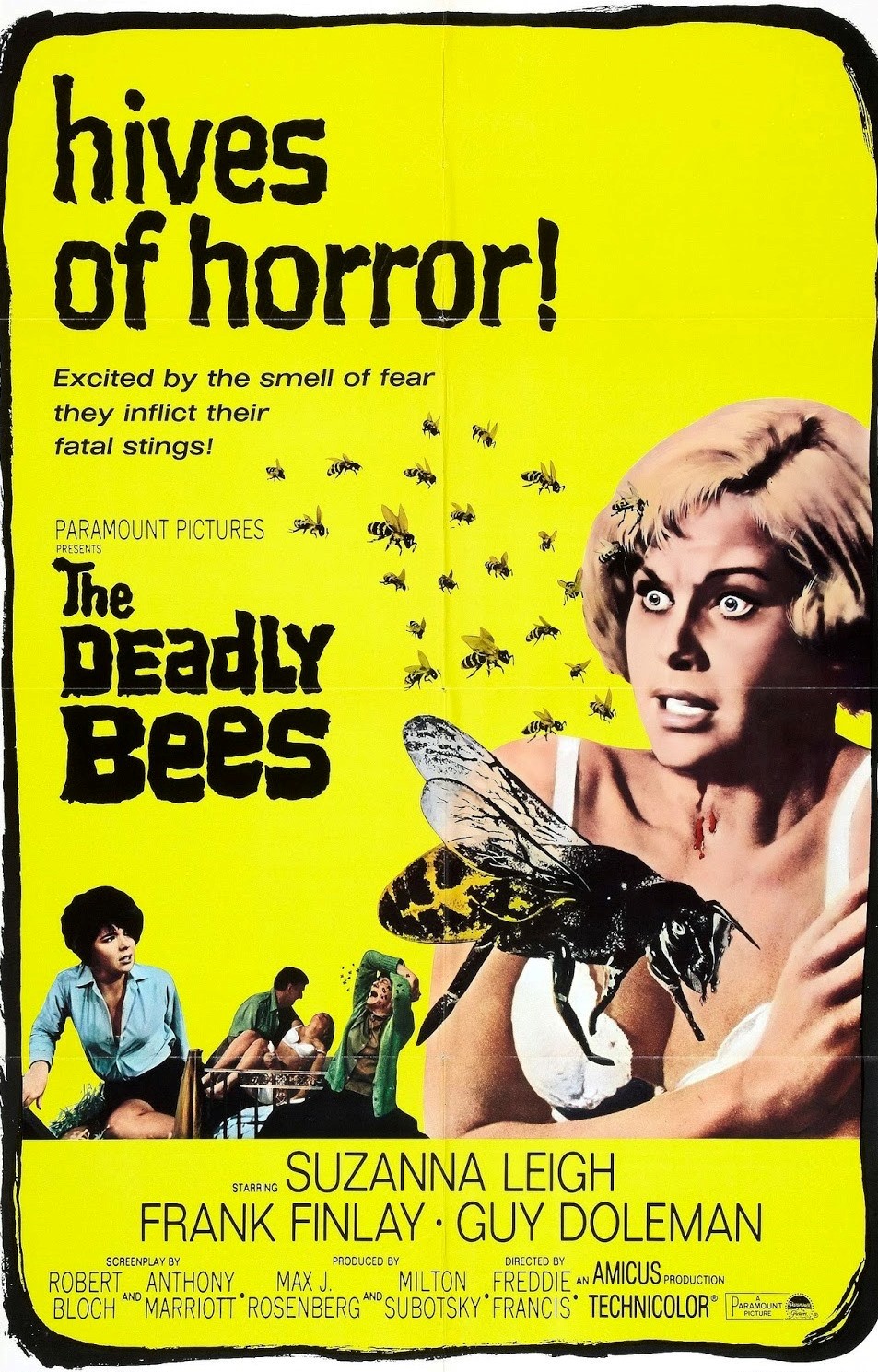
An Amicus film directed by Freddie Francis and with a script by Robert Bloch that proves the dictum that there is no such thing as a good killer bee movie
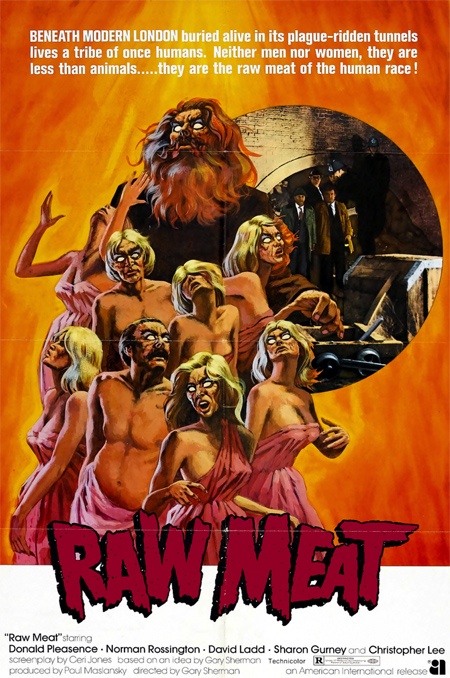
Film about cannibalistic survivors of a cave-in who lurk in the tunnels beneath the London Underground, this has gained a reasonable cult following over the years
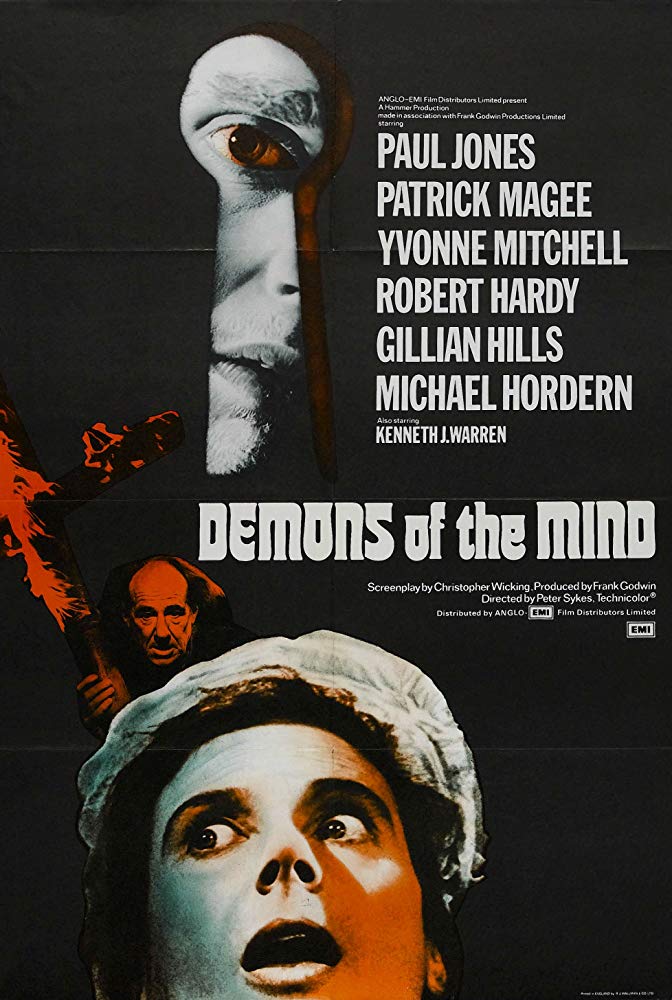
This is one of the rare failures from Hammer Films, a not uninteresting work set during the early era of 19th Century psychology and directed with some vivid effect
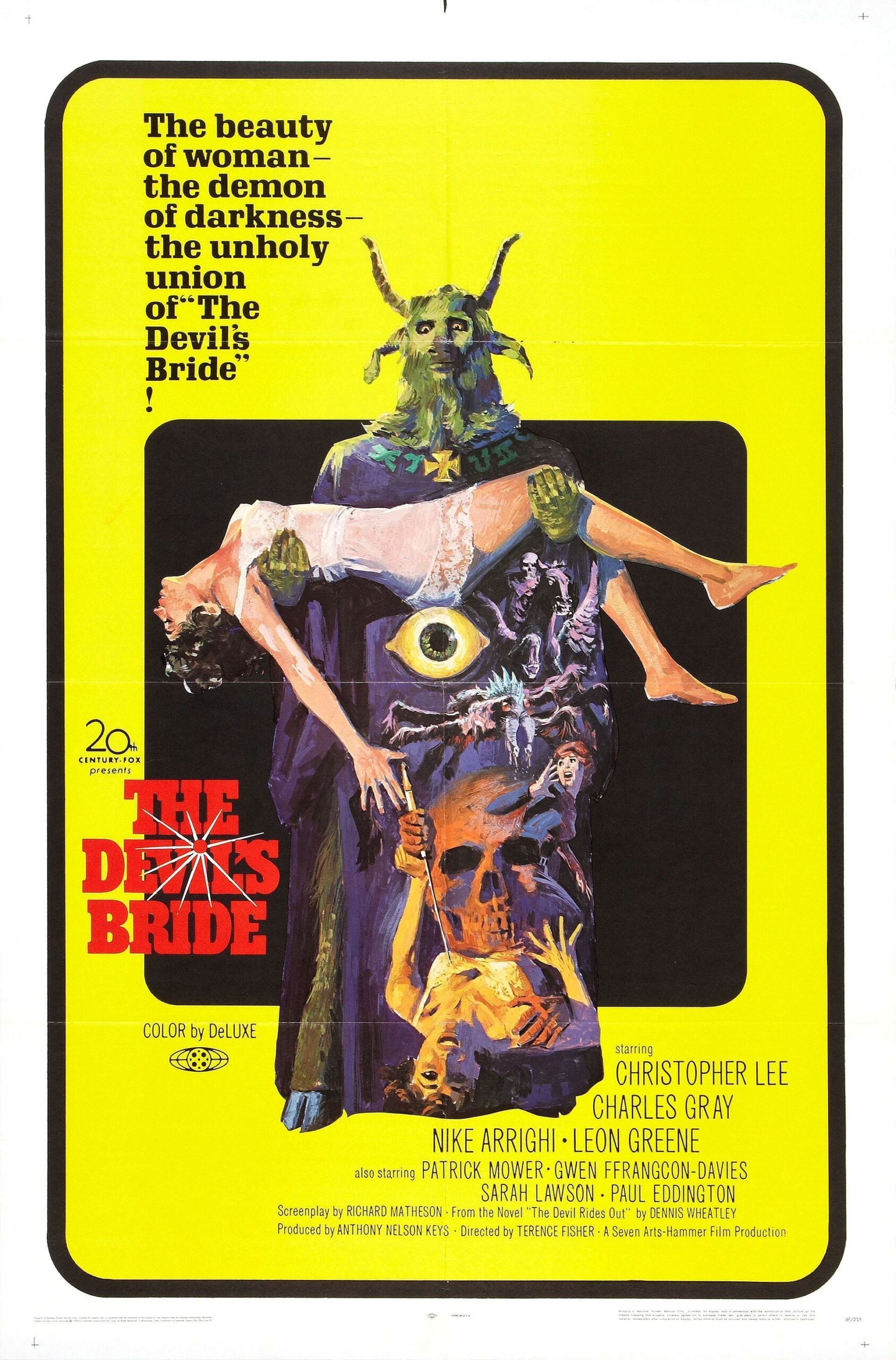
One of the classic works from Hammer Films and Terence Fisher, often regarded as one of their finest moments. In this adaptation of a Dennis Wheatley novel, Christopher Lee (in a rare heroic role) fights Satanists
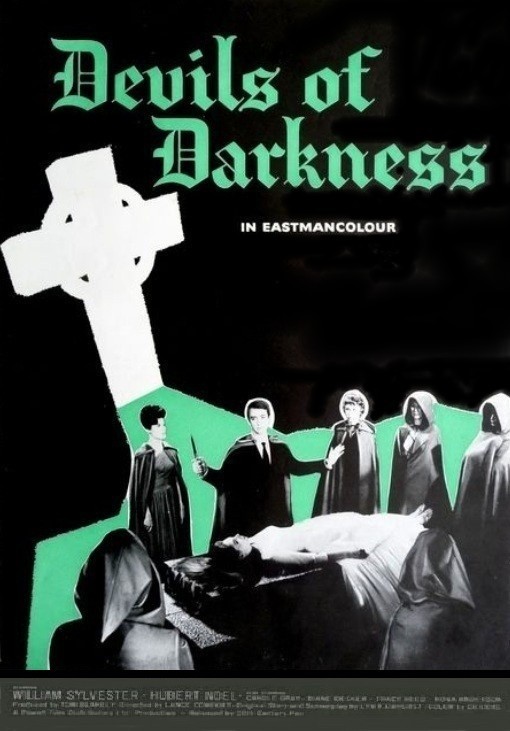
British-made vampire film that very much trying to copy the style of Hammer Films. This has colour and moments of undeniable style that stand out but lacks it in other crucial areas.

Pete Walker was one of the most underrated directors of the 1970s Anglo-horror wave. This was his first film. Compared to Walker’s later works, this is more a psycho-thriller that sits on the borderline of being horror

Anglo-horror director Freddie Francis returned to make this period adaptation of an old Dylan Thomas script about the body snatchers Burke and Hare. A literate script boosted by a fine cast
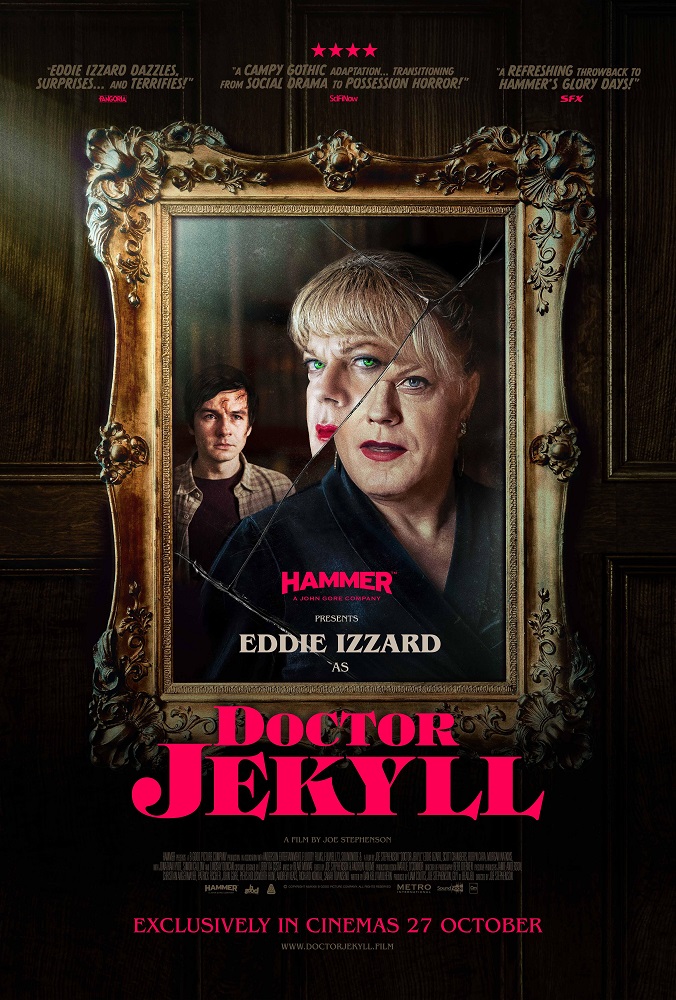
The revived Hammer Films takes on adapting Dr Jekyll and Mr Hyde with Eddie Izzard playing the role as a trans woman. This offers some amusing modernisations of the familiar, oft-filmed story
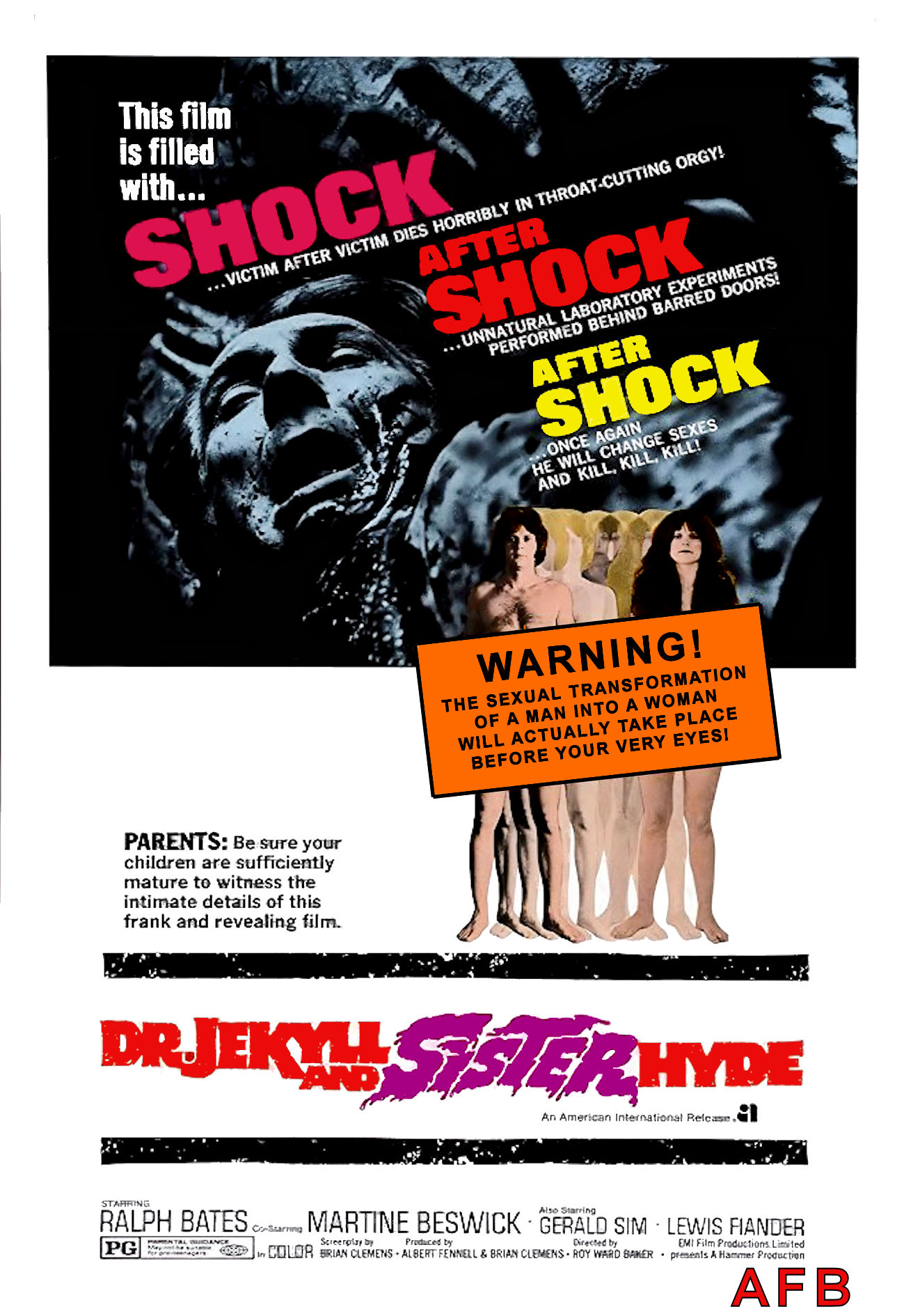
Rather enjoyable latter day Hammer Film, which plays its title pun surprisingly seriously. Ralph Bates and Martine Beswick are perfectly matched as the gender-changing Dr Jekyll
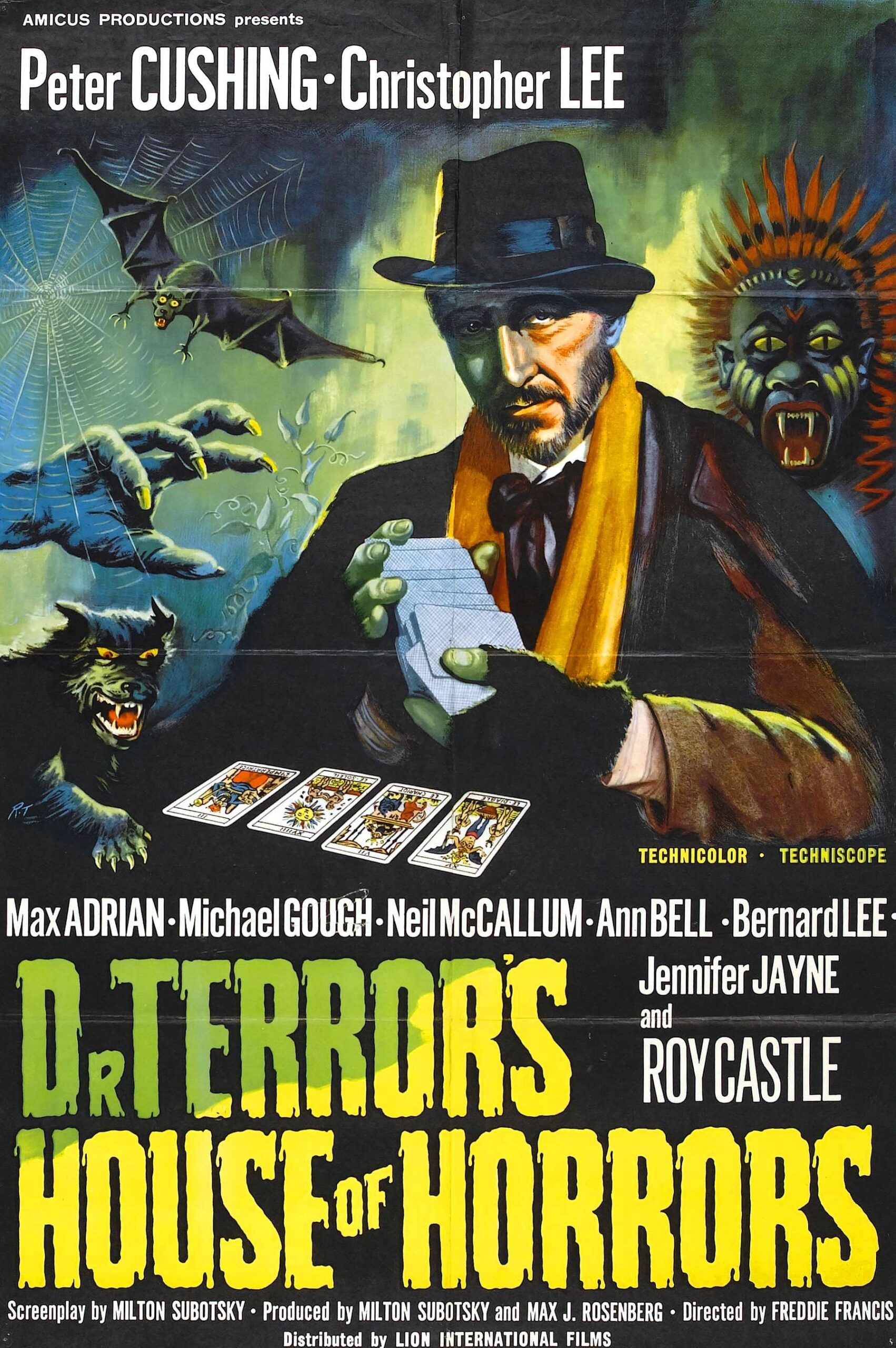
The first of Amicus’s horror anthologies. The stories are rehashes of five popular horror tropes, all united by Peter Cushing as the title doctor telling the fortunes of five passengers on a train carriage
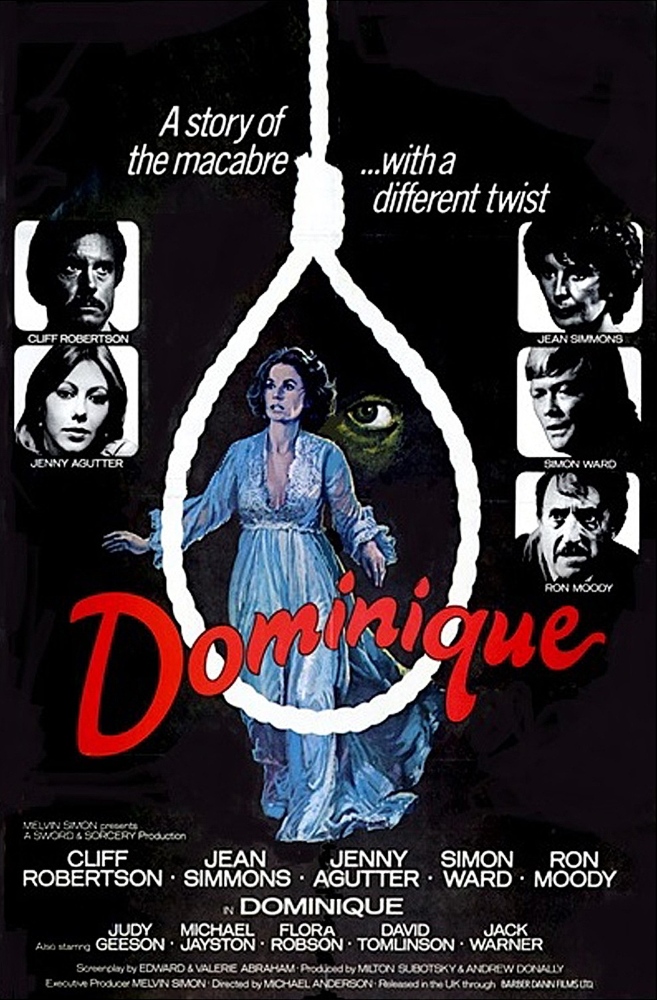
A creaky old-fashioned psycho-thriller – one that draws heavily on Les Diaboliques and a contrived plot to drive somebody crazy – that came out the same year as Halloween and feels a whole world apart

The point where the legend of Hammer Films and the careers of Christopher Lee and Peter Cushing began. A vivid colour remake of the Bram Stoker book that put a stake through the heart of the staid Universal horrors and created a new English horror industry
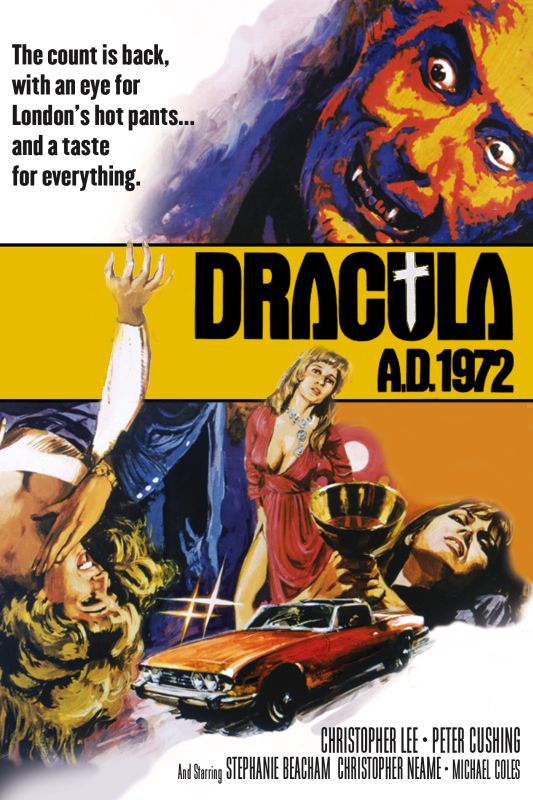
For their seventh Dracula films, Hammer introduced Dracula to the present-day. The result was a wild mishmash where Christopher Lee plays second fiddle to Hammer’s belated attempts to jump aboard the Swinging 60s youth scene
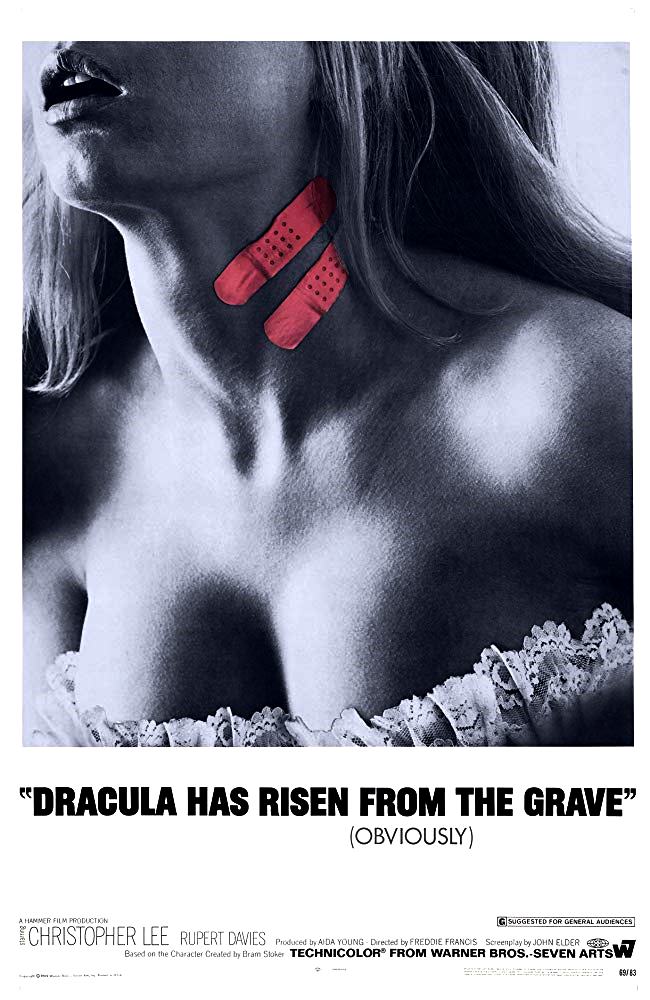
The fourth of Hammer’s Dracula films. There is a certain amount of silliness to the plot but new director Freddie Francis is on fine form. Christopher Lee is not given much to do

The third of Hammer’s Dracula films. Christopher Lee returns to the role but is given no dialogue. Nevertheless, Terence Fisher delivers some vivid directorial set-pieces that make this one of the better sequels in the series
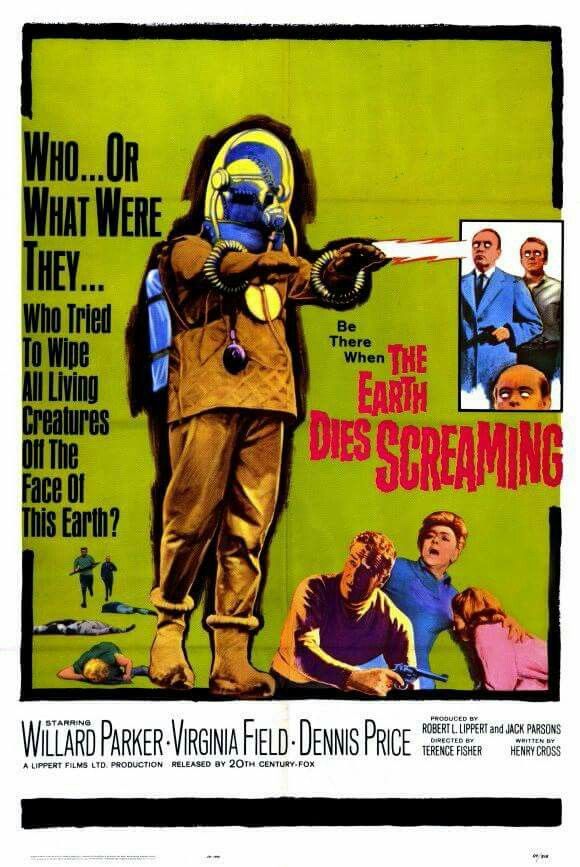
Terence Fisher was a cornerstone figures at Hammer Films. Less well-regarded is his 1960s trilogy of science-fiction films. This is an alien invasion film that is a model of economy, told with a stark effective tension
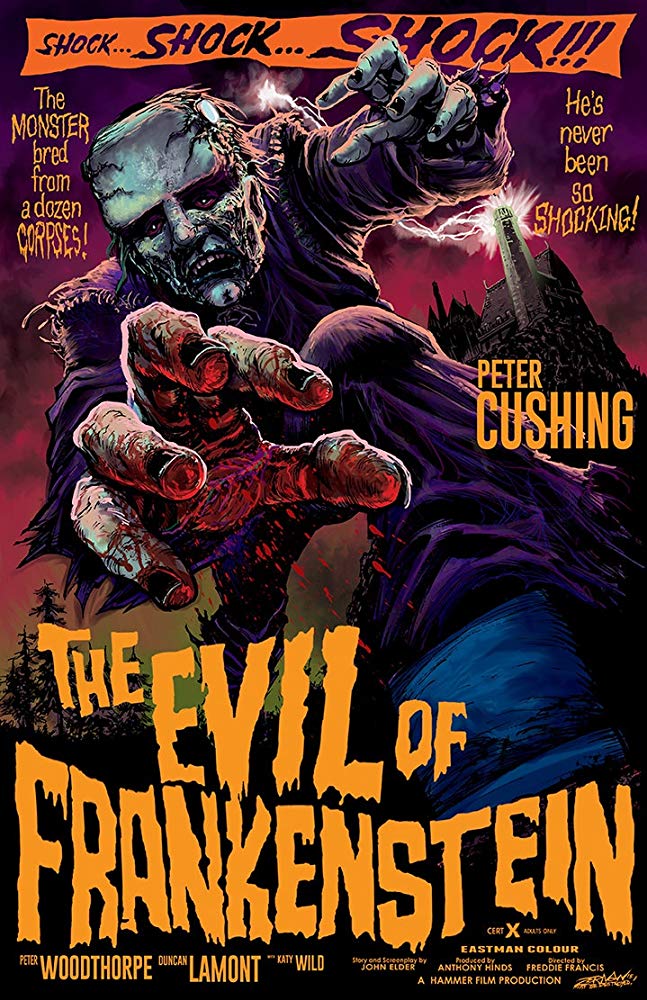
This was the third of Hammer’s Frankenstein films. A usually overlooked entry in the series, this is made into something vivid and quite memorable by Freddie Francis’s direction
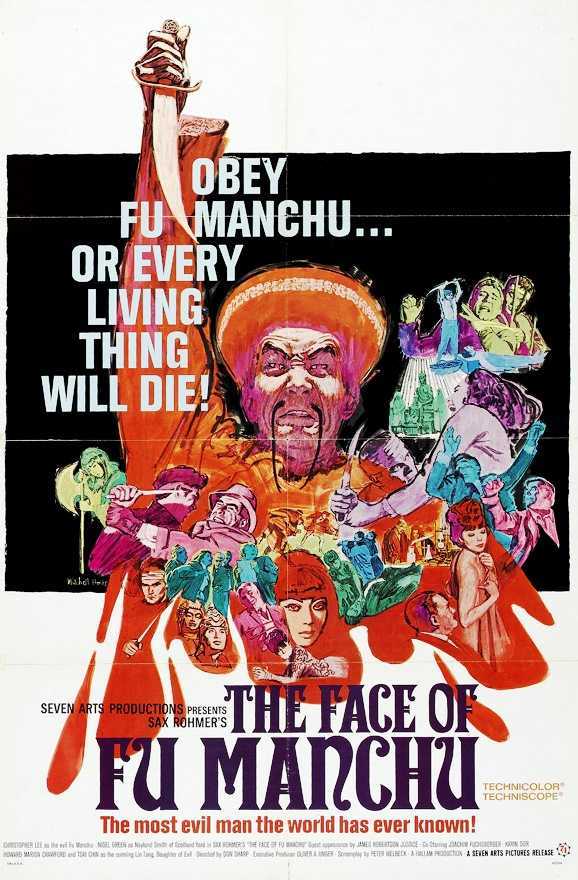
The first and best of the series of films featuring Christopher Lee at his ice cold best as the Chinese super-villain Fu Manchu. This was made at the height of the Anglo-horror cycle and employs the production values to superlative regard.
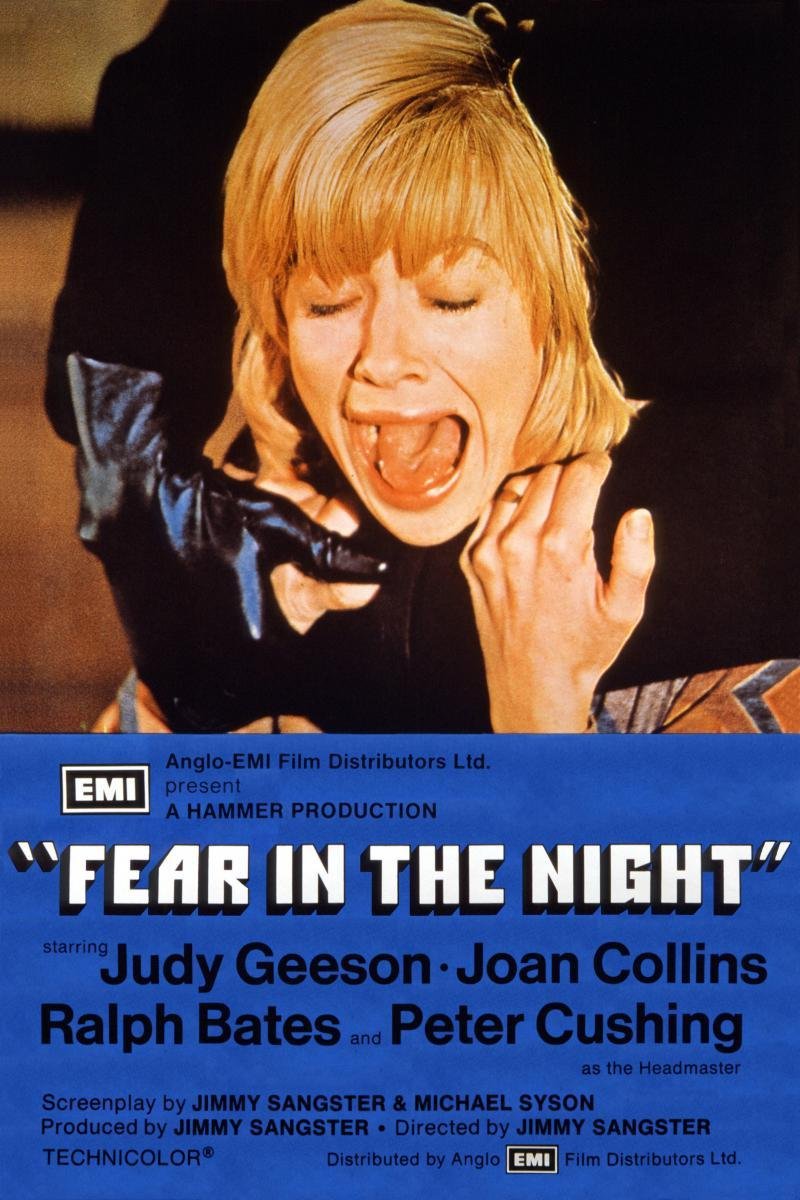
One of the better psycho-thrillers made by Hammer Films where a deft script is aided by good performances including Peter Cushing and a wonderfully bitchy Joan Collins
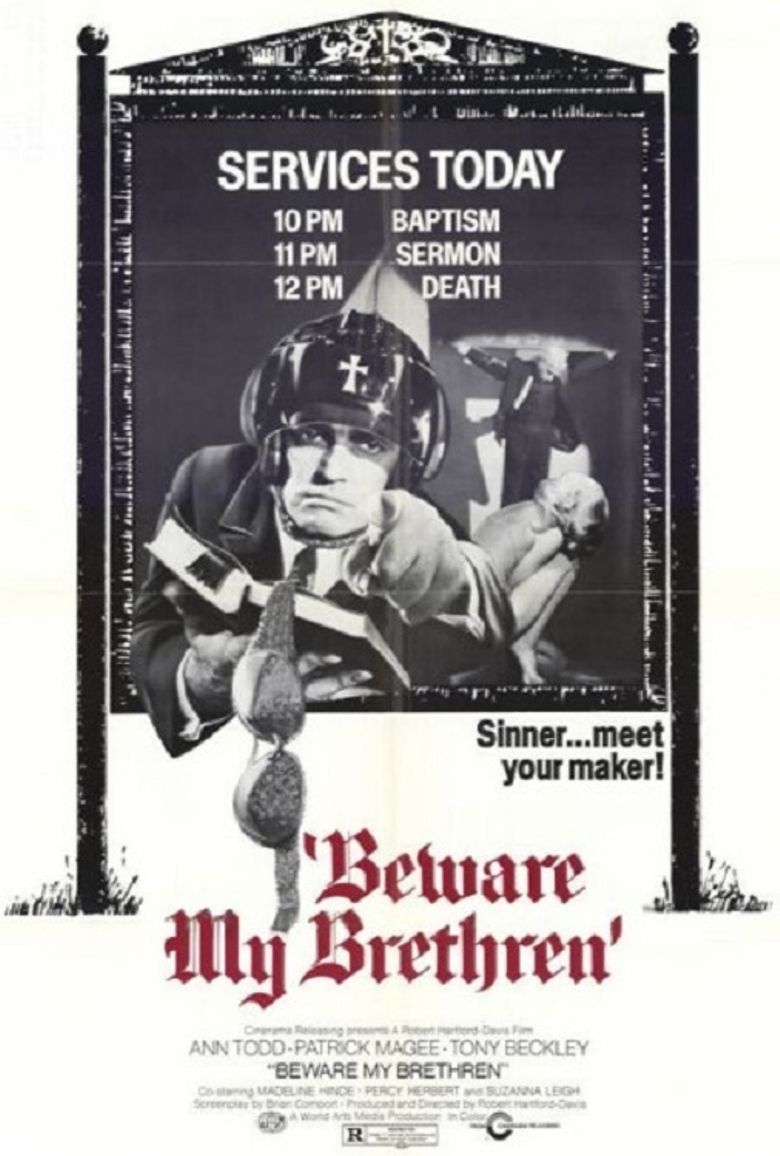
British-made film with Tony Beckley as a sexually repressed psycho raised in a religious cult who goes out and kills women. The film seems more interested in the sexploitation elements than it does in the psycho elements
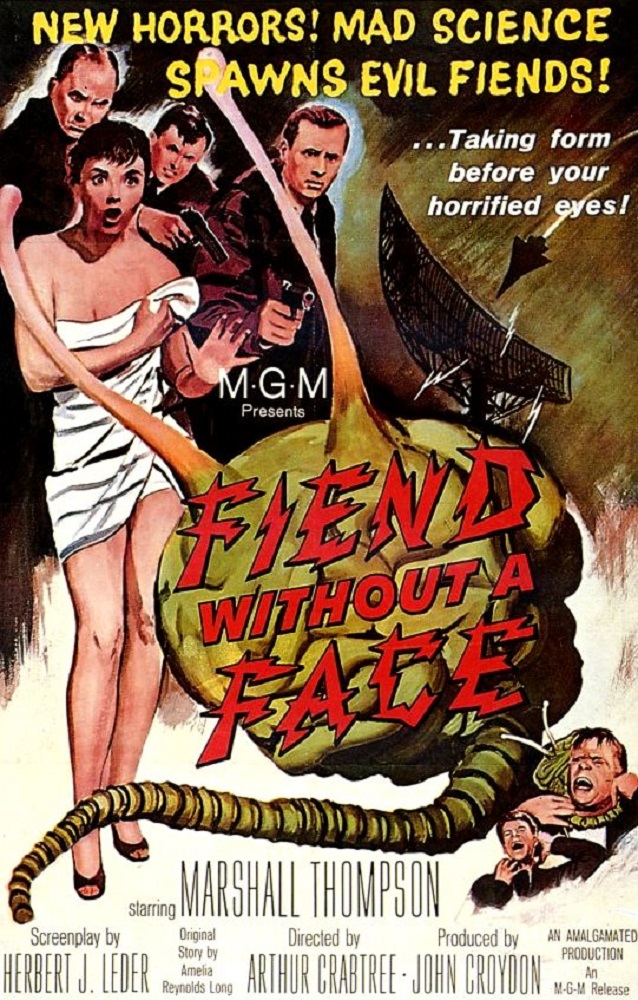
Classic SF film where Marshall Thompson faces an invasion of hopping brains – pure thought monsters that have been unleashed by an atomic scientist dabbling in telekinesis

One of the earlier films from British director Pete Walker, a whodunnit with a psycho stalking the cast of a theatrical rehearsal. Walker doesn’t stint on the flesh but proves tamer than usual when it comes to the blood
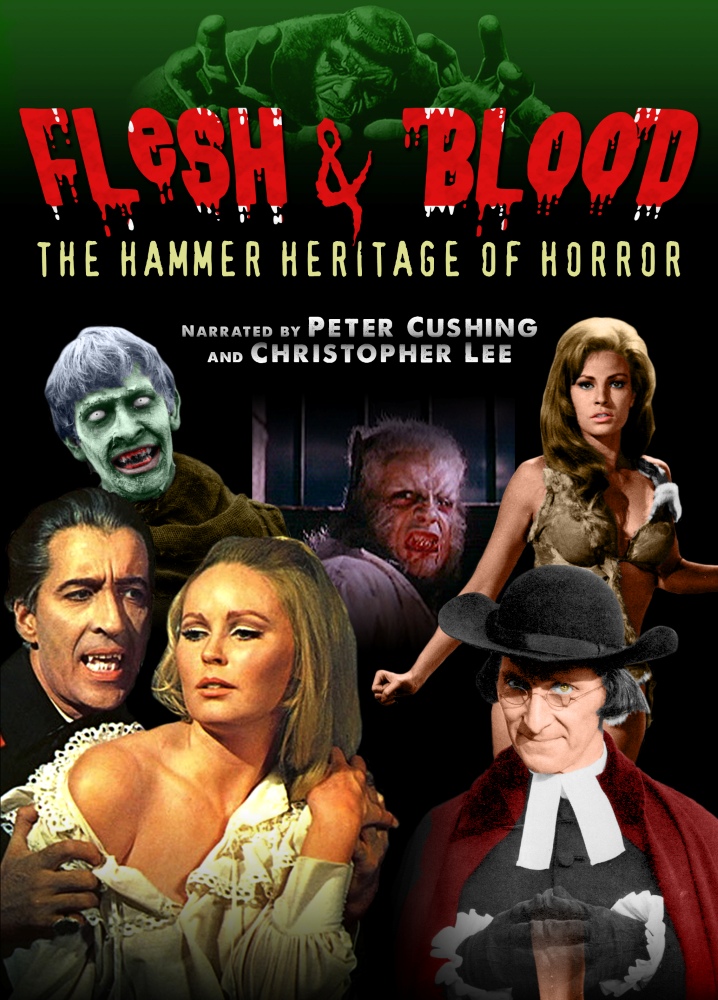
The most exhaustive of the various documentaries about Hammer Films. This covers the history of the studio and crucially was made when most of the principals from Hammer’s heyday were still alive and able to be interviewed
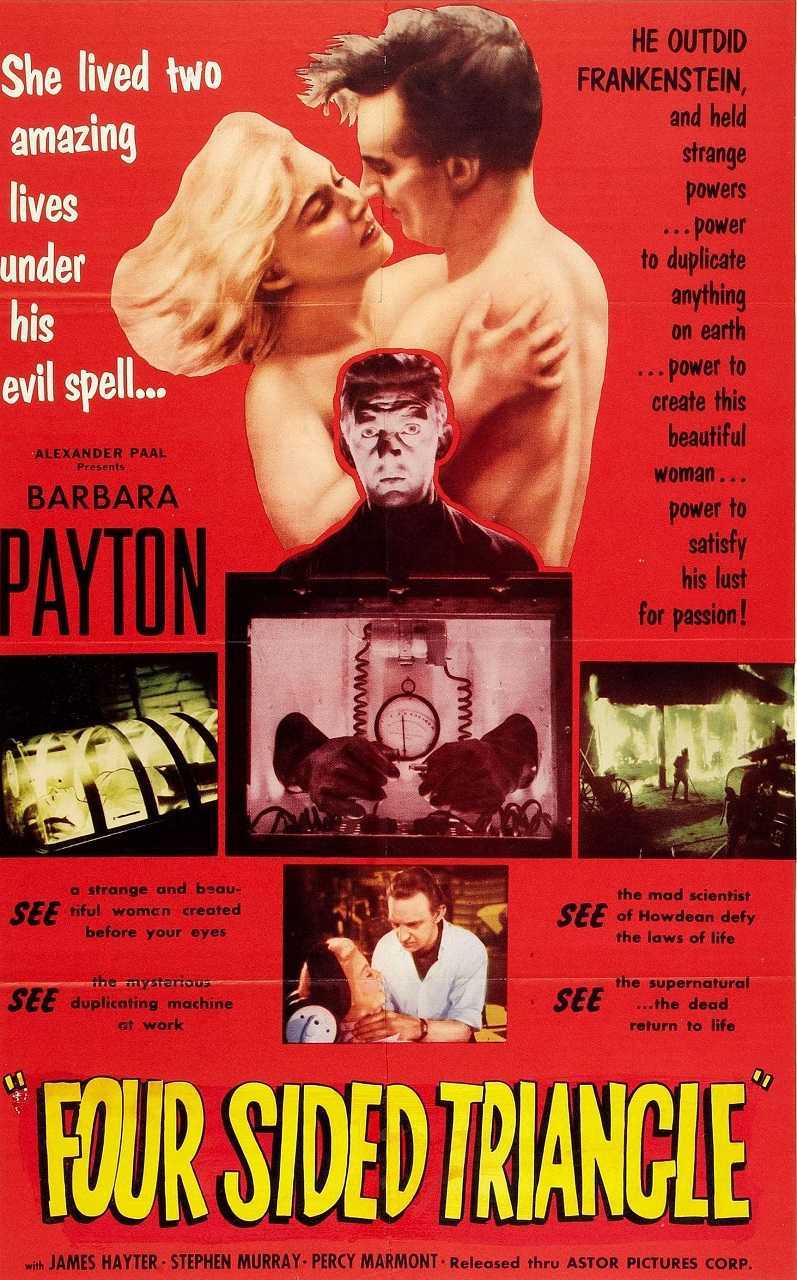
An early effort from Hammer Films and director Terence Fisher. Rather than the florid Gothic that Hammer and Fisher would discover four years later, this is a film with one foot in the mad science genre of the 1940s about the invention of a matter duplication machine
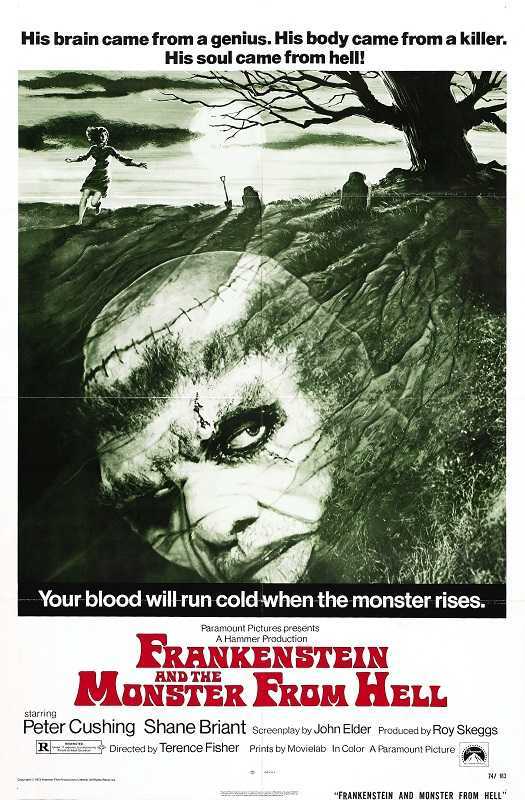
Hammer’s seventh and final Frankenstein film and the last great film that the studio would make. Everyone is back on top form – Peter Cushing at his icily arrogant best and director Terence Fisher delivering a stirring show

The fourth of Hammer’s Frankenstein films and the most conceptually wild with Frankenstein conducting soul transplants, including transferring his assistant’s soul into a woman’s body
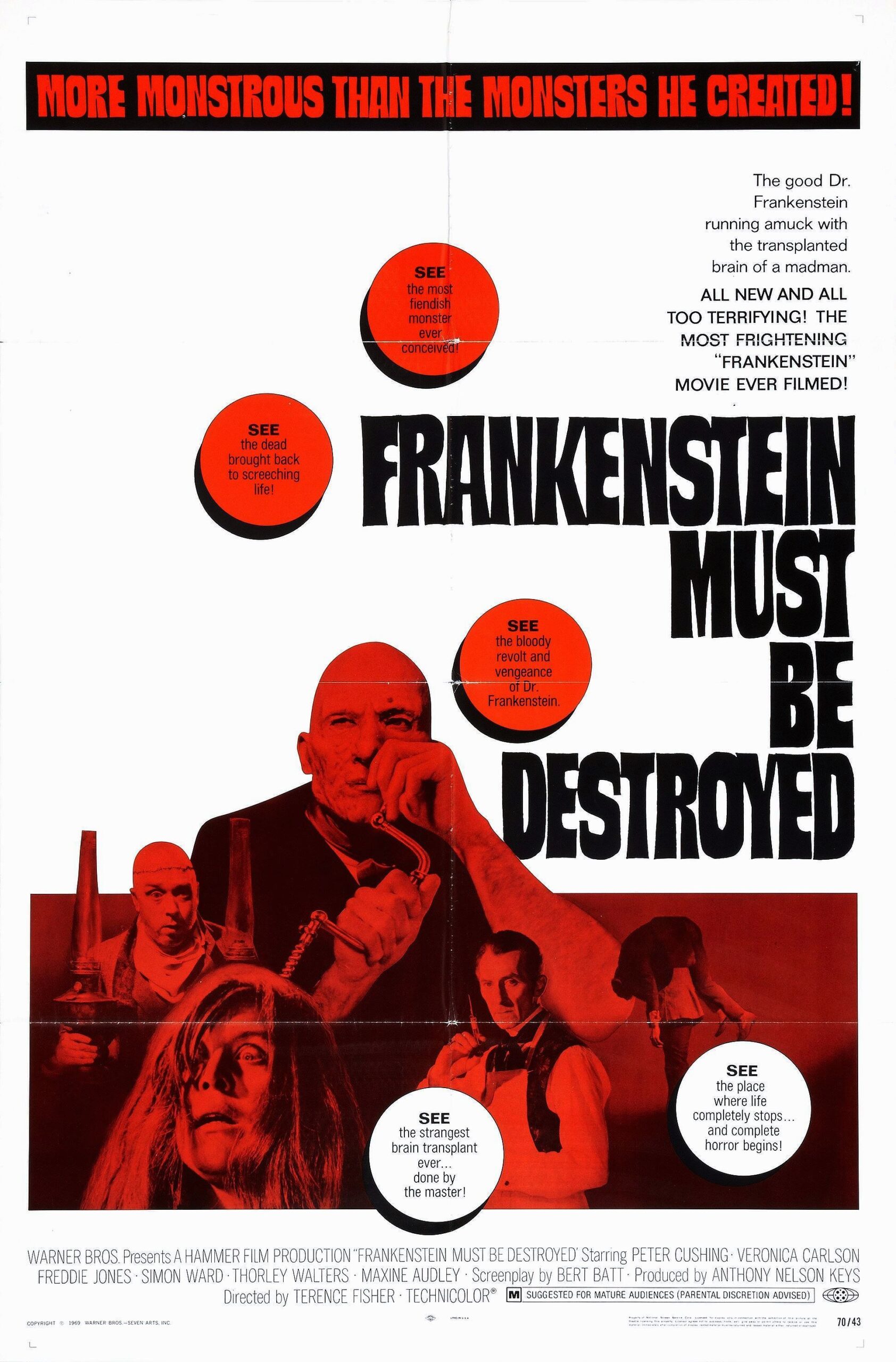
The fifth of Hammer’s Frankenstein films and the absolute pinnacle of the series. Terence Fisher is on the peak of his form and turns in a series of directorial set pieces that are quite masterful
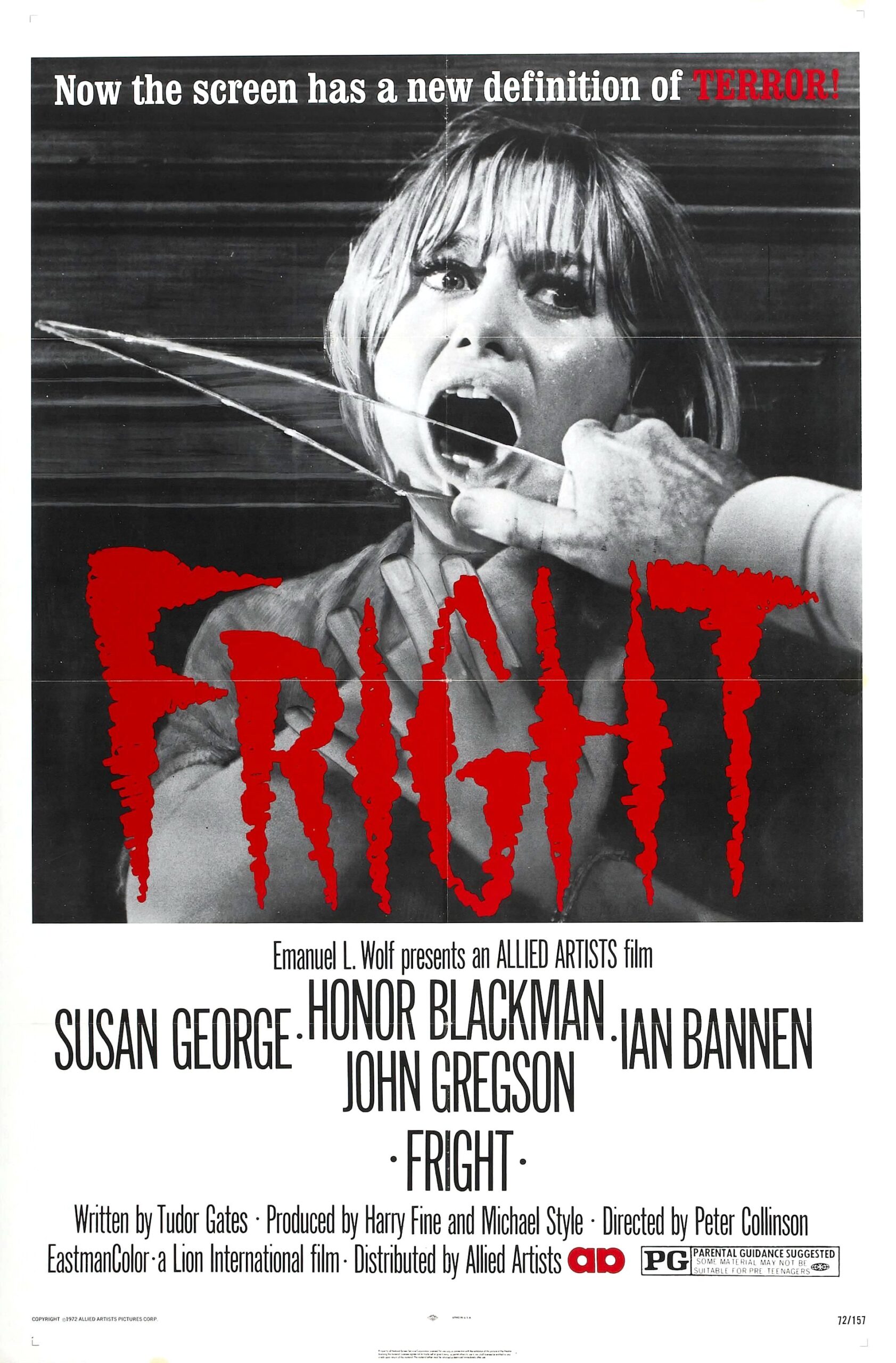
A modest and well directed psycho-thriller from the Anglo-horror cycle with Susan George as a babysitter stalked by a deranged Ian Bannen
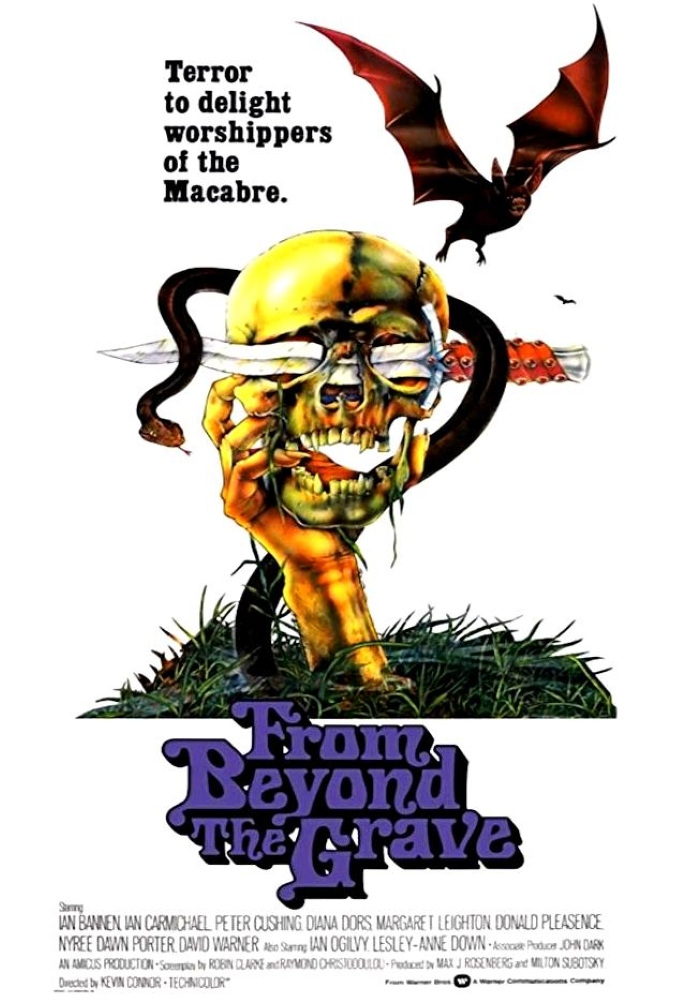
One of the best of the Amicus horror anthologies. All of the episodes are strong, well cast and well directed. The third episode offers a particularly funny comic take on the exorcism film
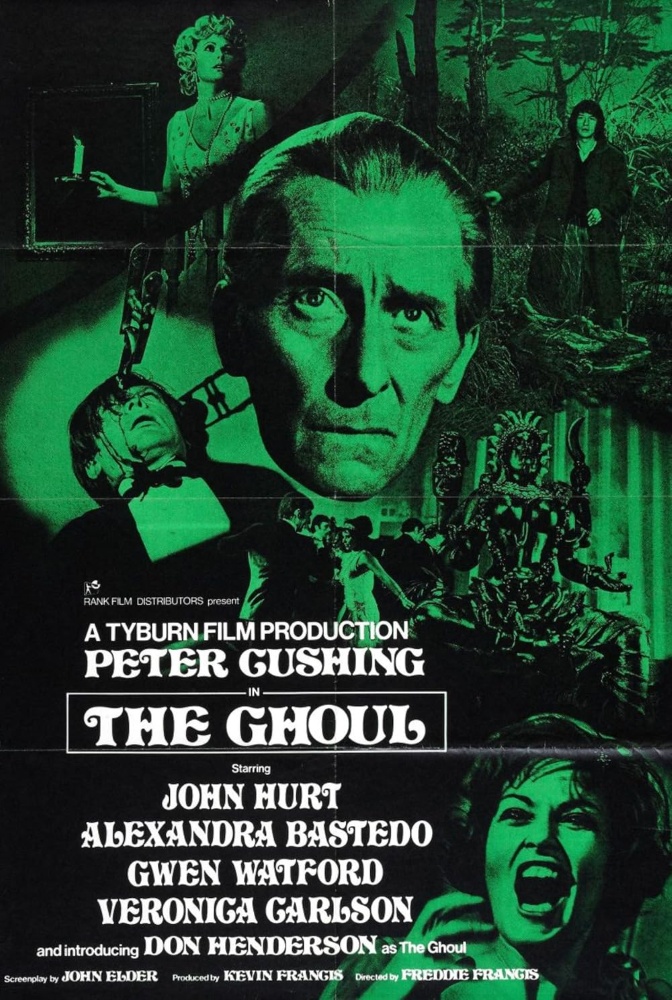
Latter day Anglo-horror film from Freddie Francis that assembles many Hammer regulars in a story where Peter Cushing keeps a cannibalistic son on his country estate

One of few attempts to create an original movie monster by Hammer Films, which they take from the Medusa of Greek myth. The result is an exquisitely and beautifully made film

Documentary about UK’s Hammer Films that focuses on the handful of films that were produced in collaboration with Warner Brothers. Each is discussed in thoughtful detail

Classic effort from Hammer Films in which a psychologist discovers a troubled patient responsible for a string of murders is Jack the Ripper’s daughter. Made with much class
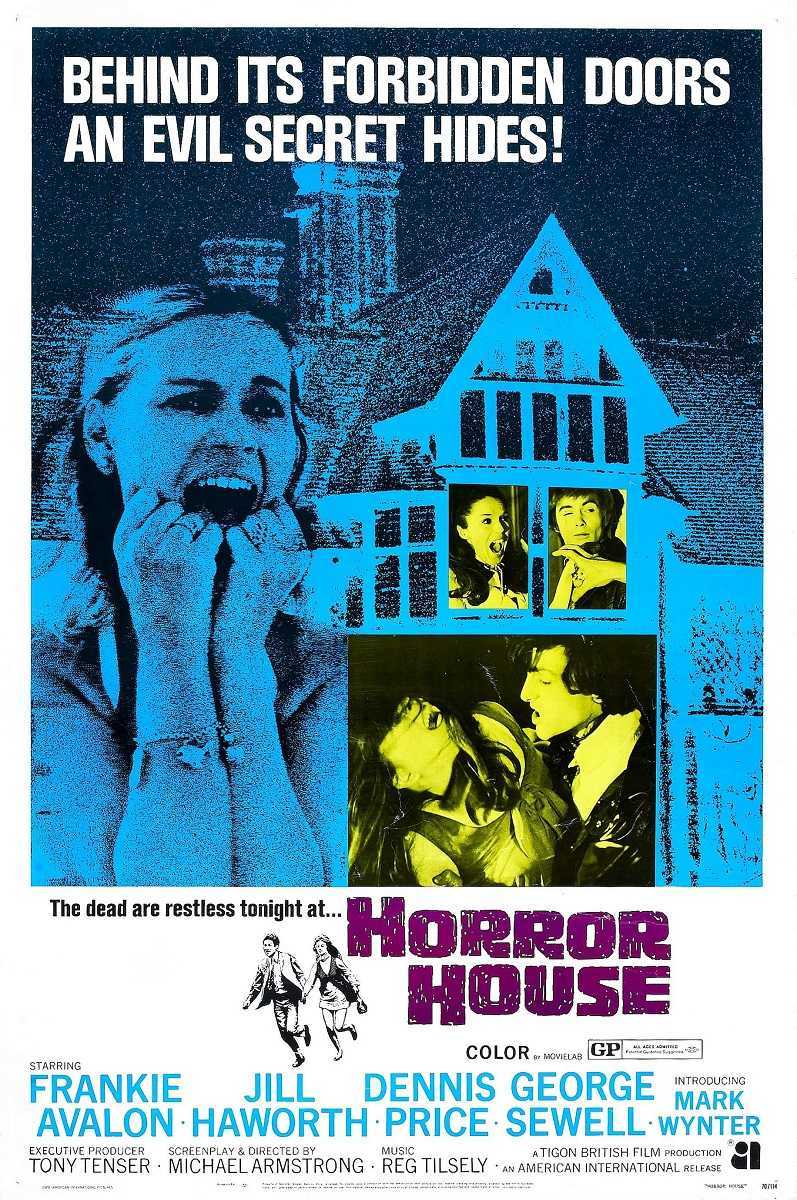
The haunted part of the title is misleading but this is an attempt to update the Old Dark House thriller of the 1930s and 40s to the midst of Swinging 60s London and featuring a youth cast
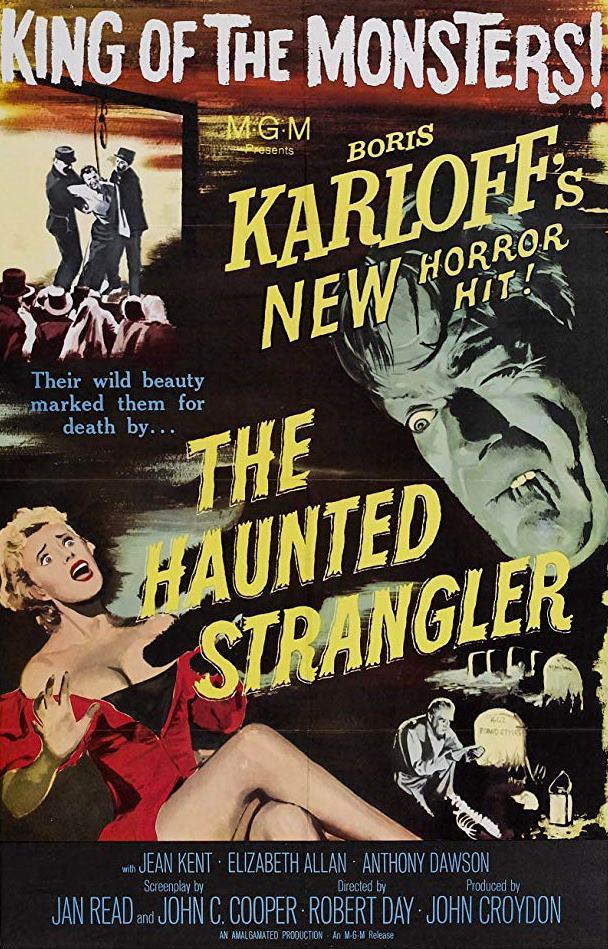
A split-personality killer film from the early days of the English horror cycle that fails through fundamentally absurd psychology and a hammy performance from Boris Karloff
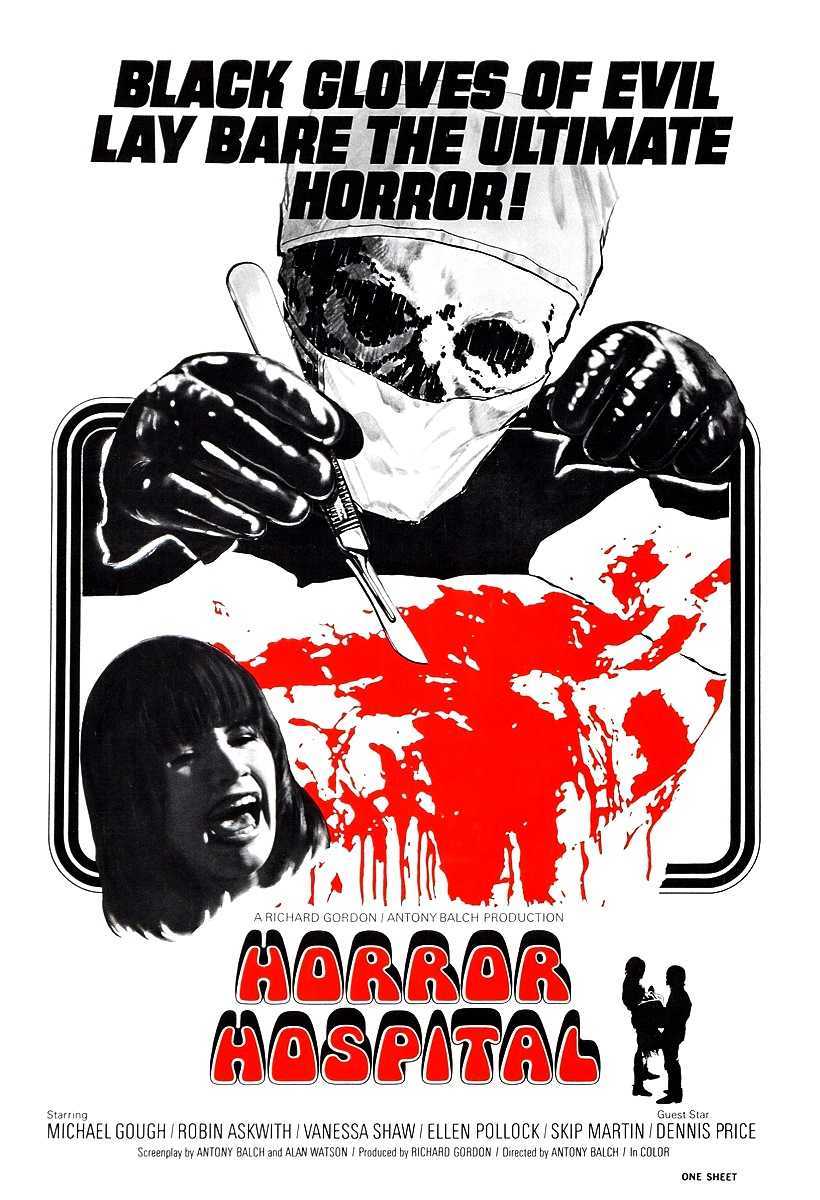
Bizarre entry from the Anglo-horror cycle with Michael Gough as a mad scientist creating zombies and driving a deadly armoured Rolls Royce

The fifth and worst of Hammer’s Frankenstein films. In a play for younger audiences, Peter Cushing was dumped in favour of Ralph Bates in a retelling of the original and an unfunny comedic approach

For all that Hammer’s Terence Fisher was raised to the status of cult director, there are efforts such as this unfunny Old Dark House comedy that reveal that he was not always on form
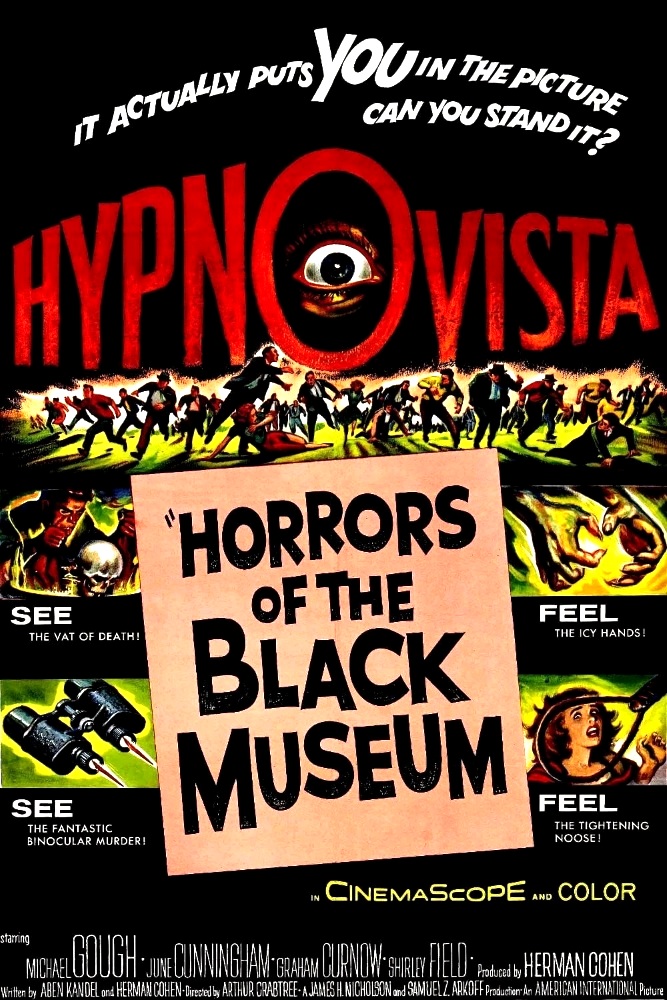
A highly entertaining Herman Cohen production where Michael Gough plays a mad crime writer who employs a series of cruel sensationalistic deaths for his victims
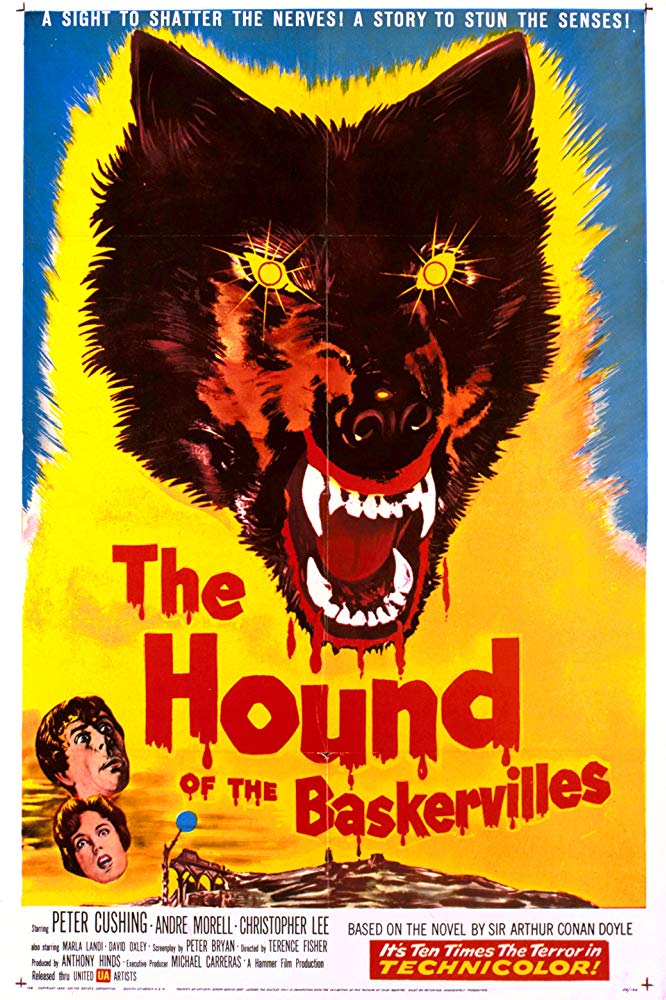
Hammer Films’ one and only Sherlock Holmes adaptation. It is beautiful to see the opulence of early Hammer productions brought to bear giving the story unusually effective life
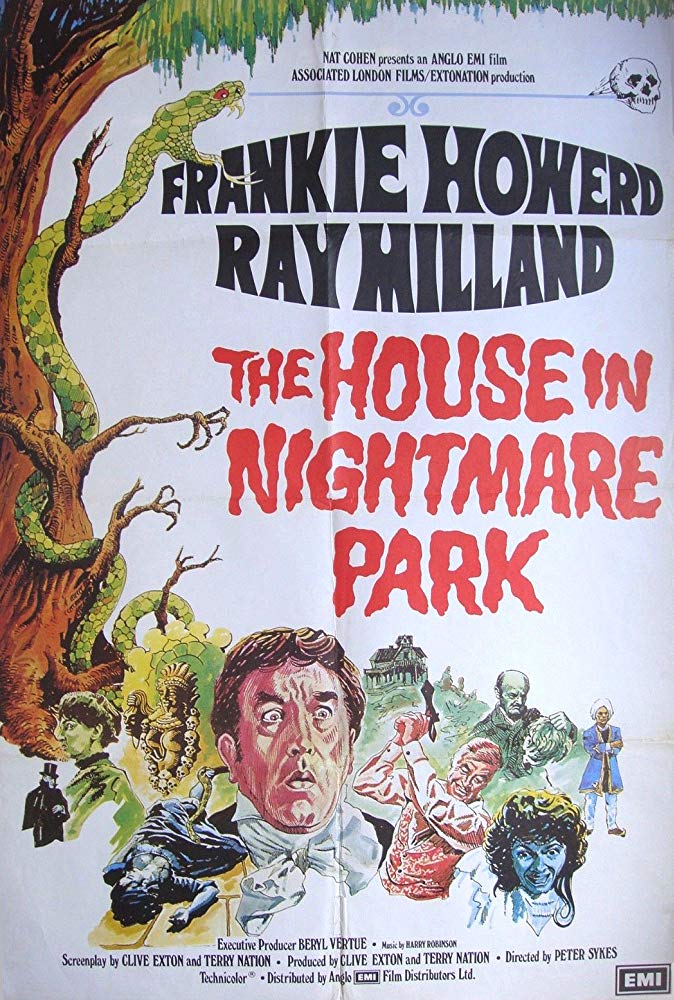
Amidst the Anglo-horror cycle of the 1970s, there was this throwback to the 1940s styled Old Dark House comedy. Made as a vehicle for comedian Frankie Howerd, this only demonstrates how creaky the genre was
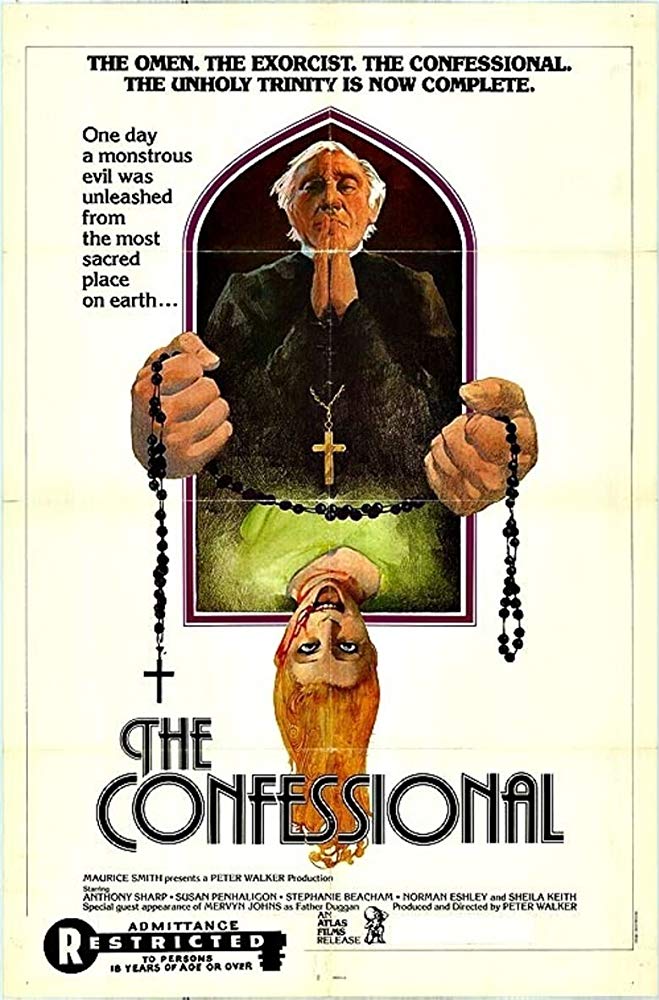
From British director Pete Walker who specialised in films about insane authority figures slaughtering Swinging Sixties youth – in this case, he caused a considerable stir with a film featuring a psychopathic Catholic priest

Cannon Films make an Old Dark House film that brings together an aging Christopher Lee, Peter Cushing, Vincent Price and John Carradine. This denoted the end of the Anglo-horror era but is not nearly as worthy as you feel it should have been
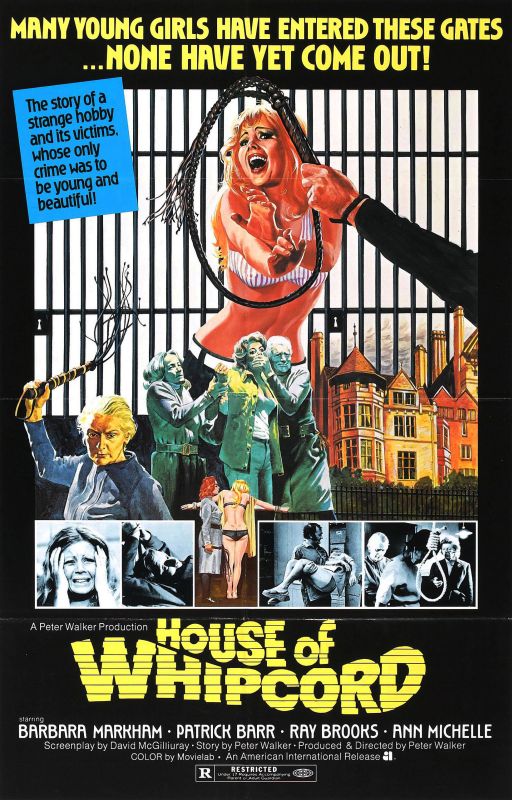
The best film from UK director Pete Walker. All of Walker’s film have a horror of ingrained institutionalism. This, concerning a private prison where morally lax women are abducted and tortured, is depicted with an extraordinary cruelty
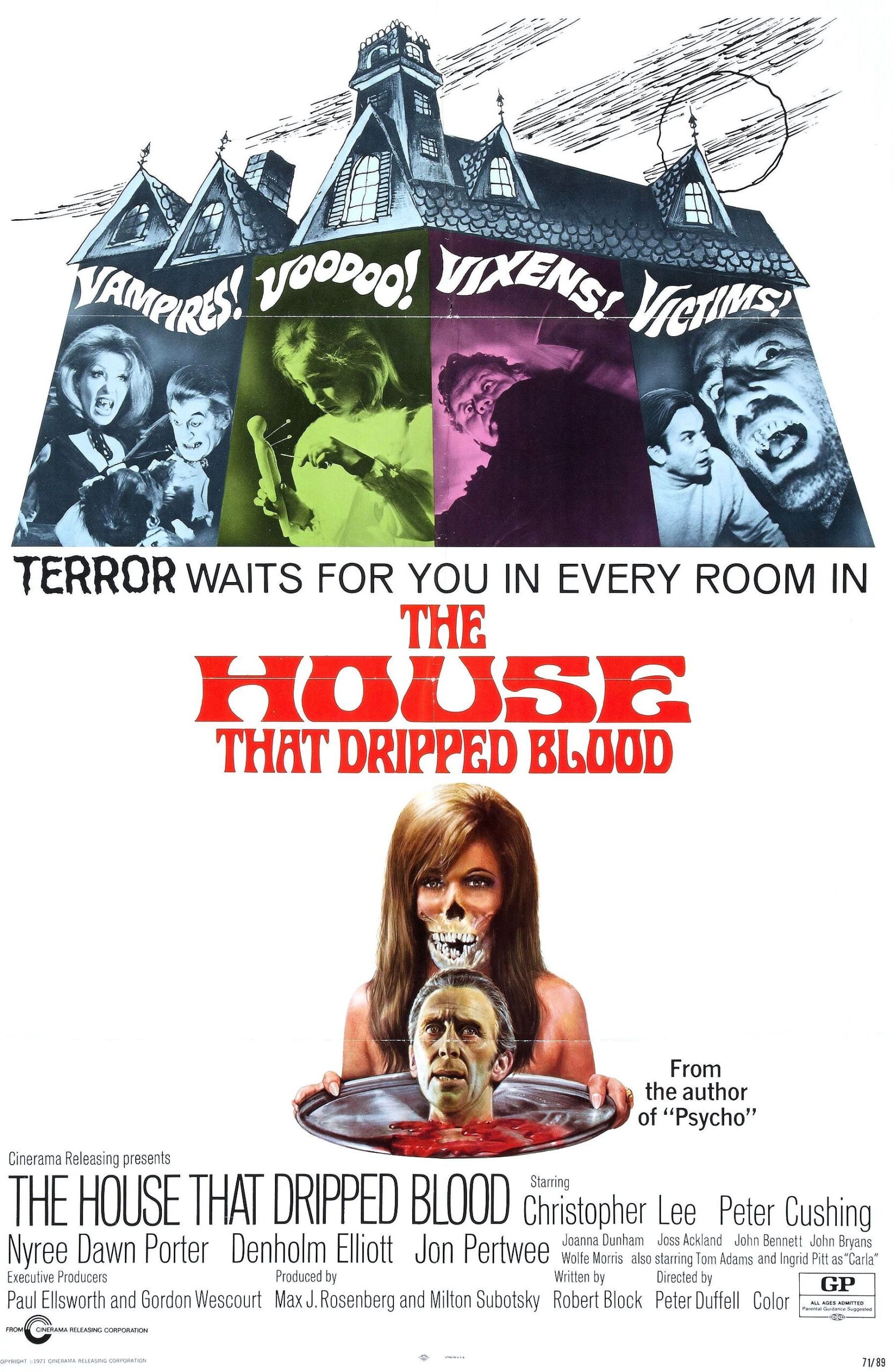
Another of the Amicus horror anthologies from a series of stories by Robert Bloch. An okay effort, mostly being remembered for Jon Pertwee’s turn as a comic vampire
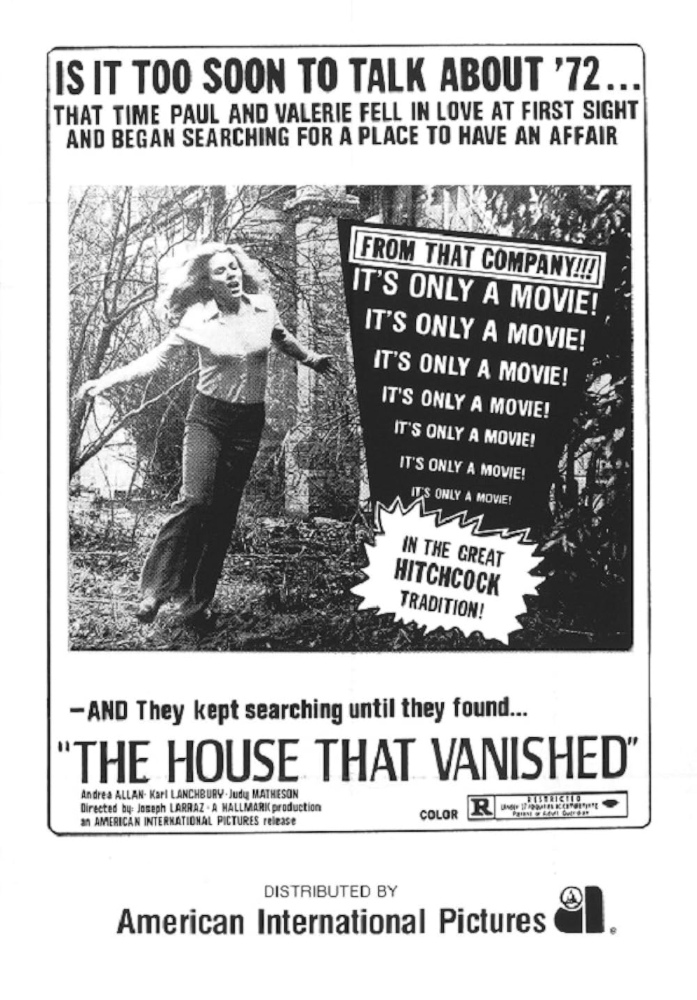
Spanish director Jose Larraz gained a small cult reputation for his work amidst the 1970s Anglo-horror cycle. This is a psycho film where a model is stalked after witnessing a murder

The title and names are changed, otherwise this is an extremely faithful adaptation of Dr Jekyll and Mr Hyde starring Christopher Lee. Not very successful at the time, this interestingly opens the story out with Freudian psychology

Scottish director Lawrie Brewster, a promising newcomer on the genre horizon, has obtained the rights to revive the Amicus Films name and conducts a strong homage to the studio’s signature anthology film
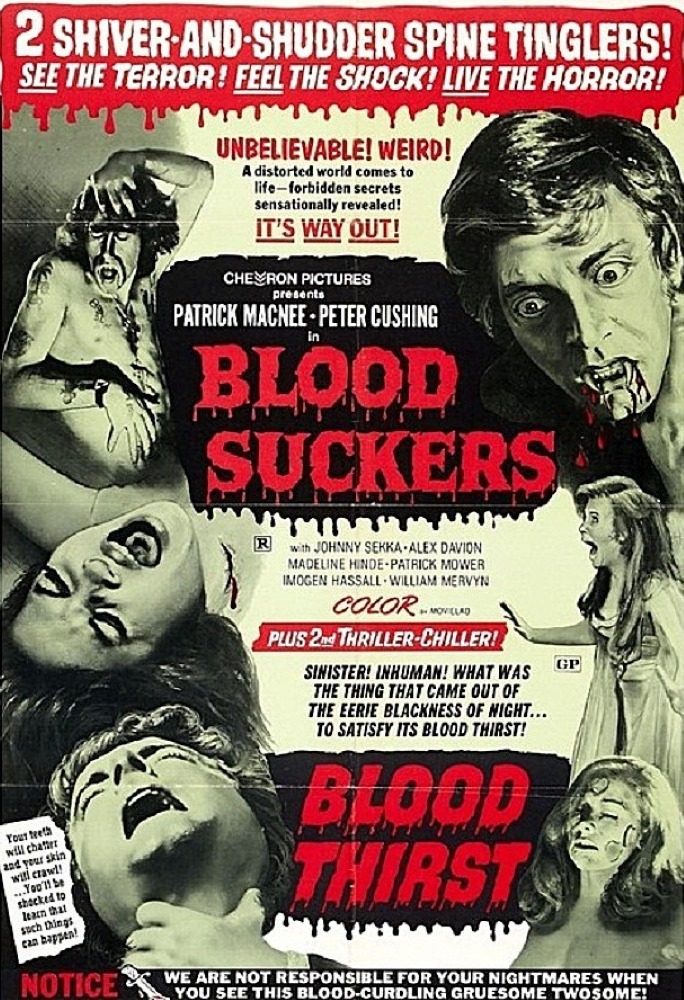
A striking variant on the vampire film full of rich metaphor. Set against the backdrop of Oxford university, this explains vampirism as a psychological condition brought on by sexual impotence and academic pressure
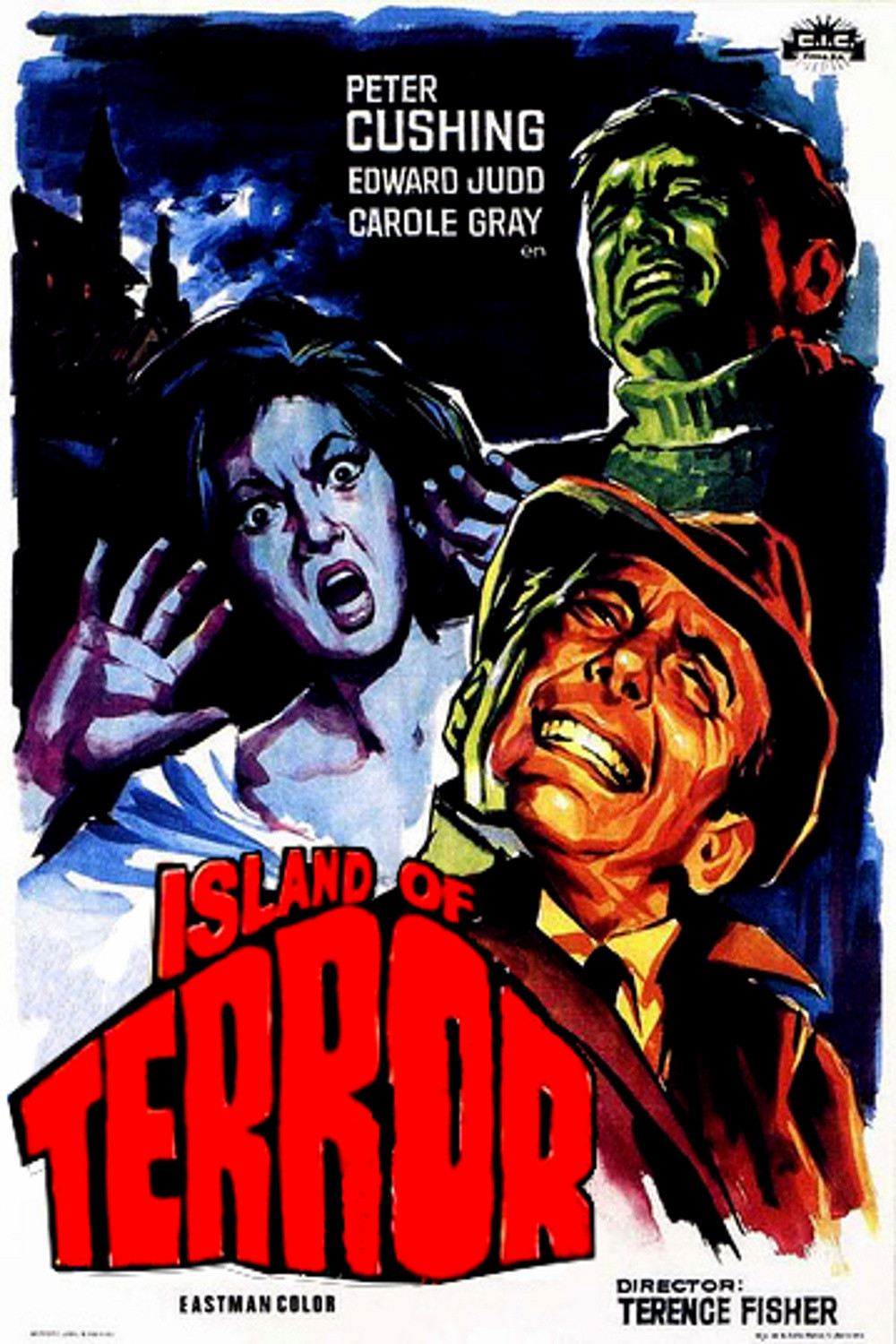
Director Terence Fisher made his name at Hammer Films but in the 1960s broke away to make a trilogy of SF films. This features the novelty of a giant virus creature but Fisher fails to generate much suspense
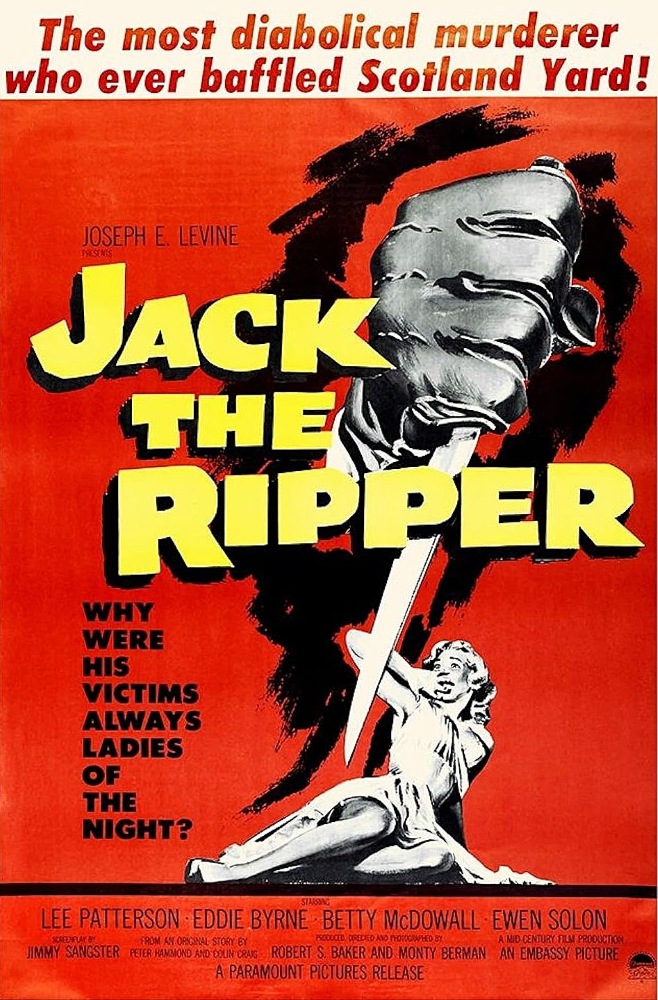
Dramatisation of the Jack the Ripper murders that resembles a cheap British quota quickie but musters some okay gaslit atmosphere. Alas, the film has done little research on the details of Ripper casefile
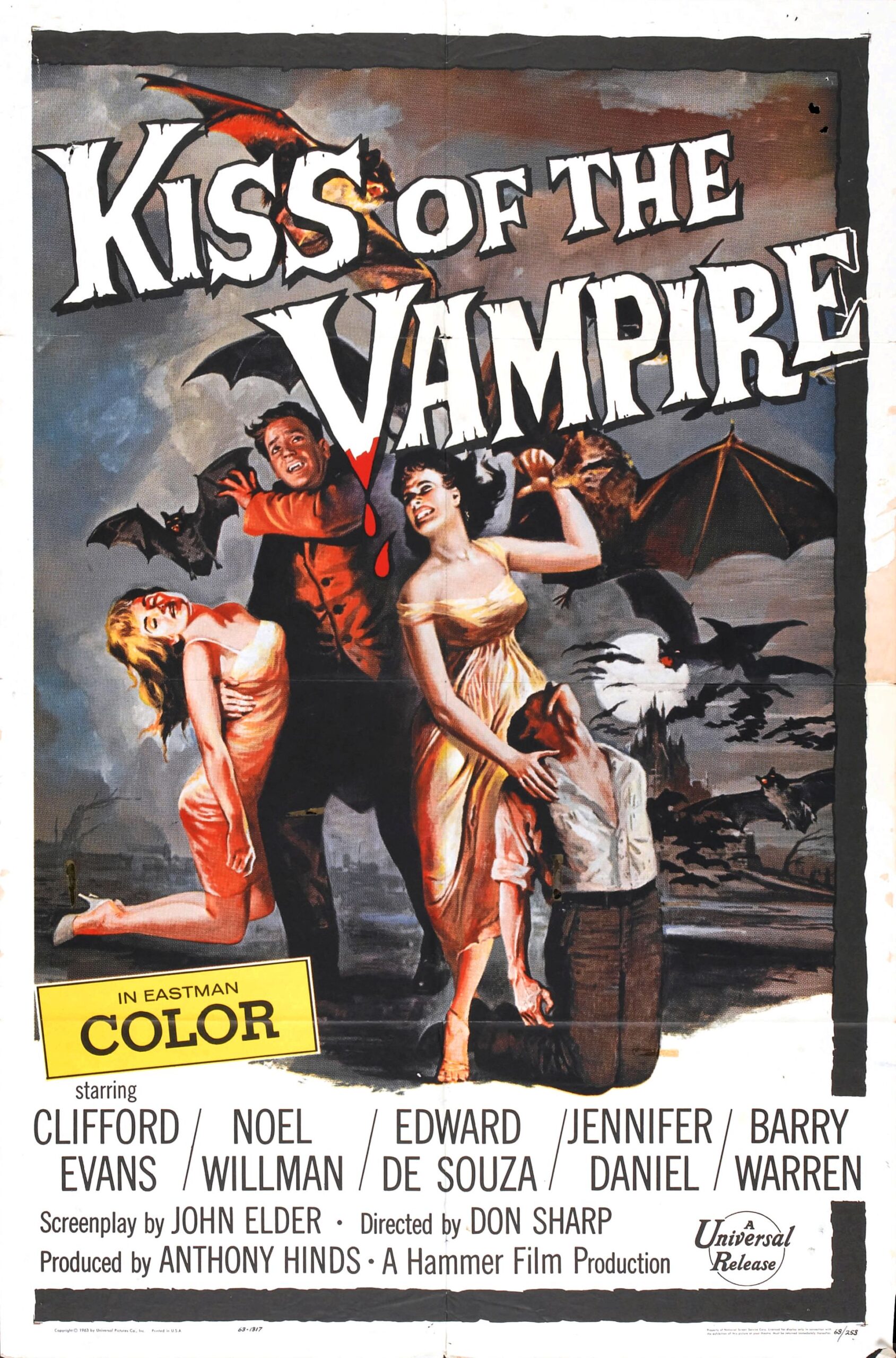
One of the more overlooked of the Hammer vampire films. This doesn’t feature Christopher Lee or Peter Cushing but does some reasonable things in its own right
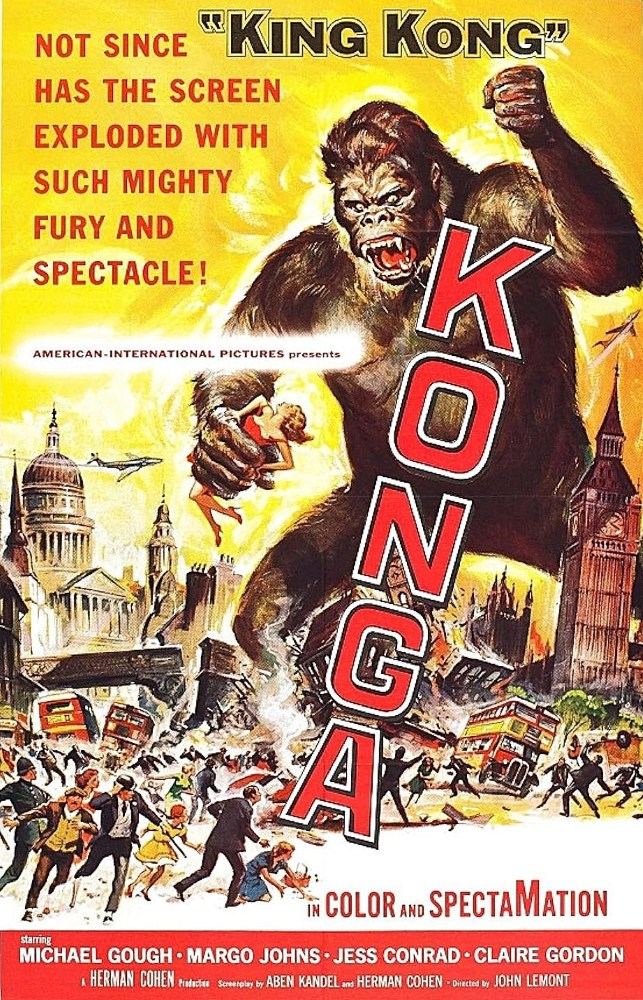
Herman Cohen production with Michael Gough as a mad scientist who creates a giant ape. Aside from Gough’s entertainingly mad performance, this is killed by incredibly tatty effects
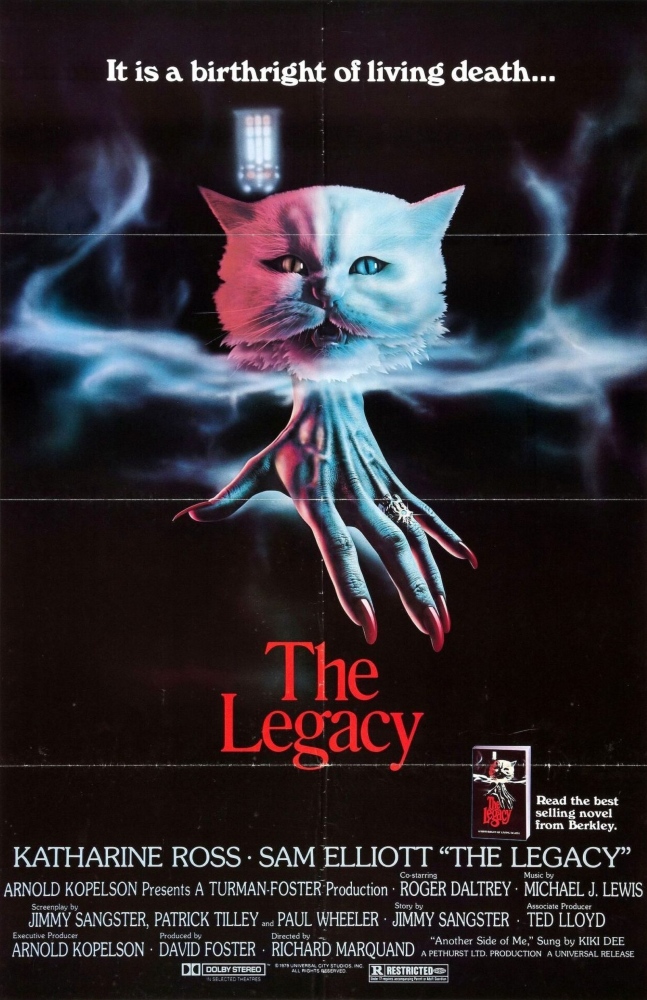
One of the last gasps of the Anglo-horror cycle, this sets assorted deviltry in an English mansion along with a series of novelty deaths that trying to compete with The Omen
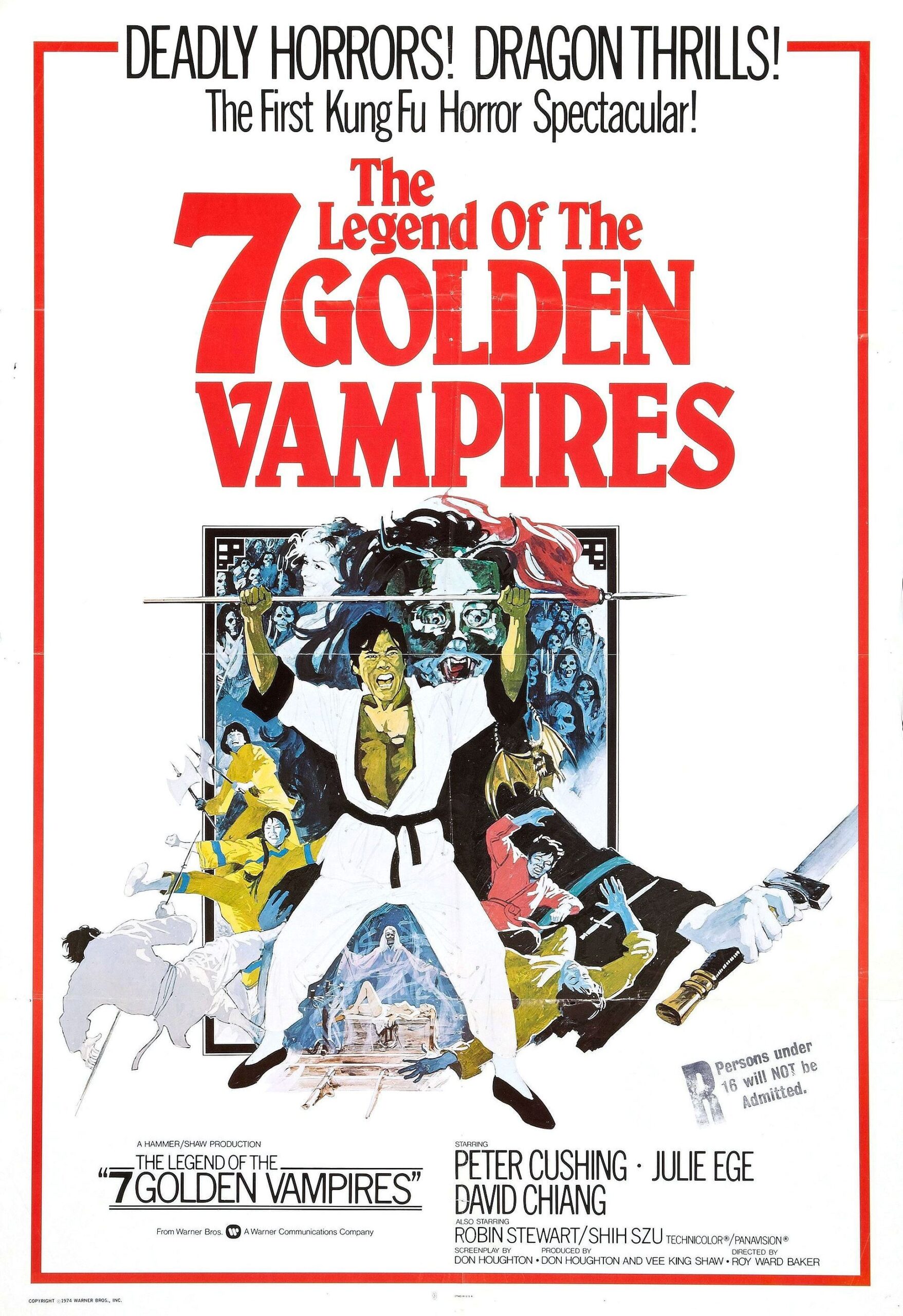
The last of Hammer’s Dracula films made after Christopher Lee departed. A co-production with Hong Kong’s Shaw Brothers that shows Hammer trying to jump aboard the 1970s kung fu fad

A Freddie Francis directed werewolf film from the latter days entry in the Anglo-horror cycle set in 1900s France. This owes much to Hammer’s earlier Curse of the Werewolf
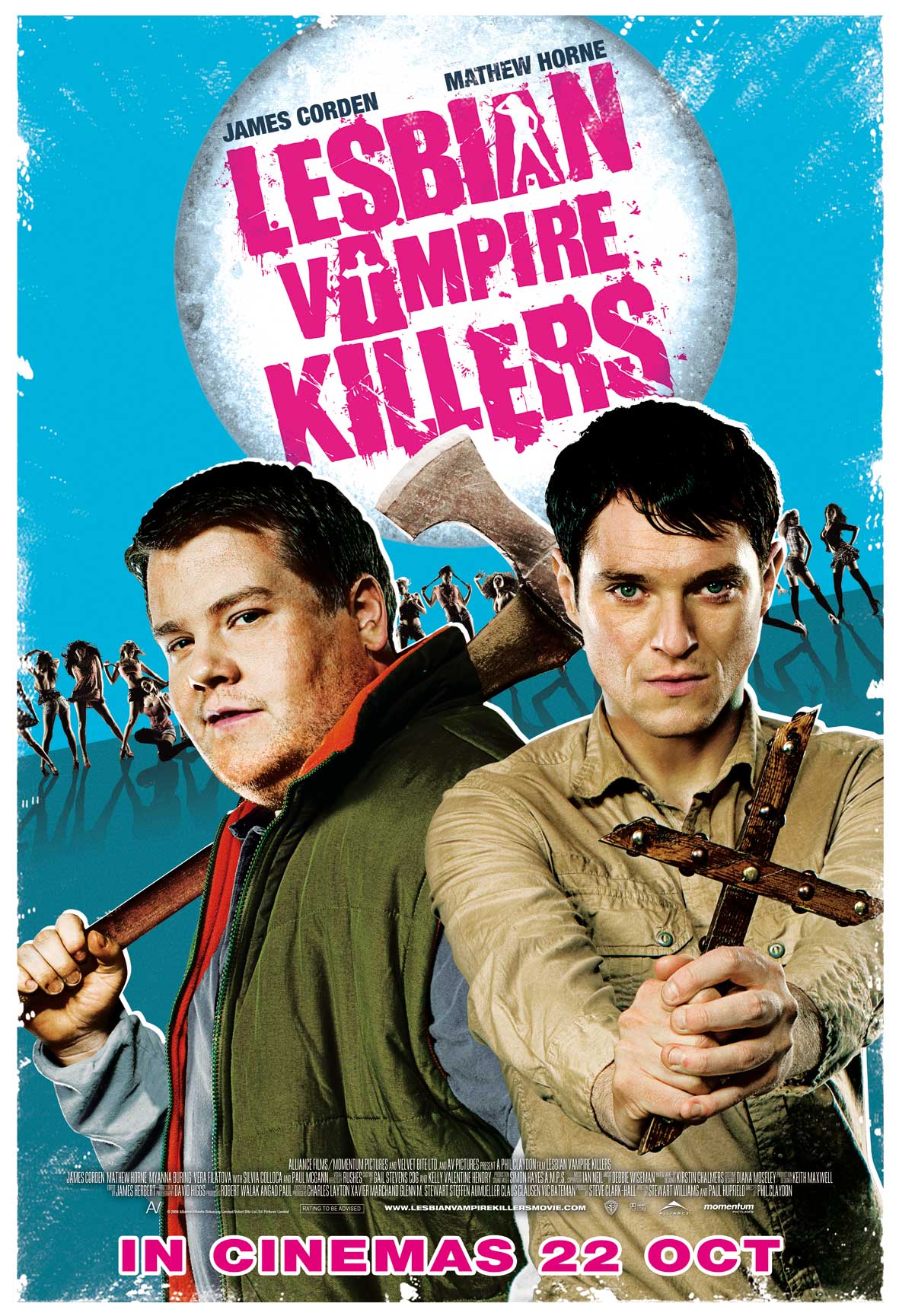
This seems to want to do for the lesbian vampire film what Shaun of the Dead did for the zombie film. Alas, the film makes its appeal fairly and squarely into the crude, sexism of British lad culture
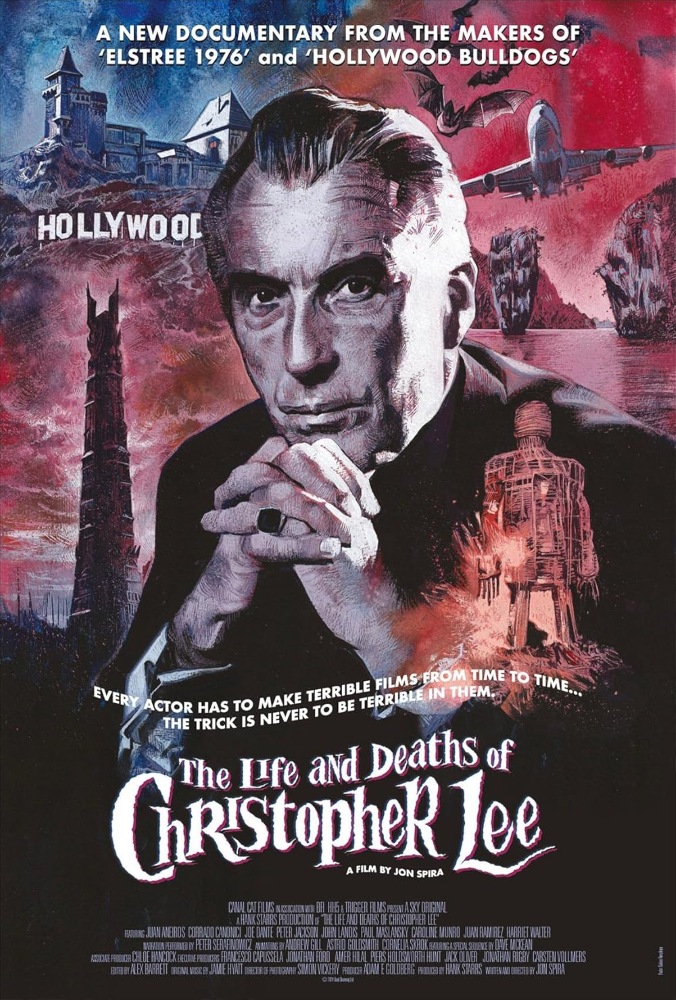
A documentary about horror legend Christopher Lee covering his life and principal films. Supposedly narrated by Lee who is represented by a voice imitator and animation
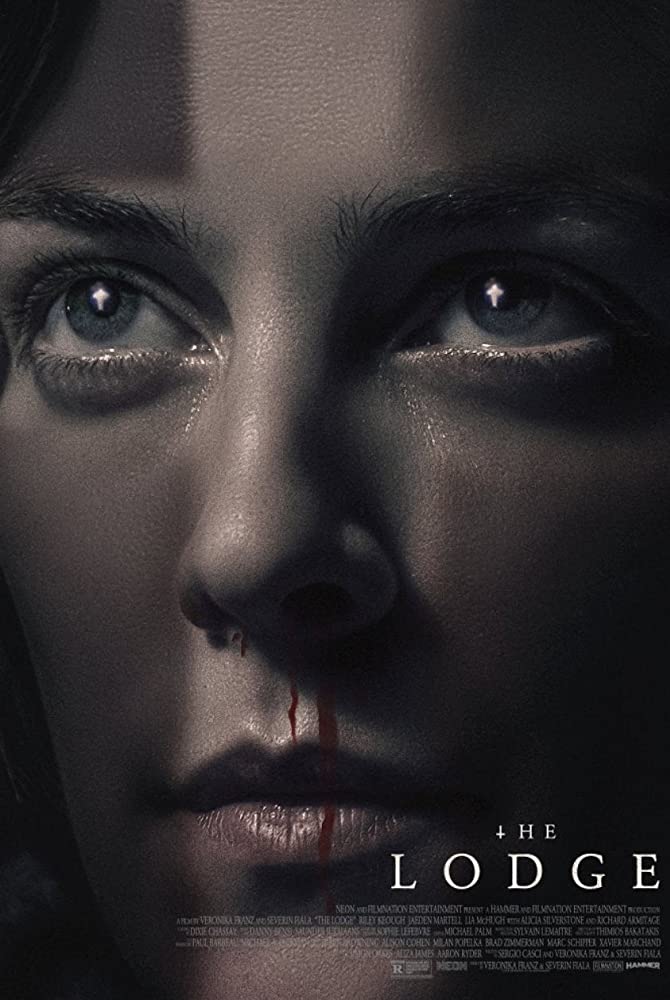
An entry from the revived Hammer Films directed by duo who made Goodnight Mommy. A slow burn of a film about cabin fever and fragmenting psychology often reminiscent of The Shining
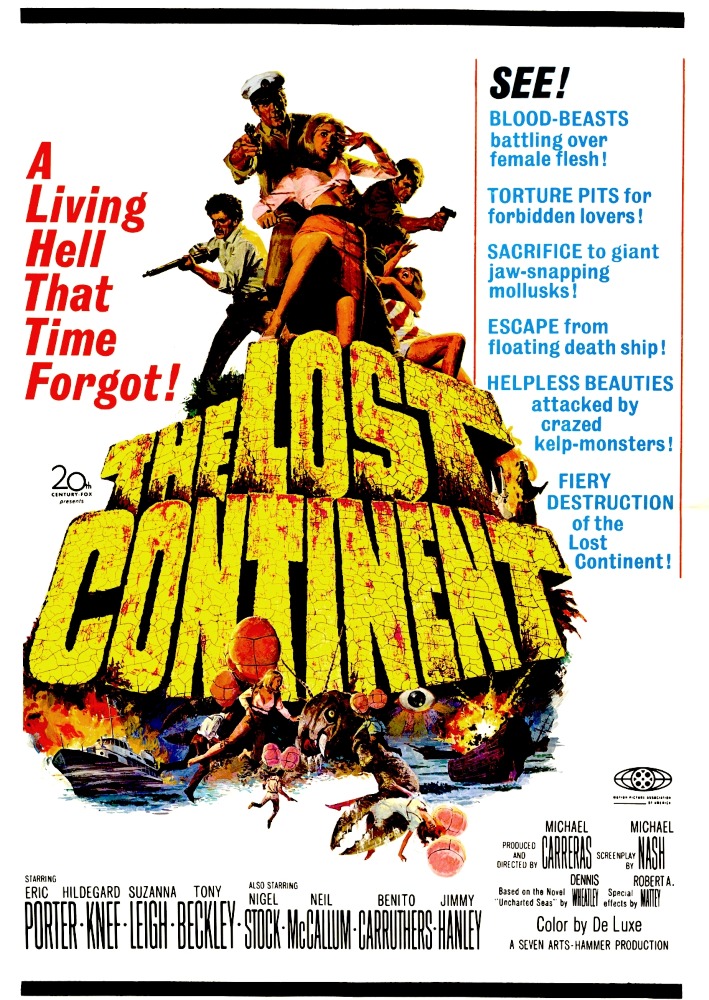
An oddity from Hammer Films – a colourfully interesting lost world film set in the Sargasso Sea filled with trapped ships from all eras and cheesy monsters
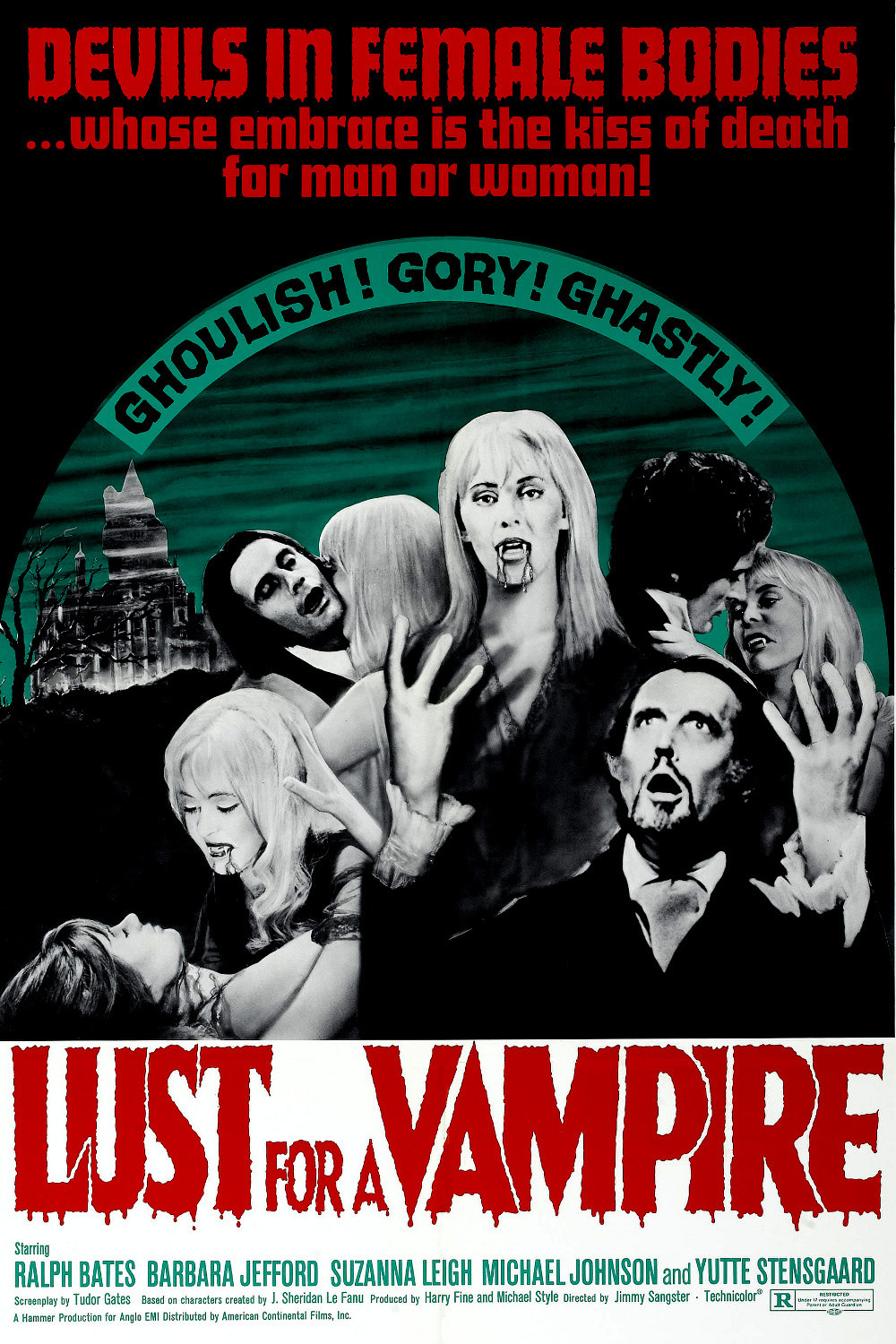
The second of Hammer’s Karenstein films based on the lesbian vampire story Carmilla. This is killed by its laughable unsubtlety and an air of adolescent masturbatory fantasy

An attempt to copy the Dr Phibes films with Vincent Price as a horror actor facing a series of killings on the set of his comeback film
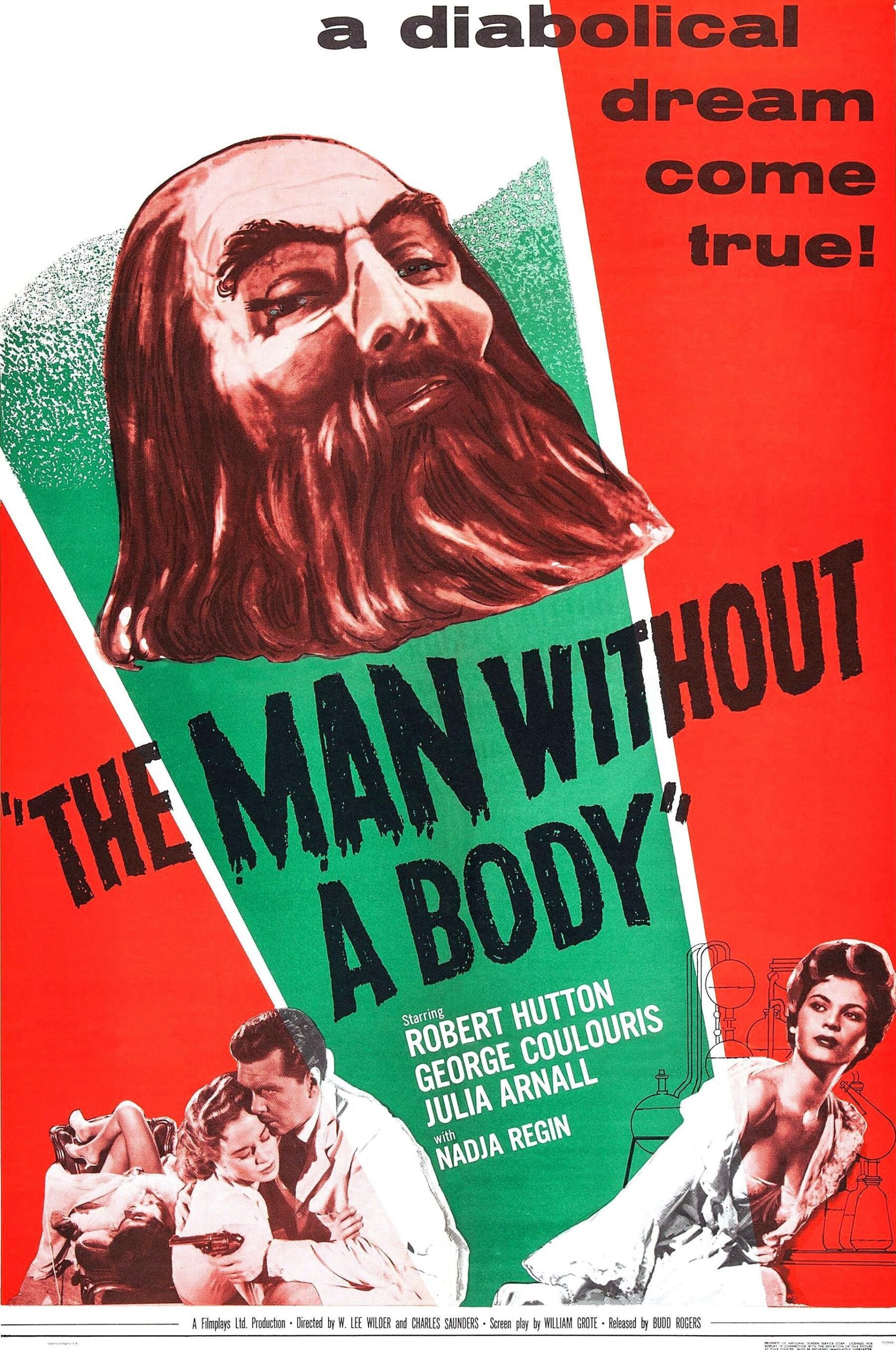
Made just as Hammer Films changed everything, a dreary quota quickie that has the most lunatic scheme of any British horror film involving the revival of Nostradamus’s severed head

One of the psycho-thrillers made by Hammer Films during the early 1960s. The absurdly contrived plot is blatantly borrowed from Les Diaboliques, although eventually produces passable tension
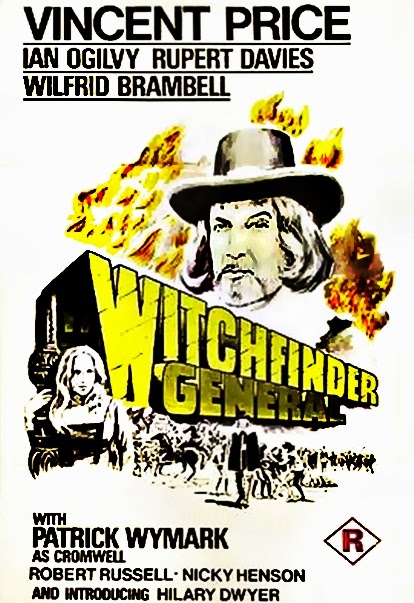
Based on a true-life historical figure, this is a stark and effective film that depicts the barbarism of the 17th century witch hunts. Vincent Price plays seriously and the film is all the more effective as a result
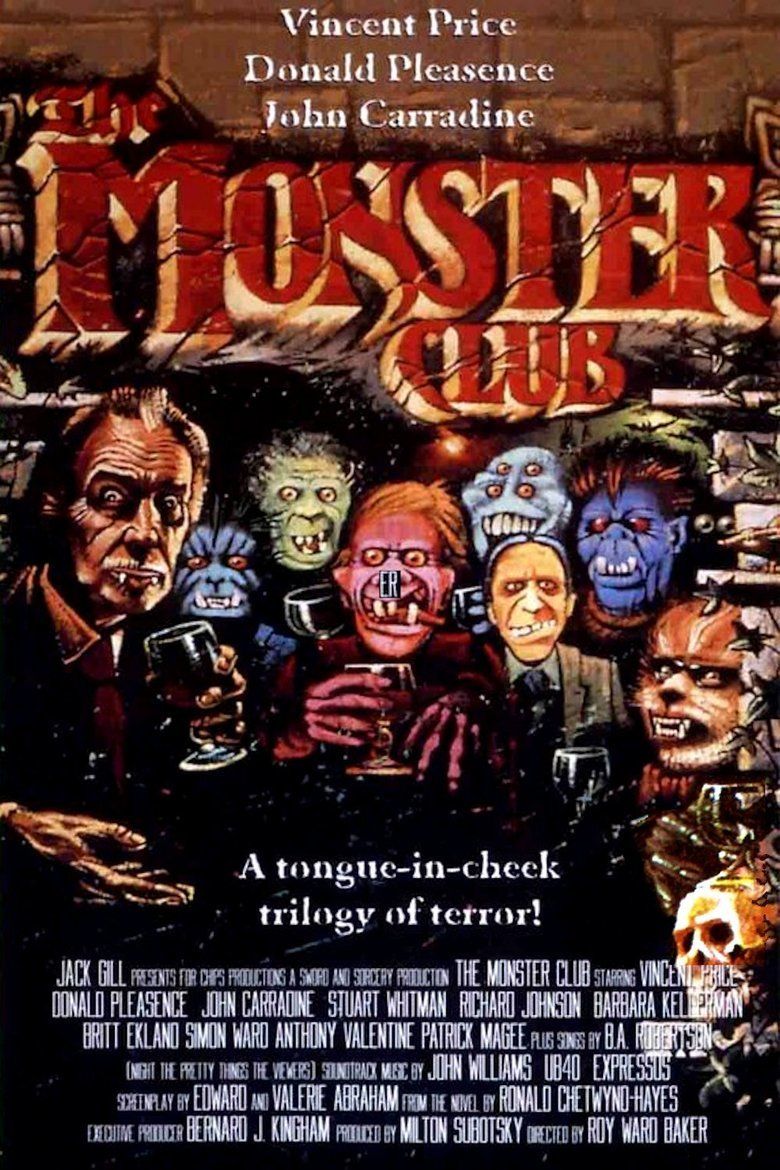
Following the collapse of Amicus Films, producer Milton Subotsky went on on his own to make this horror anthology, the bread and butter of Amicus in their heyday. Though he brings in some major horror names – Vincent Price, John Carradine – the jokey tone failed to find any success