


Crew
Director – Max Winkler, Teleplay – Ian Brennan, Created by Ian Brennan, Producer – Adam Penn, Photography – Michael Bauman, Music – Mac Quayle, Visual Effects – Folks VFX (Supervisor – John Rouse), Special Effects Supervisor – Blair Foord, Makeup Effects/Prosthetics – David Anderson, Production Design – Matthew Flood Ferguson. Production Company – Netflix/Ryan Murphy Productions/Prospect Films.
Cast
Charlie Hunnam (Ed Gein), Suzanna Son (Adeline Watkins), Laurie Metcalf (Augusta Gein), Lesley Manville (Bernice Worden), Tom Hollander (Alfred Hitchcock), Vicky Krieps (Ilse Koch), Joey Pollari (Anthony Perkins), Tobias Jelinek (Richard Speck), Charlie Hall (Deputy Frank Worden), Tyler Jacob Moore (Sheriff Art Schley), Alanna Darby (Christine Jorgensen), Sean Carrigen (Robert Ressler), Caleb Ruminer (John Douglas), Happy Anderson (Jerry Brudos), Meighan Gerachis (Nurse Salty Maguire), Linda Reiter (Nurse Roz Mahoney), Robin Weigert (Enid Watkins), Elliott Gould (Weegee), Addison Rae (Evelyn Hartley), Rondi Reed (Mary Hogan), Will Brill (Tobe Hooper), Randall Newsome (Psychiatrist), Jackie Kay (Tab Hunter), Olivia Williams (Alma Hitchcock), Ethan Sandler (Robert Bloch), Brock Powell (Leatherface), Golden Garnick (Buffalo Bill)
Plot
Plainfield, Wisconsin, 1944. Ed Gein lives on a farm in where his domineering mother Augusta harshly condemns all sexuality. His mother then dies. A distraught Ed digs up her body and brings it home. Ed treats her as though she is still alive and hears her voice talking to him. At the same time, Ed asks out local girl Adeline Watkins. After finding his mother’s body in the house, she becomes intrigued and begins to photograph the corpses. Ed is driven to kill two other women and a babysitter around the town, as well as dig up other bodies. Following Ed’s arrest and committal to a psychiatric institution, he gains much fame and notoriety. This has wide-reaching consequences, including influencing Alfred Hitchcock with the creation of Psycho and Tobe Hooper with The Texas Chain Saw Massacre, and brings attention from FBI profilers and other killers.
Ryan Murphy is creator/producer of some of the top tv series since the 2000s, including the likes of Nip/Tuck (2003-10), Glee (2009-15), American Crime Story (2016- ), Feud (2017- ) and Hollywood (2020). Murphy has dabbled in genre material on a number of occasions with the ongoing hit of the tv series American Horror Story (2011- ) and its spinoff anthology series American Horror Stories (2021- ), as well as Scream Queens (2015-6), the mini-series The Watcher (2022) and The Beauty (2026- ). In addition, Murphy has also produced the horror films The Town That Dreaded Sundown (2014) and Mr Harrigan’s Phone (2022).
The Ed Gein Story is the third season of an umbrella series called Monster that Murphy began in 2022. Each season runs between 8-10 episodes and focuses on one true-life murderer or murderers. The first season was Dahmer – Monster: The Jeffrey Dahmer Story (2002) and the second Monsters: The Lyle and Erik Menendez Story (2024). This is the third season and a fourth season in production for 2026 will tell the story of Lizzie Borden.
Ed Gein (1906–1984) has attained a notoriety in True Crime. Living in Plainfield, Wisconsin, Gein had a domineering mother and fell apart after her death. Between 1947 and 1952, Gein began to dig up bodies from cemeteries. From these, he fashioned bowls made of skulls, chairs upholstered with human skin, and a suit of breasts from flayed human skin that he would wear. Despite his notoriety and being referred to as a serial killer, Gein only committed two murders – bar owner Mary Hogan and hardware store owner Bernice Worden. He denied ever engaging in necrophilia with the bodies. He was arrested in 1957 and was found guilty of murder but was sentenced to life in a secure psychiatric institution.
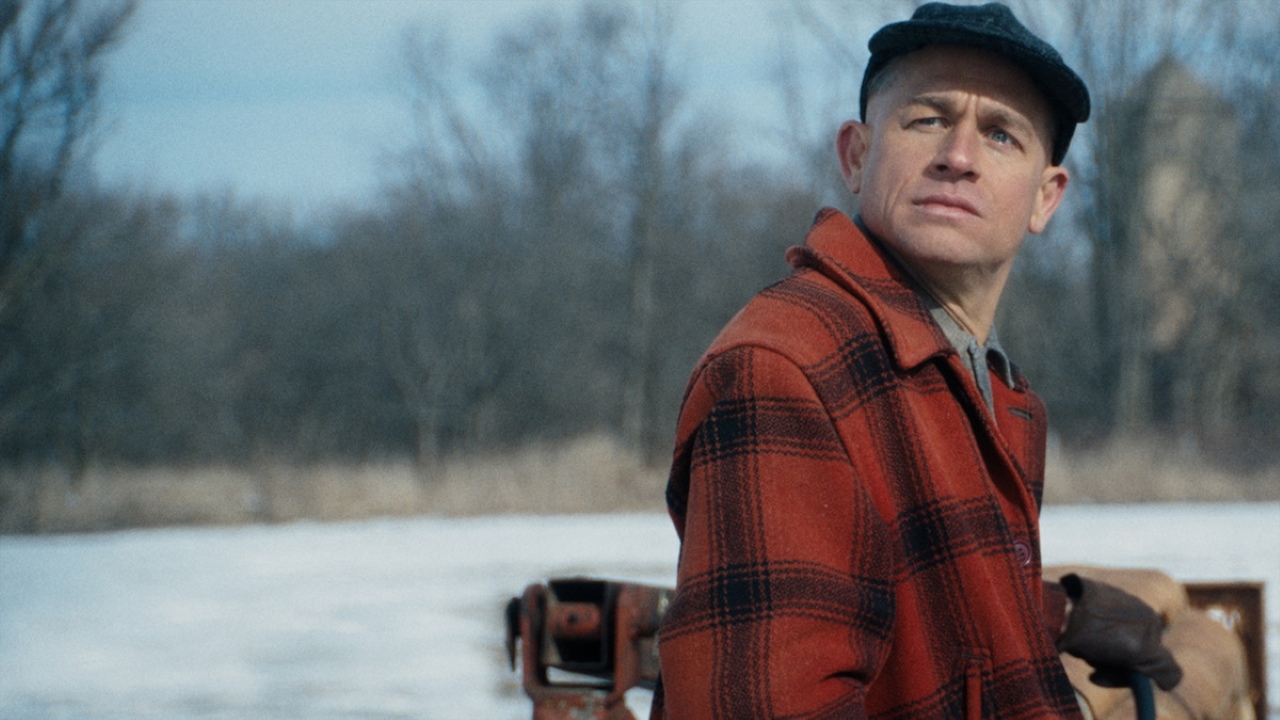
Gein has been cited as the basis for the killers in Psycho (1960), The Texas Chain Saw Massacre (1974) and The Silence of the Lambs (1991). Certainly, these are the films that The Ed Gein Story places the focus on, although they are actually the ones that have the least to do with the Gein case in terms of corresponding to details. Generally more accurate have been films such as Deranged (1974) with Roberts Blossom, Ed Gein (2000) with Steve Railsback and Ed Gein: The Butcher of Plainfield (2007) starring Kane Hodder. Gein also makes an appearance in Hitchcock (2012). This has a certain irony in that for all the criticism Monster: The Ed Gein Story took for its distortion of the facts, it ends up going with depictions of the films that treat the facts the most liberally of all rather than those versions that adhere more closely to them.
The mini-series expands the scope of the story considerably beyond Ed Gein. It shows the shooting of the films supposedly inspired by Gein – Psycho, including delving into the lives of Alfred Hitchcock and Anthony Perkins’ closeted gay lifestyle, The Texas Chain Saw Massacre and (briefly) The Silence of the Lambs. It also covers Ilse Koch, the Nazi who was nicknamed The Butcher of Buchenwald who tortured and skinned prisoners, who later formed the basis of Ilsa, She Wolf of the SS (1974).
Among the stories liberalities and outright fictions in the mini-series:-
– That Gein dug up his own mother’s body. He dug up those of several other women who resembled her, but never hers.
– Hardware story owner Bernice Worden (Lesley Manville) is portrayed as an aging floozy hungry for a man who readily falls for Ed’s attentions and has sex with him. In real-life, Worden was a much older woman and there is zero evidence that she had any sexual involvement with Gein. Indeed, it is believed that Gein never had sex (with a live person anyway, although he also denied ever having had sex with a corpse either).
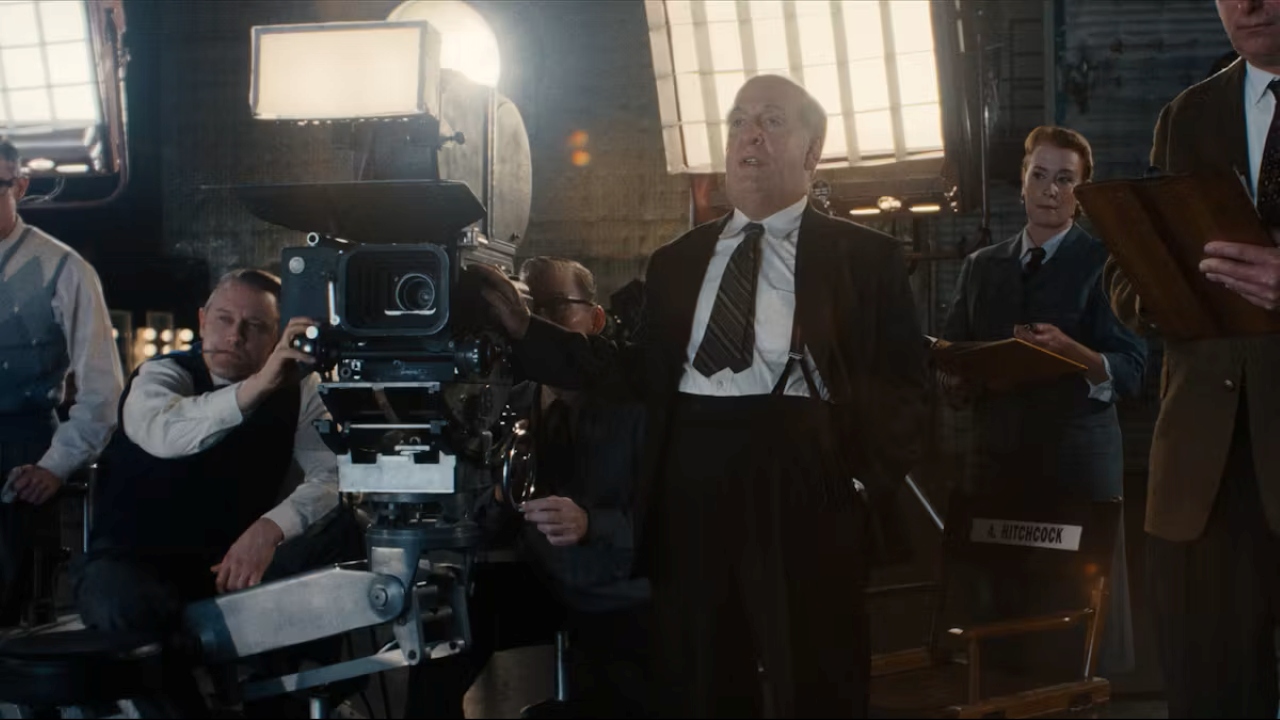
– During the Psycho scenes, Alfred Hitchcock is shown fully aware of the Ed Gein story to the extent that he outfits the Bates house as an exacting replica of the Gein home, a scene that is a complete fiction. The Ed Gein influence on Psycho has probably been overstated. Robert Bloch certainly knew about it when he wrote his book, but there is no clear proof that Hitchcock ever did at the time he made the film. When pointed out to Hitchcock in later years, it was something he downplayed.
– The mini-series also has Hitchcock aware of Anthony Perkins’ sexuality, but again there is no clear proof that this was something he knew. Certainly, Perkins being gay was an open secret, but Hitchcock and his wife maintained a distance from the Hollywood celebrity crowd.
– Michael Hollander makes an absurdly short seeming Hitchcock. Contrarily Hitchcock’s wife Alma Reville, who was a minute 5’0”, is shown towering a head taller than Hollander as played by the 5’9” Olivia Williams.
– The Texas Chain Saw Massacre scenes imagine Tobe Hooper’s inspiration while Christmas shopping, which is accurate to what Hooper said in interviews. Hooper is shown as an angry anti-establishment 1960s radical, whereas most who knew him regarded him more as a mild-mannered English professor. These scenes also place the creation of Texas Chain Saw entirely with Hooper and ignores the input of co-writer Kim Henkel and especially the influence of art director Robert Burns in designing the heavily Ed Gein-influenced house of horrors that the family in the film inhabited.
The film invents or embellishes a series of incidents that Gein has been suspected of but it never proven, including:-
– That Gein abducted and killed fourteen-year-old Evelyn Hartley who was found missing while babysitting children in 1953. Gein was questioned about her disappearance following his arrest but denied anything to do with it. (Gein readily confessed to the crimes he did commit so there is fair reason to believe him here). However, there is an audio recording of a man (now deceased) confessing to the crime
– Two hunters who disappeared in the area in 1952 that were seen near Gein’s farm. (Gein was only interested in women’s bodies, no male ones).
The final episode feels almost as though it is a lost, unaired episode of the David Fincher tv series Mindhunter (2017-9) – there is even a trio of investigators, two FBI profilers and a woman psychiatrist, as they travel about the country interviewing serial killers. This episode is the series both at its most outrightly fictional and outrageous. It first imagines Robert Ressler and John Douglas coming to consult Gein about the Ted Bundy killings. And then that there was correspondence between Richard Speck and Gein and that Bundy wrote letters of admiration to Speck – even that Speck sent Gein one of Bundy’s letters and that Gein was able to use this to tip the FBI off, leading to Bundy’s arrest in Florida. All of these scenes are a complete fiction.
It often seems here that if the mini-series can connect Gein with some contemporary in some vague way it will snatch at the opportunity. To this extent, three of the eight episodes that take place after Gein’s arrest. One entire episode consists of him placed in an asylum where he orders three ham radio sets from a catalogue and has conversations with Ilse Koch and Christine Jorgensen, the first person to undergo a sex change. These scenes seem to stretch believability to a snapping point, before an end twist that reveals that all the conversations were happening in Gein’s head while he was sitting (in bra and panties) talking into a radio that wasn’t plugged in. I could buy this as a literary device, as a way of illustrating he was having conversations with parts of his divided self, but it just seems to be adding something even more far-fetched to the mix.
Another of these complete fictions is the extent of Adeline Watkins’ involvement with Ed Gein. There was claim made by her in a newspaper interview that she had been romantically involved with Ed for twenty years and that he has proposed to her. However, she retracted this in a later interview and claimed that the earlier interview had exaggerated things – that she and Ed had a purely platonic relationship, that they had gone on dates but nothing more than that and that she had never entered his house. There is no clear proof of her involvement other than these contradictory statements. It could well be her wishing to deny her involvement and distance herself, or it could be media exploitation sensationalising her story. Anything beyond that is unverifiable. Little else is known about Watkins’ life or what happened to her after her appearance in the Ed Gein story – it is not even known when she died.
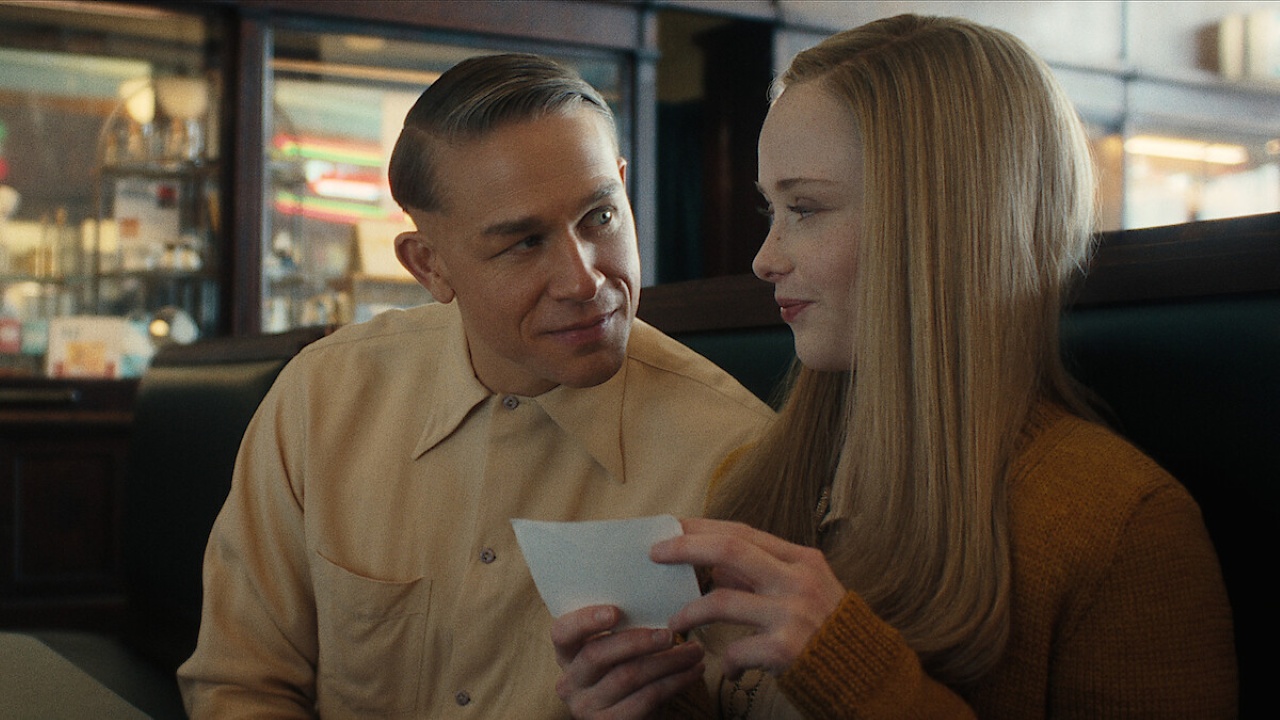
Certainly, the mini-series’ portrayal of Watkins verges on the libelous. Not to mention, Suzanna Son is cast as a blonde Hollywood starlet with a cold heart, which seems the opposite of the one photo in existence of the real-life Watkins who was dark haired, bespectacled and what would today be classified as a nerd chick. Where the mini-series goes to an extreme is showing her as actively involved with Ed’s crimes, blasé when it comes to seeing corpses in the house and later getting excited to the point of taking photos and trying to use these to get herself hired by Weegee (a real-life photographer who specialised in harshly real street scenes). It is also Adeline who, when Ed becomes distraught at the thought of her leaving for New York City, suggests that he relieve his frustrations by turning to a corpse. We even get a scene later on where their relationship is finally consummated where Ed complains “You’re too warm” and the episode fades out as we see her getting into a bath of ice cubes. This frankly stretches the character of Adeline way out beyond all believability.
The upshot of all this cinematic calling is that the spirit of these other films hangs too much over and shapes The Ed Gein Story. We get numerous references to Psycho in the telling of the Gein sections of the story – the light coming on in the window just like in the Bates house and Charlie Hunnam constantly talking to his mother as though she is there; the body of mother sitting in the chair is exactly like the one in Psycho. Indeed, the very fact that Ed dug his mother up at all and kept her in the house is entirely allowing the plot of Psycho to overrun details of the true-life happenings. We also get scenes of Charlie Hunnam wielding a chainsaw just like Leatherface, or his attempts to get mother’s corpse to hit the babysitter with the hammer that keeps intercutting with the scene where the family try to get Grandpa to kill Marilyn Burns in Texas Chain Saw.
Despite its exceedingly liberal regard for the truth, I had quite a liking for Monster: The Ed Gein Story. It is darkly funny and is determined to push the envelope as much as it possibly can in terms of outraging an audience. There is a grotesquely funny sequence in Episode 3 where Ed gets a job as a babysitter and takes the children to his farm for ‘a magic show.’ The scene where Ed has sex with the corpse is fairly out there. As is the later one where we finally do see him running around wearing the suit made of flesh with breasts.
It is an incredibly daring performance on Charlie Hunnam’s part. It is the sort of extremes travelled to that actors used to be celebrated for at the Academy Awards (although today would probably be swept under the carpet today because Hunnam is not a trans actor playing a crossdressing role). Hunnam is known for his he-man parts, whereas here he goes the opposite way and plays feminine, with very affected soft voice. Not to mention that we get a number of scenes of him dressed in lingerie and his mother’s dresses.
The mini-series becomes at its most outrageous in the final episodes. There’s the efforts of the FBI to keep maintain composure as Jerry Brudos talks about jizzing into women’s shoes and where they present him with a pair of shoes and he asks if they mind if he masturbates, or where Gein describes the type of saw needed to best cut off a head. For good measure, the episode also shows Bundy having sex with a corpse in the woods and Speck with a set of fake boobs selling himself and then being butt-fucked by another inmate. This seems tv that is determined as much as it can to push the outrage envelope. The subtler outrage the final episode gives is that, despite all the horrors we have seen, it creates surprising sympathy for the sad, lonely, soft-spoken Gein. His latter years are drawn out but come with surprisingly tender sympathy.
(Winner in this site’s Top 10 Films of 2025 list. Winner for Best Actor(Charlie Hunnam), Nominee for Best Adapted Screenplay at this site’s Best of 2025 Awards).
Trailer here